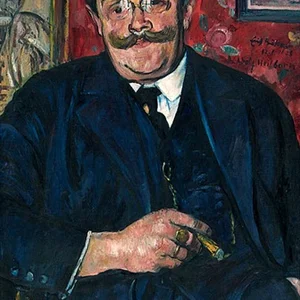

Oskar Büttner was a German botanist of the late 19th century. He took part in the botanical exploration of Africa, particularly the Congo and West Africa, where he collected numerous plant specimens described by the naturalists of his time.
Büttner(1858 — 1927)
Oskar Alexander Richard Büttner
Prusse, Empire allemand, Confédération germanique
5 min read
Frequently asked questions
Key Facts
- Born in 1858 in Germany
- Led botanical expeditions in Africa (Congo, West Africa) during the 1880s and 1890s
- Collected numerous plant specimens that served as the basis for describing new species
- His name is associated with botanical taxa through the author abbreviation “Büttner”
- Died in 1927
Works & Achievements
A set of plant specimens gathered in Central Africa, incorporated into German herbaria and serving as the basis for numerous scientific descriptions.
Plants collected along the West African coasts, contributing to the knowledge of the tropical flora of this region.
Several African plants were named after him by the botanists who described his collections, perpetuating his name in scientific nomenclature.
Field observations and accounts accompanying his travels, useful to the geographers and naturalists of the time.
His specimens enriched the collections of the Berlin Botanical Museum, a major center for the study of tropical flora.
Anecdotes
In the late 1880s, Oskar Büttner took part in the German expedition sent to explore the Congo basin and the Loango coast. Once there, he collected plants tirelessly, drying hundreds of specimens between sheets of paper so they could be brought back to Europe intact.
Several African plant species bear his name today in the Latin form *buettneri*, a tribute paid by the botanists who studied and scientifically named the plants he had gathered.
Like many collectors of his era, Büttner had to contend in equatorial Africa with fevers, humidity and long marches: every specimen he brought back represented weeks of effort in a climate that was punishing for a European.
The plants he brought home were not merely curiosities: they joined the great herbaria of Berlin, where specialists compared, described and classified them to fill in the map of an African flora that was still largely unknown.
Büttner belongs to that generation of travelling naturalists who, at the crossroads of science and German colonial expansion, brought thousands of tropical plants into European collections.
Primary Sources
The reports of the Berlin Geographical Society give an account of the exploratory voyages carried out in the Congo basin and the Loango region, in which naturalists took part to collect plants and observations.
German botanical journals published descriptions of new species coming from Africa, citing the names of the collectors whose specimens served as the basis for the work of the systematists.
The handwritten records accompanying the specimens indicate the place of collection, the date and the name of the collector, preserving a precise record of the plants brought back from Africa.
Key Places
Büttner's home country and the hub of the learned societies that organized expeditions and studied the collections brought back.
A vast equatorial region traveled by Büttner to collect plants in a rainforest then little known to Europeans.
A stretch of central African coastline (in present-day Congo) that served as the starting point for several German expeditions into the interior.
A coastal and forested region where Büttner botanized and gathered plant specimens destined for European herbaria.
A great botanical museum where many African specimens brought back by collectors were studied, described, and preserved.
Typical Objects

Two wooden boards strapped tightly together, between which plants are flattened and dried for preservation. It is the basic tool of the plant-collecting botanist.

Large sheets of paper onto which each dried plant is mounted and labelled with its place and date of collection. They form the scientific archive of the journey.

A small high-magnification lens used to examine the details of flowers, leaves and seeds in order to identify species.

A notebook in which the naturalist records observations, place names, plant descriptions and collecting conditions throughout the expedition.

A metal box carried on a shoulder strap that keeps plants fresh and moist until one can return to camp to put them under the press.

A cork helmet covered in light-coloured cloth, worn by Europeans in Africa to protect against the tropical sun during long marches.
School Curriculum
Vocabulary & Tags
Key Vocabulary
Daily Life
Morning
On expedition, Büttner rises early to take advantage of the cool air. From first light, he sets off to gather plants, spotting and picking the flowering specimens that he slips into his collecting box before the sun becomes overwhelming.
Afternoon
The afternoon is devoted to the painstaking work of the camp: laying out each plant between sheets of paper, tightening the herbarium press and writing the labels. In his notebook he records the location, the date and the appearance of each specimen.
Evening
In the evening, by lamplight, he puts his collections in order, changes the damp papers to prevent mould and plans the next day's route. It is also the time to write his travel journal.
Food
In the field, his diet combines provisions brought from Europe (tinned food, biscuits, coffee) and local products such as cassava, bananas, fish or game meat supplied by the porters and the villages he passes through.
Clothing
He wears the typical clothing of the European explorer in tropical regions: a light canvas shirt and trousers, sturdy boots and a cork pith helmet to protect himself from the sun and the weather.
Housing
While travelling, he lodges in a tent, in village huts or in the posts and trading stations set up along the coast. Back in Germany, he returns to urban lodgings near the scientific institutions.
Historical Timeline
Period Vocabulary
Liens externes & ressources
Références
Œuvres
Collections botaniques du Congo et de Loango
vers 1886-1890
Récoltes d'Afrique de l'Ouest
fin des années 1880
Espèces dédiées « buettneri »
fin du XIXe siècle
Notes et rapports d'exploration
vers 1885-1890
Contribution aux herbiers de Berlin
années 1880-1890