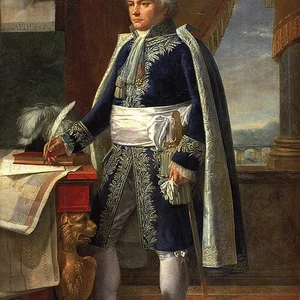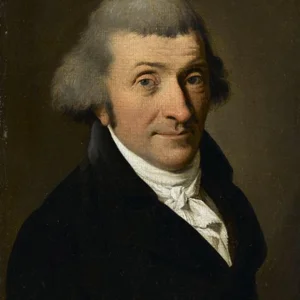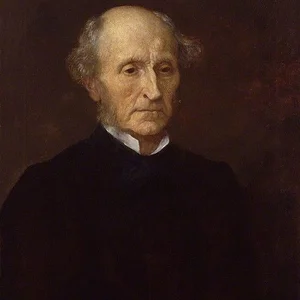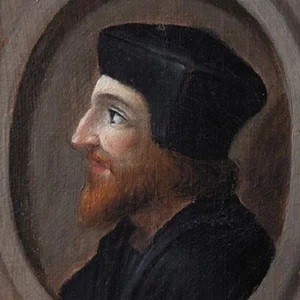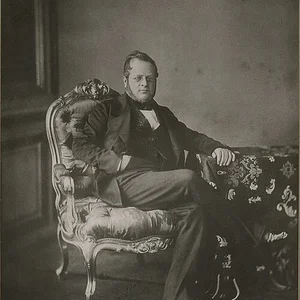

Piedmontese statesman (1810–1861), Cavour was the principal architect of Italian unification. As President of the Council of the Kingdom of Sardinia, he pursued a liberal policy and used diplomacy to win over France and isolate Austria.
Camillo Cavour(1810 — 1861)
Camillo Cavour
royaume d'Italie, royaume de Sardaigne
8 min read
Frequently asked questions
Famous Quotes
« Italy is made; all is done.»
« If we did for ourselves what we do for our country, what rascals we should be!»
Key Facts
- 1810: born in Turin into a Piedmontese aristocratic family
- 1847: founded the liberal newspaper Il Risorgimento
- 1852: became President of the Council of the Kingdom of Sardinia
- 1858: Plombières meeting with Napoleon III — Franco-Piedmontese alliance against Austria
- 1861: proclamation of the Kingdom of Italy; Cavour became its first President of the Council, dying in June of the same year
Works & Achievements
Cavour founded this liberal newspaper, which gave its name to the Italian unification movement. In its pages, he championed constitutional ideas and the need for an alliance with France against Austria.
Actively supported by Cavour, these laws abolished ecclesiastical courts and clerical privileges in Piedmont, laying the foundations of a modern, secular, and liberal state.
As Minister of Finance and later Prime Minister, Cavour massively expanded Piedmont's railway network, modernizing the economy and strengthening the kingdom's military cohesion.
By sending 15,000 Piedmontese soldiers to fight alongside France and Britain, Cavour secured Piedmont a seat at the Congress of Paris in 1856, where he was able to raise the Italian question before all of Europe.
Cavour's diplomatic masterpiece: in exchange for Nice and Savoy, France committed militarily to supporting Piedmont against Austria, paving the way for the Second Italian War of Independence.
Cavour organized the plebiscites that enabled the legal annexation of Tuscany, Emilia-Romagna, and the central duchies, countering Garibaldi's revolutionary approach with an institutional path to unification.
The culmination of Cavour's entire strategy: Parliament, convened in Turin, proclaimed Victor Emmanuel II King of Italy, officially creating the unified state to which Cavour had devoted his life.
Anecdotes
Cavour learned English and French before he had even fully mastered literary Italian: his mother tongue was Piedmontese, a local dialect. This paradoxical situation sometimes embarrassed his foreign counterparts, who discovered that the architect of unified Italy expressed himself more easily in French than in Italian.
In 1858, Cavour secretly met Napoleon III at the Thermes de Plombières, in the Vosges, to negotiate a Franco-Piedmontese alliance against Austria. The two men rode through the town in a horse-drawn carriage to avoid being spied upon, reaching an agreement that would redraw the map of Europe. Their conversation remained confidential for several years.
Cavour had a passion for agronomy and modern economics. On his estates in Piedmont, he introduced crop rotation, chemical fertilizers, and rice paddy drainage before he ever entered politics. His farms served as models for Piedmontese farmers and brought him the fortune he needed to fund his political ambitions.
When Garibaldi was preparing to attack Rome with his red shirts in 1861, Cavour firmly opposed the plan, unwilling to provoke France and the Pope. He reportedly confided to those close to him: “Italy must be made, but not in this way.” This enduring tension with Garibaldi illustrates the two faces of Italian unification: diplomacy versus revolution.
Cavour died on June 6, 1861, at just 50 years of age, only months after the proclamation of the Kingdom of Italy. Exhausted by years of relentless work, he reportedly repeated on his deathbed: “Italy is made, all is well.” He never lived to see Rome become the capital of unified Italy — a goal he had nonetheless passionately championed.
Primary Sources
"A free press is the strongest guarantee of citizens' rights and the best instrument of social progress. To suppress the press is to suppress public thought."
"I owe my country everything I possess in intelligence and energy. If I cannot serve it through my actions, I will serve it through my counsel."
"Your Majesty has laid the foundations of an alliance whose consequences will be decisive for the future of Italy and the balance of Europe. Piedmont is ready to honour its commitments."
"We ask for the Church the same freedom as for any other association of citizens: no privileges, no constraints. A free Church in a free State — that is the programme of true liberty."
"Our policy must convince Europe that Piedmont is the only Italian state capable of order and progress. It is through diplomacy, not arms alone, that we shall win our independence."
Key Places
The city where Cavour wielded power as President of the Council and seat of the Sardinian Parliament. It was in Turin that the landmark liberal laws were passed and the Kingdom of Italy proclaimed in 1861.
A French spa town where Cavour met secretly with Napoleon III in July 1858. The agreement reached here — exchanging Nice and Savoy for a military alliance — proved decisive for Italian unification.
The Cavour family estate where the statesman experimented with agricultural reforms and where he was ultimately buried. The site symbolizes the link between his drive for economic modernization and his political ambitions.
The diplomatic capital of Second Empire Europe, where Cavour showcased his skills as a negotiator — most notably at the Congress of Paris (1856) following the Crimean War — to bring the Italian question onto the international stage.
A major Italian city under Austrian rule until 1859. Its liberation following the battles of Magenta and Solferino marked the first concrete victory of Cavour's diplomatic and military strategy.
Typical Objects

Cavour was a master of secret diplomacy and exchanged coded messages with his ambassadors. These dispatches allowed him to coordinate his strategy without arousing the suspicions of rival powers.

An avid reader of specialized English and French publications, Cavour kept abreast of the latest agricultural and financial innovations in order to modernize Piedmont. He himself founded the journal *Il Risorgimento* in 1842.

Short-sighted, Cavour used a lorgnette which he kept constantly at hand during parliamentary debates to read his notes. This detail is visible in several official portraits of the statesman.

An essential working tool for Cavour, these detailed maps helped him plan the gradual annexations and visualize the balance of power among the various Italian states and foreign powers.

The treaty signed after the Crimean War allowed Cavour to formally raise the Italian question before the great European powers, lending diplomatic legitimacy to Piedmontese ambitions.

Cavour was one of the first statesmen to make extensive use of the telegraph to coordinate his diplomatic and military actions in real time, most notably during the campaigns of 1859–1860.
School Curriculum
Vocabulary & Tags
Key Vocabulary
Daily Life
Morning
Cavour rose early, around six o'clock, and devoted his mornings to reading diplomatic dispatches and European newspapers. He annotated his ambassadors' reports before receiving his collaborators and ministers for intense working meetings. His desk was covered with maps, correspondence, and handwritten notes.
Afternoon
His afternoons were taken up by sessions in the Sardinian Parliament, where Cavour distinguished himself with elaborate speeches and a formidable ability to improvise responses to opposition attacks. He often negotiated in parallel with foreign diplomats, juggling parliamentary debates and the corridors of diplomacy.
Evening
In the evenings, Cavour frequented Turin's salons and liberal circles where Piedmontese nobles, financiers, and intellectuals mingled. A great lover of card games and political conversation, he used these social occasions to cultivate his networks of influence. He went to bed late, often after midnight.
Food
Cavour was a refined gourmand who appreciated Piedmontese cuisine rich in truffles, risotto, and slow-cooked meats. He readily drank Barolo wine produced on his own estates and entertained guests at lavish working dinners. His table was renowned in Turin as a place where gastronomic pleasures and political discussions went hand in hand.
Clothing
Cavour dressed with the understated elegance of an Anglophile liberal gentleman: a black frock coat, white cravat, and grey trousers made up his daily uniform in Parliament. He wore round spectacles and a lorgnon that reinforced his air of a serious bourgeois notable, contrasting sharply with Garibaldi's more flamboyant appearance.
Housing
Cavour lived in a government apartment in Turin, modestly furnished but equipped with a large library and a study where he received visitors. He spent summers at his family estate in Santena, where he personally oversaw his model farming operations, finding renewal in the work of the fields.
Historical Timeline
Period Vocabulary
Liens externes & ressources
Références
Œuvres
Fondation du journal Il Risorgimento
1847
Lois Siccardi : séparation de l'Église et de l'État au Piémont
1850
Réseau de chemins de fer piémontais
1850-1860
Participation à la guerre de Crimée
1855
Accords de Plombières avec Napoléon III
Juillet 1858
Annexions par plébiscite de l'Italie centrale
1860
Proclamation du royaume d'Italie au Parlement
17 mars 1861