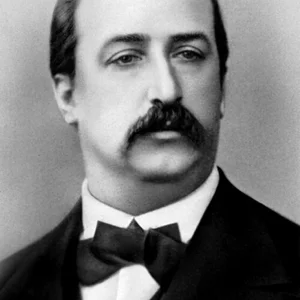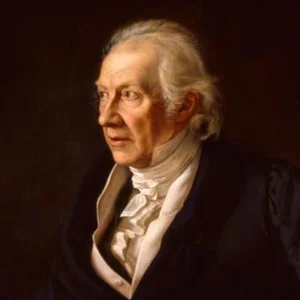

German composer and choral conductor (1758–1832), director of the Sing-Akademie zu Berlin and teacher of Felix Mendelssohn. A close friend of Goethe, he contributed to the revival of Bach's music in Germany.
Carl Friedrich Zelter(1758 — 1832)
Carl Friedrich Zelter
royaume de Prusse
7 min read
Frequently asked questions
Key Facts
- 1758: born in Berlin
- 1800: becomes director of the Sing-Akademie zu Berlin
- Long epistolary friendship with Goethe (more than 800 letters exchanged)
- Teacher of Felix Mendelssohn, whom he introduced to the music of Bach
- 1832: dies in Berlin, the same year as Goethe
Works & Achievements
Zelter composed more than two hundred songs set to texts by Goethe, Schiller, and other German poets. These Lieder, marked by great expressive simplicity, were models admired by Schubert and Mendelssohn.
Over thirty years at its helm, Zelter transformed the Sing-Akademie into one of Europe's finest choral institutions, growing its membership to more than two hundred singers and placing Bach at the heart of its repertoire.
Zelter founded the first *Liedertafel*, a male choral society combining music, fellowship, and patriotism. The model spread throughout Germany and gave rise to the great popular choral society movement of the nineteenth century.
At Zelter's initiative, the King of Prussia approved the establishment of Berlin's first public conservatory, dedicated to training church musicians and music teachers for the kingdom.
The correspondence between Zelter and Goethe, published after their deaths, stands as a fundamental document on the musical and intellectual life of classical and Romantic Germany.
Anecdotes
Before becoming a renowned musician, Zelter worked as a mason, following in his father's footsteps. He became a master mason and ran his own business while composing and conducting choirs in Berlin. This double life as craftsman and musician made him a respected figure across all levels of Berlin society.
Zelter and Goethe maintained one of the most celebrated correspondences in German literature: more than 800 letters exchanged over thirty years, from 1796 until Goethe's death in 1832. Zelter himself died just a few weeks after his friend, as though the poet's passing had been fatal to him as well.
It was Zelter who first recognized the genius of the young **Felix Mendelssohn**, then around ten years old, and took him under his wing around **1819**. He taught him composition and choral conducting, then personally introduced him to Goethe during a memorable visit to **Weimar** in **1821**.
Zelter passed on to Mendelssohn his passion for the music of **Johann Sebastian Bach**, who was then largely forgotten by the general public. This teaching was partly responsible for Mendelssohn's decision to conduct the first modern revival of the *St Matthew Passion* in **1829** — an event regarded as the starting point of the Bach revival across Europe.
In **1809**, Zelter founded the *Liedertafel* in **Berlin**, a male choral society that gathered around a shared meal to sing, compose, and discuss music. This model of a "singers' table" spread throughout Germany and helped popularize amateur choral singing in the nineteenth century.
Primary Sources
Zelter to Goethe, 22 October 1821: "There is here a boy of twelve, Felix Mendelssohn Bartholdy, my best pupil. If, as I believe, he lives and develops, he will certainly become something great."
"You remain for me a singular being. When I think of your way of working, of what you have made of the Sing-Akademie, of the clarity you bring to everything you touch, I understand why music resembles you."
"Under the direction of Mr. Zelter, the academy this year assembled more than two hundred voices and presented to the Berlin public works by Graun, Handel, and J. S. Bach in a performance worthy of the greatest institutions in Europe."
"My father was a mason and I became one too, not out of compulsion, but because working with my hands taught me what art alone could not: patience, rigor, and a taste for a job well done."
"Music can fulfil its moral and civic mission only if the State provides it with the institutions necessary for the training of its practitioners. I humbly petition for the creation of a music institute in the service of the Church and the nation."
Key Places
Choral institution that Zelter directed from 1800 until his death, transforming it into one of the foremost centers of European choral music. Within its walls, the great works of Bach were rediscovered and brought back into performance.
Zelter traveled to Weimar several times to visit his friend Goethe. These stays, filled with music and long philosophical conversations, fed the extraordinary correspondence the two men maintained.
Zelter was born, lived, and died in Berlin. There he ran his masonry business and founded the Liedertafel, making the city a center of the German choral revival at the turn of the nineteenth century.
Music school founded in 1822 at Zelter's initiative and with royal approval, intended to train church musicians for the Kingdom of Prussia. It was the first public institution of musical education in Berlin.
Typical Objects

Zelter worked as a mason for much of his life and managed the family business. These tools symbolize his dual identity as craftsman and artist — a rare and admired combination in his era.

Zelter composed hundreds of Lieder for voice and piano set to poems by Goethe and Schiller. His manuscripts, often given as gifts, stand as direct evidence of the intimate bond between music and poetry in Berlin.

Indispensable to a choral conductor for tuning voices, the tuning fork was Zelter's everyday tool at the Sing-Akademie. It allowed him to impose accurate pitch on hundreds of amateur singers.

The roughly 800 letters exchanged with Goethe form one of the most celebrated literary correspondences in Germany. Each letter, carefully sealed with wax, traveled by post between Berlin and Weimar.

Zelter used the fortepiano to accompany his students and set the poems of his poet friends to music. It was around this instrument that he gave lessons to the young Felix Mendelssohn.

As director, Zelter kept meticulous records of singers, rehearsals, and concerts. These archives, preserved in Berlin, attest to the administrative rigor he brought to the institution.
School Curriculum
Vocabulary & Tags
Key Vocabulary
Daily Life
Morning
Zelter rose early, a habit inherited from his years as a craftsman. He began his day by reading and writing his voluminous correspondence — including his letters to Goethe — before overseeing the day-to-day affairs of the Sing-Akademie.
Afternoon
Afternoons were devoted to rehearsals at the Sing-Akademie zu Berlin, where he directed amateur and professional singers alike with firm but benevolent discipline. He also gave private lessons in composition and counterpoint, notably to the young Felix Mendelssohn.
Evening
Zelter's evenings were often spent in Berlin's salons, where music, philosophy, and politics mingled freely. He was a regular at the gatherings of the Liedertafel, where men of letters and musicians came together to sing and debate over a shared meal.
Food
Zelter enjoyed the hearty fare of 18th-century Prussia: braised meats, cured sausages, dense breads, and local beers. His letters to Goethe mention shared meals in Weimar, accompanied by the Rhine wines the poet so favoured.
Clothing
Zelter dressed in the bourgeois Berlin fashion: a dark frock coat, waistcoat, knee breeches — and trousers from the 1800s onward — with a high-knotted cravat. His conducting attire was sober and dignified, reflecting his constant concern for authority and respectability.
Housing
Zelter lived in Berlin in a comfortable, well-to-do townhouse that served as both family home and workplace, where he received his pupils. His study, well stocked with scores, books, and instruments, bore witness to his dual life as a former craftsman turned respected intellectual.