 flip
flipEarly Morning Oat Porridge
Early Morning Oat Porridge
Why this dish? Caroline's anchor sheet explicitly mentions morning porridge. Frugal by necessity and temperament, she began her days with this cheap, nourishing oatmeal that sustained her until midday dinner.
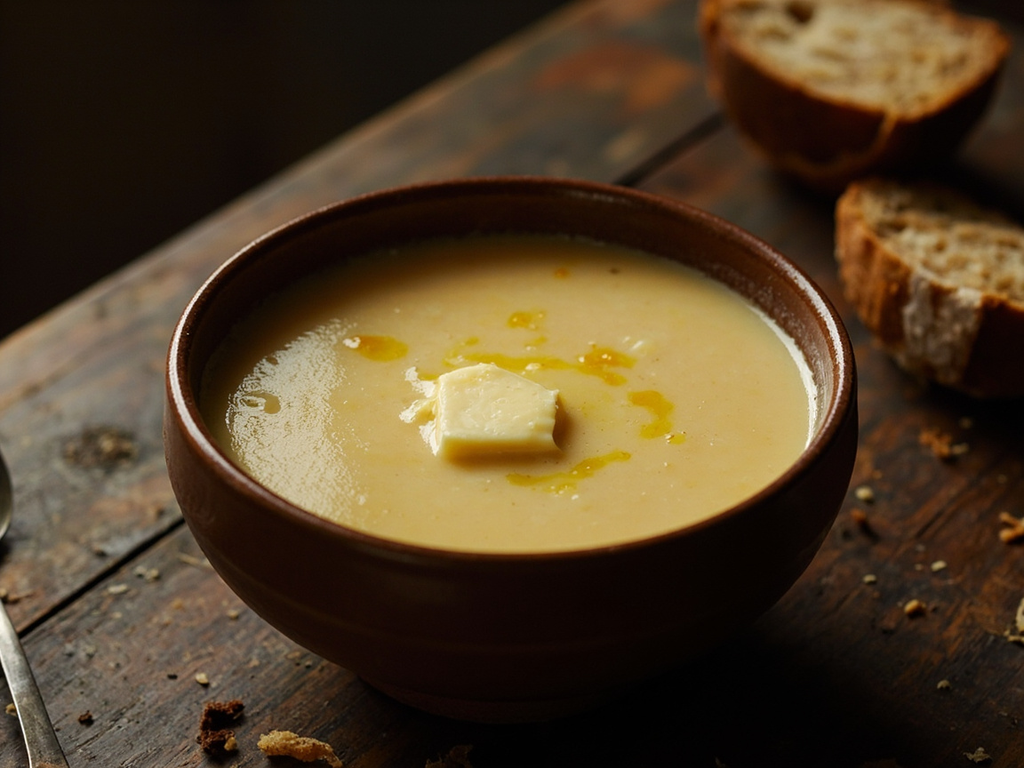
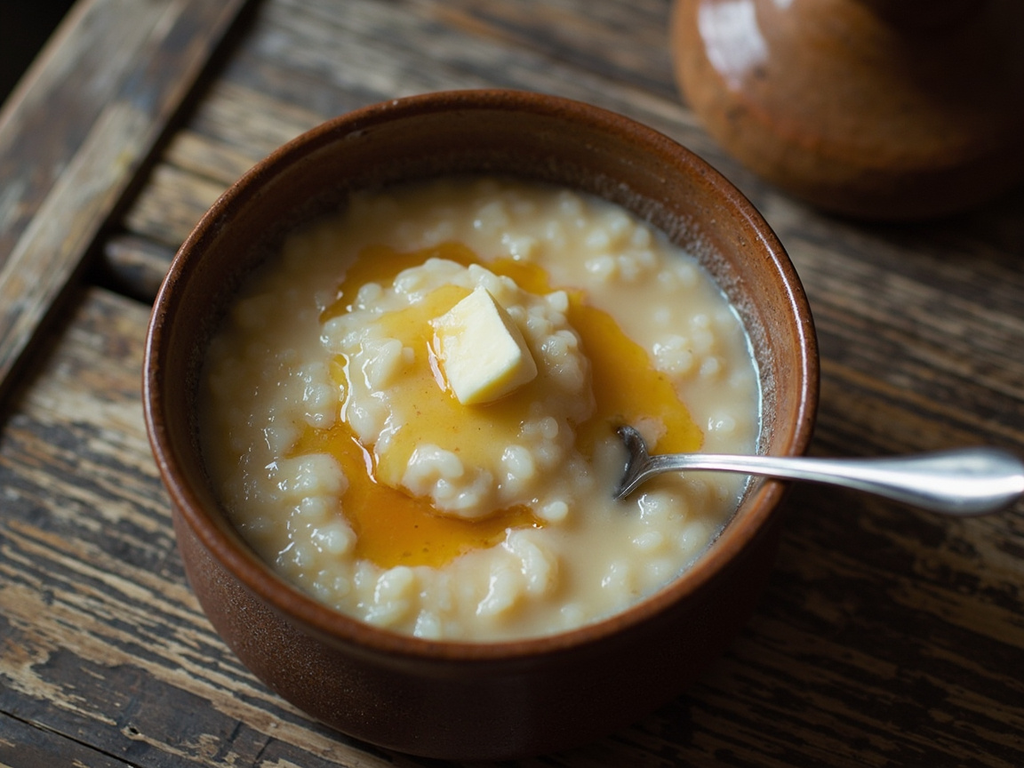
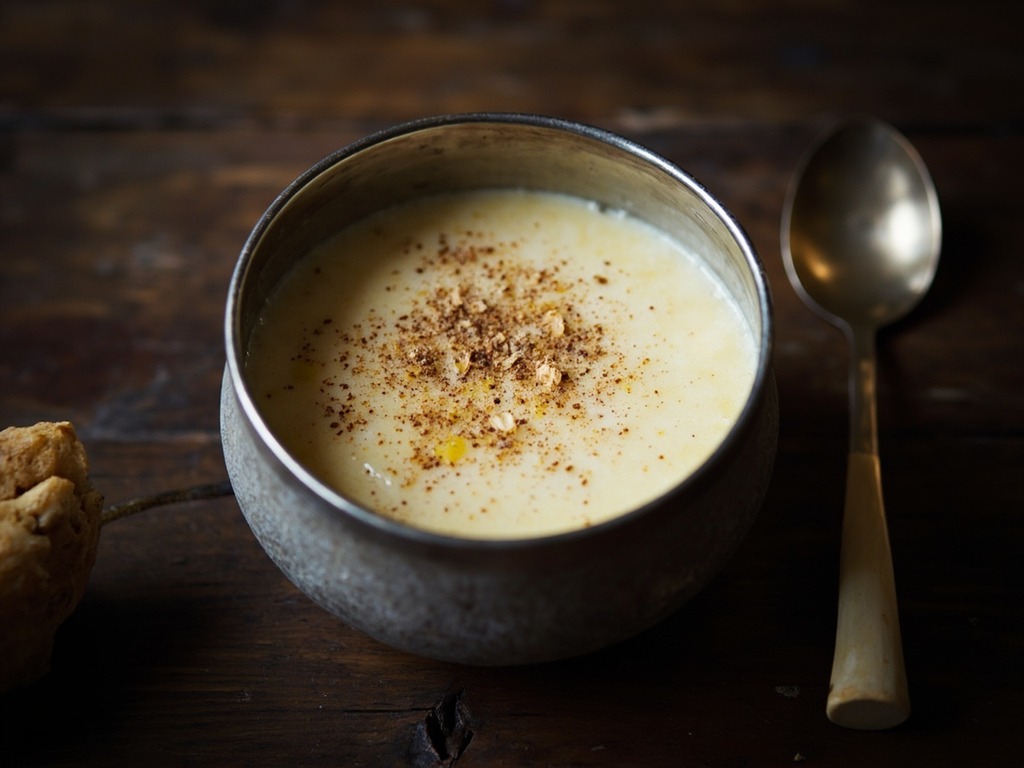
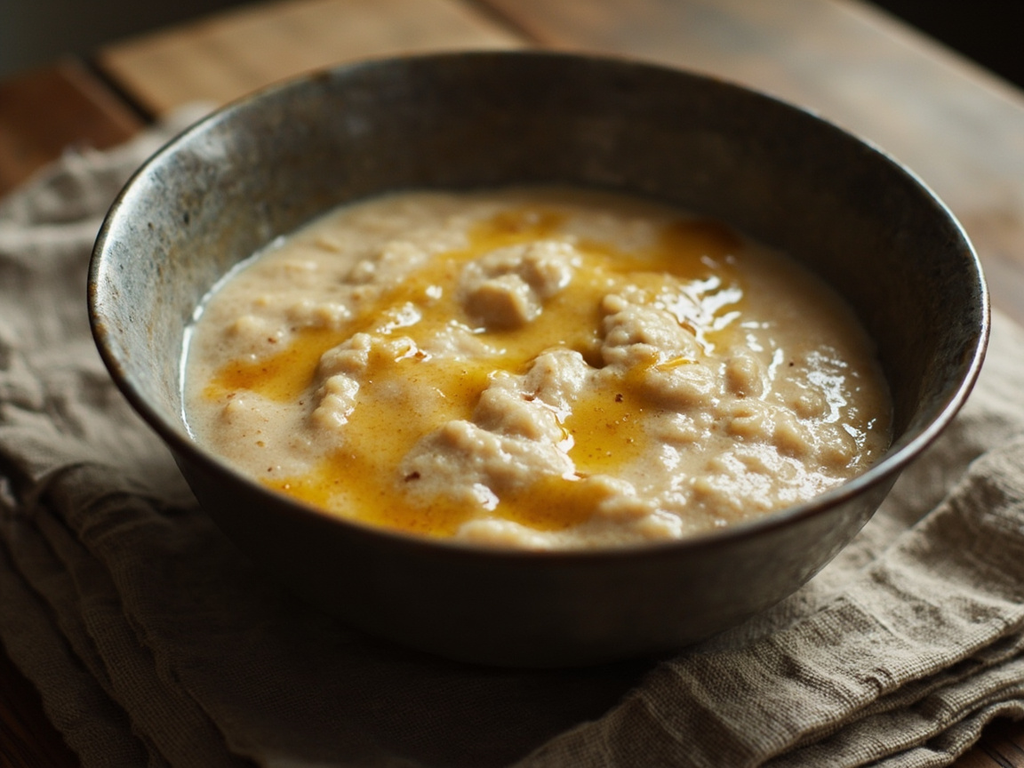
A slow-cooked oatmeal in water or a mix of water and milk, salted in the Scottish style and then drizzled with honey. The humblest and most widespread breakfast in the British Isles in the 18th century.
You see, I was never one to linger over the pleasures of the table: my brother William had taught me that every hour lost was a comet missed. At daybreak, before the calculations called me, I would thicken the oats in simmering water, stirring without pause with the same arm that polished our mirrors. A pinch of salt, a little honey from the neighbour's hives, and I was sustained until noon. It was little, but the sky, after all, does not feed itself and yet demands all our vigour.
- •Oatmeal (coarse groats) — a good handful per person (nourishing base)
- •Well water — three times the volume of oats (cooking liquid)
- •Milk — a splash, depending on what one had (creaminess)
- •Salt — a pinch (seasoning)
- •Honey — to taste (sweetness)
Early Morning Oat Porridge
A slow-cooked oatmeal in water or a mix of water and milk, salted in the Scottish style and then drizzled with honey. The humblest and most widespread breakfast in the British Isles in the 18th century.
Why this dish? Caroline's anchor sheet explicitly mentions morning porridge. Frugal by necessity and temperament, she began her days with this cheap, nourishing oatmeal that sustained her until midday dinner.
You see, I was never one to linger over the pleasures of the table: my brother William had taught me that every hour lost was a comet missed. At daybreak, before the calculations called me, I would thicken the oats in simmering water, stirring without pause with the same arm that polished our mirrors. A pinch of salt, a little honey from the neighbour's hives, and I was sustained until noon. It was little, but the sky, after all, does not feed itself and yet demands all our vigour.
Ingredients (period version)
- Oatmeal (coarse groats) — a good handful per person (nourishing base)
- Well water — three times the volume of oats (cooking liquid)
- Milk — a splash, depending on what one had (creaminess)
- Salt — a pinch (seasoning)
- Honey — to taste (sweetness)
Ingredients
- Rolled oats (preferably thick) — 80 g (base)
- Water — 250 ml (cooking liquid)
- Milk — 100 ml (creaminess)
- Salt — 1 pinch (seasoning)
- Honey — 1 teaspoon (sweetness)
Method
- Bring the water to a simmer in a saucepan and sprinkle in the oats.
- Cook over low heat for 10 to 15 minutes, stirring regularly with a wooden spoon, until creamy.
- Add the milk and a pinch of salt at the end of cooking; mix well.
- Pour into a bowl, drizzle with honey, and serve piping hot.
How it was made : In the 18th century, oats were often soaked overnight and cooked slowly on the corner of the stove. In Scotland, they preferred it salty and without sugar; in England, honey or molasses was tolerated. The spoon was always held in the same hand, by superstition.
The contemporary twist : A drop of cream and a few warm currants transform this austere porridge into observatory comfort—enjoy it, why not, while gazing at the stars through the window.
Caroline Herschel · Charactorium