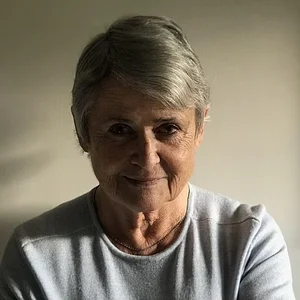

Catherine Malabou, born in 1959, is a French philosopher and a student of Jacques Derrida. She developed the concept of “plasticity,” bringing together continental philosophy, neuroscience, and politics.
Catherine Malabou(1959 — ?)
Catherine Malabou
France
6 min read
Frequently asked questions
Key Facts
- Born in 1959 in Sucy-en-Brie, a contemporary French philosopher
- In 1994 she defended a doctoral thesis on Hegel supervised by Jacques Derrida, published under the title “The Future of Hegel” (1996)
- Develops the concept of “plasticity” at the crossroads of philosophy and neuroscience
- Publishes “What Should We Do with Our Brain?” (2004), a major work on the link between the brain and society
- Teaches notably at the University of Paris-Nanterre and at the University of California, Irvine
Works & Achievements
Her doctoral thesis, which reinterprets Hegel's philosophy and lays the foundation for her key concept of plasticity.
A book for general readers that brings neuroscience into dialogue with a political critique of contemporary capitalism.
A reflection on trauma and brain injury, setting Freud's psychoanalysis against neurology.
A short essay exploring how an accident can bring about a radically new being.
A work in which she connects the biology of epigenesis to Kant's theory of knowledge.
A feminist essay weaving together anatomy, the history of ideas, and the philosophy of pleasure.
A book in which Malabou examines the anarchist tradition and the possibility of thinking without power.
Anecdotes
Catherine Malabou wrote her doctoral thesis under the supervision of Jacques Derrida, one of the most famous philosophers of the 20th century. From this encounter was born a long intellectual friendship: they even wrote a book together, in which they exchanged letters on the theme of travel.
To build her philosophy, Malabou did something unusual for a philosopher: she immersed herself in neuroscience and studied how the brain actually works. She wondered what doctors' discovery of “brain plasticity” could change about the way we think about human freedom.
Her best-known idea is that of “plasticity.” The word comes from Greek and gave us “plastic”: Malabou explains that to be plastic is both to be able to receive a form (like clay) and to be able to give one, but also, sometimes, to blow up one's own form, like the “plastic” in explosives.
In a striking book, Malabou reflected on people whose personality changes abruptly after an accident, a brain injury, or a major trauma. She asks whether one then becomes a completely new person, a kind of “stranger” to one's loved ones.
Although French, Catherine Malabou teaches mostly abroad, first in England and then in the United States. This makes her a bridge between European “continental” philosophy and the English-speaking academic world, two traditions that often have little to say to each other.
Primary Sources
Plasticity designates both the capacity to receive form and the capacity to give form.
What should we do with our brain? Today this is a political question before it is a scientific one: it is a matter of becoming aware that we are plastic.
A cerebral injury can give rise to a new being, a subject who no longer bears any relation to the one he was before.
There exists a destructive plasticity, a form arising from the loss of form, in which the subject survives by becoming wholly other.
Key Places
Algerian city where Catherine Malabou was born in 1959, at the end of the French colonial period.
At the School for Advanced Studies in the Social Sciences, Malabou worked alongside Jacques Derrida, her thesis supervisor.
She taught philosophy here for many years before continuing her career abroad.
At the Centre for Research in Modern European Philosophy of this British university, Malabou carried out much of her research.
She teaches at this California university, extending the historical connection between Derrida and the American West Coast.
Typical Objects

Her published essays, such as *What Should We Do with Our Brain?*, are the main tool through which **Malabou** spreads her ideas. The book remains the central medium of philosophical work.

Medical images of the brain obtained by MRI symbolize the dialogue that **Malabou** establishes between philosophy and neuroscience. Brain plasticity is made visible in them.

A pliable material that takes and holds a shape, clay concretely illustrates the concept of plasticity at the heart of her thought. It can be shaped and then reshaped.

A daily instrument for writing, research, and remote teaching between Europe and the United States. It accompanies the life of an international philosopher.

The “plastic” that explodes gives plasticity its most radical meaning: the power to annihilate a form. **Malabou** sees in it the metaphor of “destructive plasticity.”
School Curriculum
Vocabulary & Tags
Key Vocabulary
Daily Life
Morning
Like many academics, Catherine Malabou devotes her mornings to reading and writing, while her mind is still fresh. She might prepare a class, annotate articles on neuroscience, or make progress on the draft of an essay.
Afternoon
The afternoon is often set aside for teaching: seminars, classes, and discussions with students in France, England, or California. The philosopher's profession is also one of oral transmission and debate.
Evening
The evening may be devoted to proofreading, to correspondence with other researchers, or to preparing international conferences. Intellectual life does not stop at office hours.
Food
Living between Europe and the United States, Malabou shares the ordinary diet of a twenty-first-century academic, blending French cuisine with the habits of the countries where she stays. Meals are often moments of exchange and discussion.
Clothing
She wears the plain, contemporary clothing of the academic world, with no particular uniform. Her attire remains understated, serving thought rather than appearance.
Housing
Her professional life leads her to live in several countries, notably the United Kingdom and the United States. She thus experiences the mobility and the sharing of life across multiple places that is typical of international researchers.
Historical Timeline
Period Vocabulary
Liens externes & ressources
Références
Œuvres
L'Avenir de Hegel. Plasticité, temporalité, dialectique
1996
Que faire de notre cerveau ?
2004
Les Nouveaux Blessés
2007
Ontologie de l'accident. Essai sur la plasticité destructrice
2009
Avant demain. Épigenèse et rationalité
2014
Le Plaisir effacé. Clitoris et pensée
2020
Au voleur ! Anarchisme et philosophie
2022