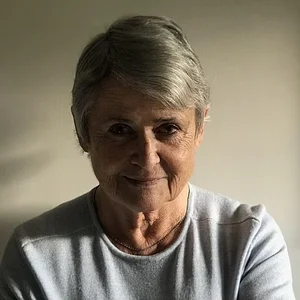

Geneviève Fraisse, born in 1948, is a French philosopher and historian of feminist thought. A research director at the CNRS, she made gender equality and the genealogy of women's emancipation a genuine philosophical subject.
Geneviève Fraisse(1948 — ?)
Geneviève Fraisse
France
5 min read
Frequently asked questions
Famous Quotes
« The service of goods is not the service of the good.»
Key Facts
- Born on April 9, 1948, in Paris
- Research director in philosophy at the CNRS
- Published “Muse of Reason: The Exclusive Democracy and the Difference of the Sexes” in 1989
- Interministerial delegate for women's rights in 1997–1998
- Member of the European Parliament (1999–2004) on the United Left list
Works & Achievements
One of her first books, which analyzes women's domestic labor as a historical and philosophical question.
A major work showing that the exclusion of women from citizenship was a deliberate decision made by the thinkers of the Revolution.
An essay that establishes sexual difference as a genuine philosophical concept, neither denied nor turned into destiny.
A reflection on the relationship between private power (the family) and public power (the City) in the question of equality.
A collection of interviews and texts retracing her career and the development of her feminist thought.
An exploration of the concept of gender, between a category of analysis and an overflowing of norms and images.
An essay devoted to women as active subjects of history and creation.
Anecdotes
Geneviève Fraisse likes to recall that she long worked on the margins of academic philosophy: in the 1970s, her research on women and gender equality was considered hardly serious. She turned that disdain into a driving force, transforming feminism into a philosophical subject in its own right.
In 1989, for the bicentennial of the French Revolution, she published *Muse of Reason* and showed that the exclusion of women from citizenship was not an oversight, but a deliberate decision by the thinkers of the time. The book changed the way historians look at the Revolution.
Between 1997 and 1998, she briefly left research to become interministerial delegate for women's rights, then a government adviser: a philosopher at the heart of political action, which is rare in France.
In 2004, she was elected to the European Parliament on a left-wing list, proving that one can think about equality in books and defend it in assemblies. She sat there until 2009.
Fraisse insists on a point of vocabulary: she speaks of “exclusive democracy” to describe a regime that calls itself egalitarian while shutting out half of humanity. The phrase has become famous in debates over gender parity.
Primary Sources
Modern democracy was built on the exclusion of women: not through oversight, but as a condition of its very functioning.
To think about the difference between the sexes is to refuse both to deny it and to turn it into a destiny.
Equality between the sexes is decided not only within the City, but also in the sharing of power within the family.
Gender is not merely a category of analysis; it is also an excess, something that overflows norms and images.
Key Places
Birthplace of Geneviève Fraisse in 1948 and the center of her intellectual and political life.
Institution where she is a research director, conducting her work on gender equality and the genealogy of feminism.
Where she served as a Member of the European Parliament from 2004 to 2009, championing equality issues at the European level.
Seat of the French government, where she served as interministerial delegate for women's rights in the late 1990s.
Site of her research into revolutionary archives and the history of thought about women.
Typical Objects

The notebooks where Fraisse jots down her concepts, her readings and the genealogy of feminist ideas. Writing is her main tool for philosophical work.

Her published works, from “Muse of Reason” to “The Excesses of Gender,” which spread her concepts. The book is the medium through which she inscribes the equality of the sexes into philosophy.

The writings, pamphlets and debates of the French Revolution that she pores over to understand the exclusion of women. Her raw material as a historian of thought.

A symbol of the citizenship women were long denied, at the heart of her reflection on “exclusive democracy.” A political object that became a philosophical one.

The tool of her public talks, symposiums and debates where she defends parity. Public speech extends the written word in her work.

It marks her status as a research director, the institution that gives her the means to carry out her work. Recognition of a feminism that has become a science.
School Curriculum
Vocabulary & Tags
Key Vocabulary
Daily Life
Morning
The morning of a researcher like Geneviève Fraisse is devoted to reading and writing, in the quiet needed for concentration. She combs through texts, takes notes, and works on the precise formulation of her concepts.
Afternoon
The afternoon is often shaped by the demands of intellectual life: seminars, meetings at the CNRS, encounters with students or colleagues. During her political terms in office, these hours were taken up by sessions and public debates.
Evening
The evening may be devoted to further reading, to preparing lectures, or to dinners spent in discussion. Exchanges with other thinkers nourish her reflection.
Food
Like most contemporary French intellectuals, she shares in the ordinary diet of Parisian urban life. Meals are also moments of exchange and debate with her peers.
Clothing
She wears the plain, practical clothes of an academic of the late 20th and early 21st centuries. Her attire reflects the seriousness of the research world rather than any particular fashion.
Housing
She lives mainly in Paris, in an urban setting close to libraries and research institutions. Her home holds a substantial personal library, an essential tool of her work.
Historical Timeline
Period Vocabulary
Liens externes & ressources
Références
Œuvres
Femmes toutes mains. Essai sur le service domestique
1979
Muse de la raison. La démocratie exclusive et la différence des sexes
1989
La Différence des sexes
1996
Les Deux Gouvernements : la famille et la Cité
2000
La Fabrique du féminisme
2012
Les Excès du genre. Concept, image, nudité
2014
La Suite de l'Histoire. Actrices, créatrices
2019