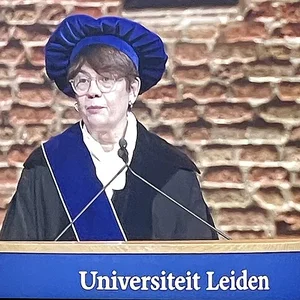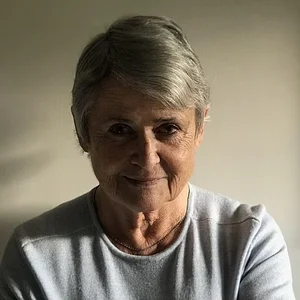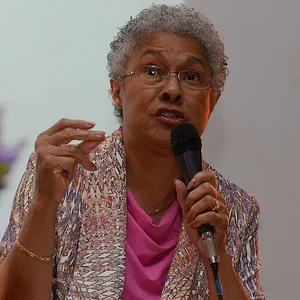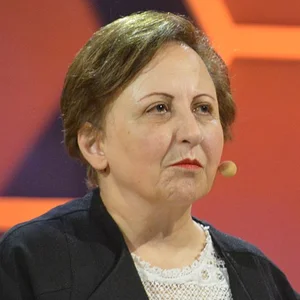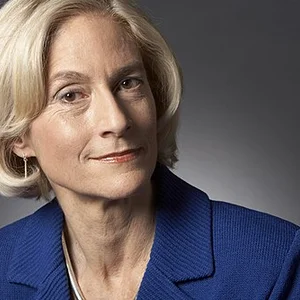

American philosopher born in 1947, professor of law and ethics at the University of Chicago. Together with the economist Amartya Sen, she developed the capabilities approach, which measures human development by the real freedoms available to individuals. She is one of the leading voices in contemporary moral and political philosophy.
Martha Nussbaum(1947 — ?)
Martha Craven Nussbaum
États-Unis
6 min read
Frequently asked questions
Key Facts
- Born on May 6, 1947, in New York.
- Develops the capabilities approach with Amartya Sen from the 1980s and 1990s onward.
- Publishes “Women and Human Development” (2000), applying the capabilities approach to the condition of women.
- Professor of law and ethics at the University of Chicago since 1995.
- Receives the Kyoto Prize (2016) and the Berggruen Prize (2018) for her body of work.
Works & Achievements
A study of Greek philosophy and tragedy showing that the good life remains vulnerable to luck. The work that founded her reputation.
An application of the capabilities approach to the condition of women around the world, especially in India. A plea for universal rights.
A sweeping theory of the emotions understood as value judgments rather than mere irrational impulses.
An extension of the theory of justice to people with disabilities, poor countries, and animals, reaching beyond the classical social contract.
A defense of the humanities in schools, seen as essential to forming democratic citizens capable of empathy and critical thinking.
An accessible and concise presentation of the capabilities approach, which has become a key reference for students and policymakers.
A reflection on the role of positive emotions, such as love and compassion, in holding together just societies.
An analysis of fear as a driving force behind contemporary political crises and democratic divisions.
Anecdotes
As a teenager, Martha Nussbaum developed a passion for theater and acted in plays from Greek antiquity. This love of the tragedies of Aeschylus, Sophocles, and Euripides would shape her entire philosophy: she believes that literature teaches us to feel human vulnerability better than abstract treatises do.
In 1969, when she wished to convert to Judaism (the religion of her first husband), she ran up against the fact that classical studies and philosophy were still very male-dominated strongholds. She would later recount having to fight against the sexism of Harvard's academic world to get her work recognized.
Nussbaum is famous for her work discipline: she runs every day and sings opera, convinced that the body and the emotions are an integral part of the life of the mind. She has written more than twenty books while teaching law and philosophy.
With the Indian economist Amartya Sen, the future Nobel Prize winner, she developed the “capabilities approach” in the 1980s: instead of measuring a country's wealth by its GDP, one assesses what people are actually able to do and to be (to feed themselves, to get an education, to take part in political life).
In 2016, she received the Kyoto Prize, one of the highest international honors, and in 2018 the prestigious Berggruen Prize, worth one million dollars. True to her convictions, she declared that she wanted to devote part of these sums to causes related to justice and education.
Primary Sources
Human goodness is, by its very nature, something fragile, exposed to the blows of fortune; and it is precisely this vulnerability that makes it a beauty that is properly human.
The central idea is that each person is an end in herself, and that the question is not only total or average well-being, but the opportunities available to each individual.
Thirsty for profit, nations and their educational systems are unknowingly discarding skills that democracies need in order to survive.
Emotions are not mere irrational impulses: they involve judgments about things that matter for our flourishing and that we do not fully control.
Key Places
City where Martha Craven is born in 1947 and grows up. She completes her first undergraduate studies there at New York University.
There she earns her doctorate in philosophy in 1975 and begins her academic career, in a still largely male-dominated environment.
Since 1995, she has been a professor of law and ethics here. It is her main place of teaching and research.
She teaches philosophy and classics here in the 1980s and early 1990s, before moving to Chicago.
At the WIDER research institute, she collaborates with Amartya Sen and develops the capabilities approach starting in 1986.
Typical Objects

Nussbaum's main tool: she has published more than twenty works spreading her ideas on justice, emotions and capabilities. The book is her means of influencing public debate.

As a professor of law and ethics in Chicago, she has been teaching students for decades. The classroom is where she trains future lawyers and philosophers.

A scholar of the classics, she draws on the plays of Aeschylus, Sophocles and Euripides to reflect on human vulnerability. These ancient texts nourish all of her thinking about the emotions.

A UN document measuring the quality of life of populations. The capabilities approach of Nussbaum and Sen directly inspired these indicators, which go beyond mere economic wealth.

A lover of lyric singing, Nussbaum practises opera as a discipline of the body and the emotions. For her, the art of music is part of the fully human life she defends.

The everyday instruments of a prolific author who writes lectures, articles and books. Handwriting and note-taking accompany her relentless research work.
School Curriculum
Vocabulary & Tags
Key Vocabulary
Tags
Daily Life
Morning
Martha Nussbaum is known for her disciplined mornings: she rises early and devotes her first hours to writing, the time when her mind is at its clearest. She runs regularly to maintain a close connection between body and thought.
Afternoon
Her afternoons are filled with classes, seminars, and meetings at the University of Chicago. She talks with students and colleagues — legal scholars, philosophers, and economists — since her work is deeply interdisciplinary.
Evening
In the evening, she reads a great deal, prepares her lectures, and keeps up an extensive intellectual correspondence. She also practices opera singing, which she regards as nourishment for the emotions.
Food
Like a contemporary American academic, she eats in an ordinary, accessible way. Mindful of her fitness as a runner, she makes sure to keep a balanced diet.
Clothing
She wears the professional attire of a 21st-century university professor: neat, understated clothing suited to classes, lectures, and official award ceremonies.
Housing
She lives in urban housing near the University of Chicago, surrounded by books and a work desk. Her home reflects the life of an active intellectual in a major American city.
Historical Timeline
Period Vocabulary
Liens externes & ressources
Références
Œuvres
The Fragility of Goodness (La Fragilité du bien)
1986
Women and Human Development
2000
Upheavals of Thought: The Intelligence of Emotions
2001
Frontiers of Justice
2006
Not for Profit: Why Democracy Needs the Humanities
2010
Creating Capabilities
2011
Political Emotions: Why Love Matters for Justice
2013