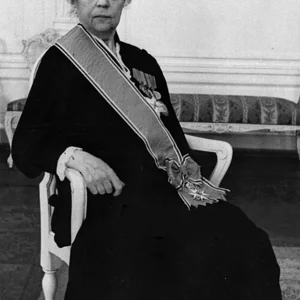
An English woman of the 14th century known for a legal document of 1380 by which she released the poet Geoffrey Chaucer from all prosecution for “raptus.” This document, rediscovered by scholars, fuels a historical debate on the status of women and the nature of the incident.
Cecilia Chaumpaigne
Cecilia Chaumpaigne
8 min read
Frequently asked questions
Key Facts
- 1380: Cecilia Chaumpaigne signs a deed of release freeing Geoffrey Chaucer from all prosecution related to a “raptus”
- The Latin term raptus can refer to rape, abduction, or seduction alike, which fuels the historical debate
- The document was rediscovered in the English archives and reignited biographical research on Chaucer in the 20th century
- She represents one of the rare ordinary women whose name has survived to us through the sole trace of a medieval legal document
Works & Achievements
A legal document in which Cecilia Chaumpaigne released Geoffrey Chaucer from all prosecution for raptus. It is the only direct trace left by this woman in the historical record, preserved at the British national archives (The National Archives, C 54/219).
A more explicit deed uncovered by scholar Christopher Cannon in the London archives, in which Cecilia relinquished all right of action against Chaucer. Its publication in the journal Speculum lastingly reignited debate about the nature of the incident.
While Cecilia Chaumpaigne was not the author of this work, the 1380 deed is inseparable from the biography of the Chaucer who wrote it. Some scholars have looked within these texts for literary traces of the incident, particularly in the figure of the Wife of Bath and her speeches on male domination.
Anecdotes
On 4 May 1380, Cecilia Chaumpaigne appeared before the Royal Court of Chancery in London and signed a legal document releasing the poet Geoffrey Chaucer from all charges of “raptus.” This document, recorded in the kingdom’s Close Rolls, constitutes virtually everything history has preserved about this woman, whose dates of birth and death remain unknown.
The Latin term “raptus” inscribed in the 1380 document lies at the heart of an intense historical debate since the record was rediscovered. In medieval English law, the word could mean rape, abduction, or the forcible seizure of a person; historians remain deeply divided over its precise meaning here, making any judgment about the incident particularly difficult.
In 1993, historian Christopher Cannon discovered in the London archives a second, more explicit document in which Cecilia relinquished all “right of action” against Chaucer. This finding reignited fierce controversy in the literary scholarship community and prompted a reassessment of the biography of the father of English poetry.
Two men, Richard Goodchild and John Grove, also signed similar documents releasing Chaucer from legal action around the same time. Some historians see in this the traces of a financial settlement arranged to suppress a compromising affair — a common practice in medieval out-of-court resolutions.
The Chaumpaigne–Chaucer affair illustrates the precarious legal standing of women in fourteenth-century England. Under common law, a married woman could not bring suit independently, and even an unmarried woman had little recourse against an influential figure like Chaucer, who was both a court poet and the royal customs controller.
Primary Sources
Cecilia Chaumpaigne has remised, released, and entirely discharged Geoffrey Chaucer from all manner of actions, as well of raptus as of all other things or causes whatsoever.
Cecilia Chaumpaigne releases Geoffrey Chaucer from all right of legal action she might have had or brought against him, of whatever nature.
Richard Goodchild and John Grove release Geoffrey Chaucer from all legal actions, in connection with the same circumstances mentioned by Cecilia Chaumpaigne.
The Close Rolls preserve numerous private legal deeds enrolled at the Royal Chancery, including quitclaims, contracts, and releases from prosecution for various parties.
Key Places
The place where Cecilia Chaumpaigne's quitclaim deed was registered on 4 May 1380. The Chancery kept important legal records of the kingdom in the form of parchment rolls known as the Close Rolls.
The area of London where Chaucer lived from 1374 in an apartment above the city gate. It was in this London setting that the incident involving Cecilia Chaumpaigne is believed to have taken place.
The principal royal court handling major civil and criminal cases in medieval England. A prosecution for *raptus* could have been brought there had Cecilia Chaumpaigne not relinquished her rights through the 1380 deed.
The commercial and judicial heart where both protagonists lived and worked. In the fourteenth century, London had between 40,000 and 80,000 inhabitants and was the kingdom's foremost economic, political, and cultural centre.
Typical Objects

A legal document drawn up on prepared sheepskin, on which Cecilia Chaumpaigne had her renunciation of all claims against Chaucer recorded. This type of deed, enrolled in the royal Chancery, had the force of law and constituted irrefutable proof in the event of any future dispute.

Medieval legal documents were authenticated by a wax seal applied using a personal matrix. The seal guaranteed the identity of the signatory at a time when handwritten signatures were not yet in common use.

Voluminous series of parchment rolls kept by the English royal Chancery, in which private deeds and letters close were copied. It is precisely in these registers that Cecilia Chaumpaigne's deed was preserved and later discovered by modern historians.

Typical women's garments in fourteenth-century England: the cotte, a long fitted dress worn close to the body, topped by a sleeveless surcoat. The quality of the fabric — coarse wool or finely dyed cloth — immediately signalled the woman's social standing.

A medieval women's headdress covering the head and neck, worn by respectable women whether married or not. Wearing it signalled virtue and social respectability in fourteenth-century England.

The everyday light source for ordinary people in the Middle Ages, made from animal fat. It allowed Chancery scribes to continue drafting and copying legal documents after nightfall.
School Curriculum
Vocabulary & Tags
Key Vocabulary
Daily Life
Morning
A woman of modest or middling standing in fourteenth-century England rose early, at sunrise. She took part in morning prayers, then turned to the first household tasks of the day: lighting a peat or wood fire, and preparing the morning meal of brown bread, cheese, and light ale.
Afternoon
The afternoon was given over to textile work — spinning, weaving, or sewing — which made up the bulk of women's labour outside the aristocracy. Women in cities such as London might also tend a market stall, assist a craftsman husband in his shop, or work as laundresses or spinners for cloth merchants.
Evening
The evening was brief, as tallow candles were costly and smoky. The household gathered around the hearth to talk, listen to stories or songs, then retired early to bed. London's streets were notorious for being dangerous after the curfew announced by the ringing of parish bells.
Food
Ordinary Londoners ate bread (rye or wheat, depending on income), vegetables (onions, leeks, cabbages, turnips), salted or dried fish on fast days, and boiled meat on the rest. Light ale brewed at home or purchased from an alehouse keeper replaced the often impure water drawn from urban wells.
Clothing
Women wore a long fitted woollen kirtle, over which they threw a sleeveless surcoat when going out. The head was covered with a linen veil or wimple as a mark of respectability. The colour and fineness of the cloth signalled social rank: undyed coarse wool for the poor, fine dyed cloth (red madder, blue woad) for wealthier households.
Housing
In the city of London, women of modest means lived in narrow, two- or three-storey timber-framed houses, often shared with lodgers. Rooms were few, with earthen or stone floors and little light coming through small wooden-shuttered windows. Overcrowding was the norm in working-class districts, where families were crammed into one or two rooms.
Historical Timeline
Period Vocabulary
Liens externes & ressources
Références
Œuvres
Acte de quitclaim (Close Rolls, 4 mai 1380)
4 mai 1380
Second acte de libération (découvert par Christopher Cannon, 1993)
1380
Contes de Canterbury — contexte biographique (Geoffrey Chaucer)
vers 1386-1400