 flip
flipCachupa rica des jours de fête (Festive rich cachupa)
Cachupa rica des jours de fête (Festive rich cachupa)
Why this dish? Cachupa is THE national dish of Cape Verde, and the “rica” (rich, with meats and sausages) version is the one for special occasions. Cesária, generous and attached to Mindelo, loved to cook and entertain: rich cachupa was the dish of reunions, prepared the day before and simmered all night.
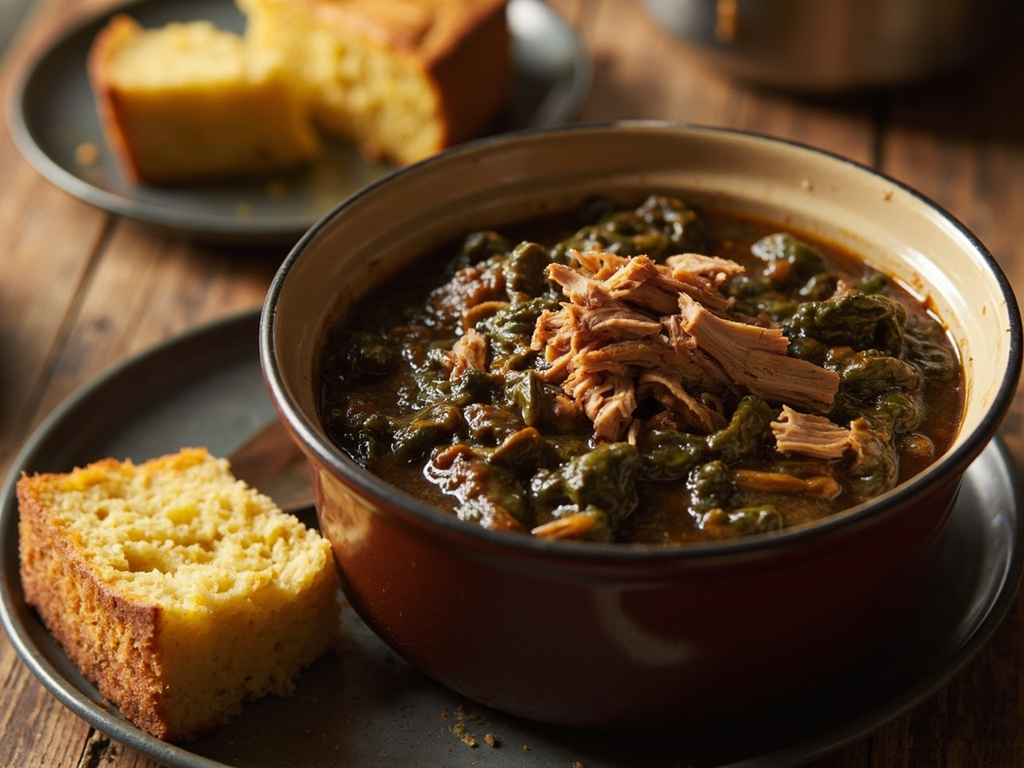
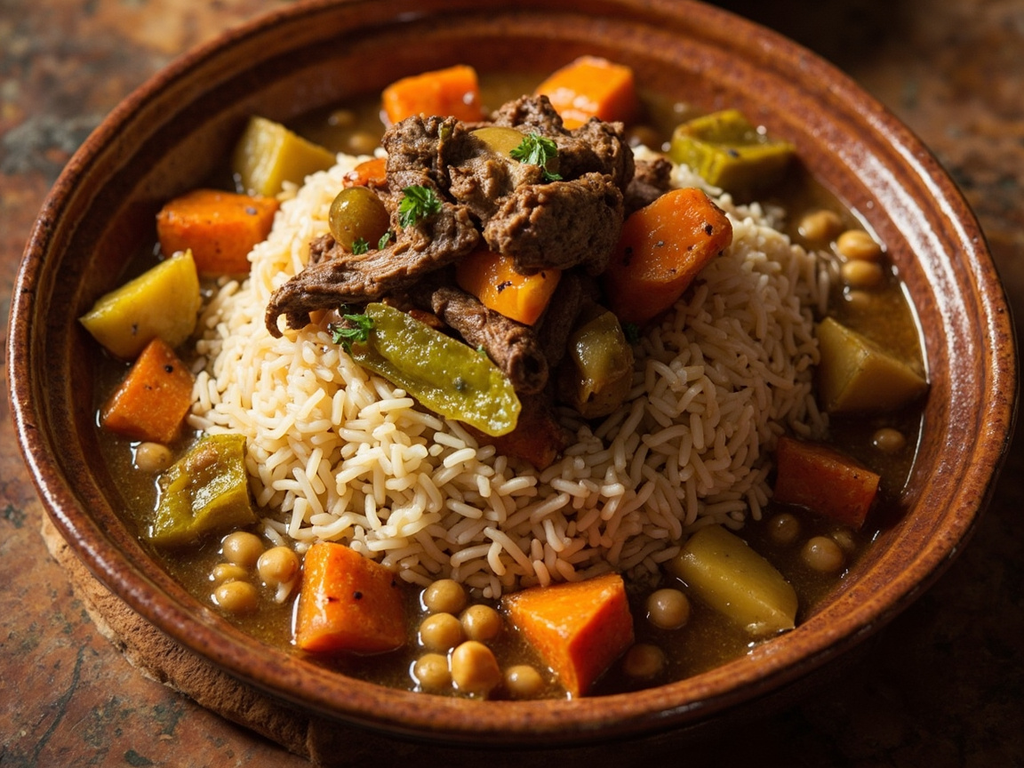
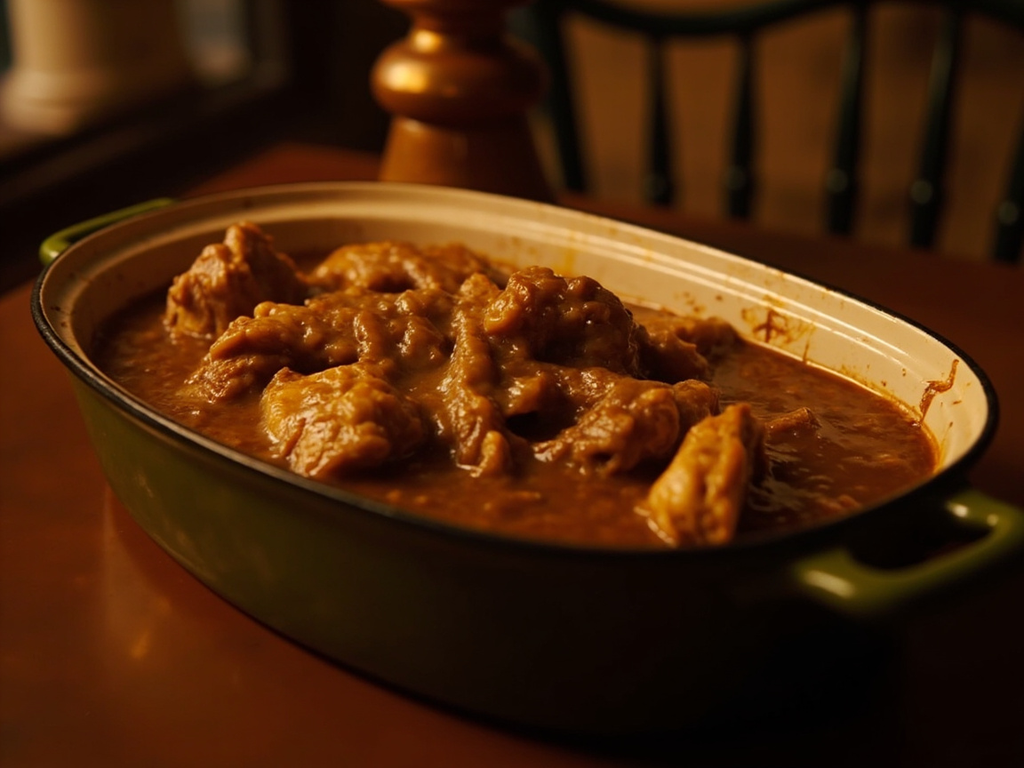
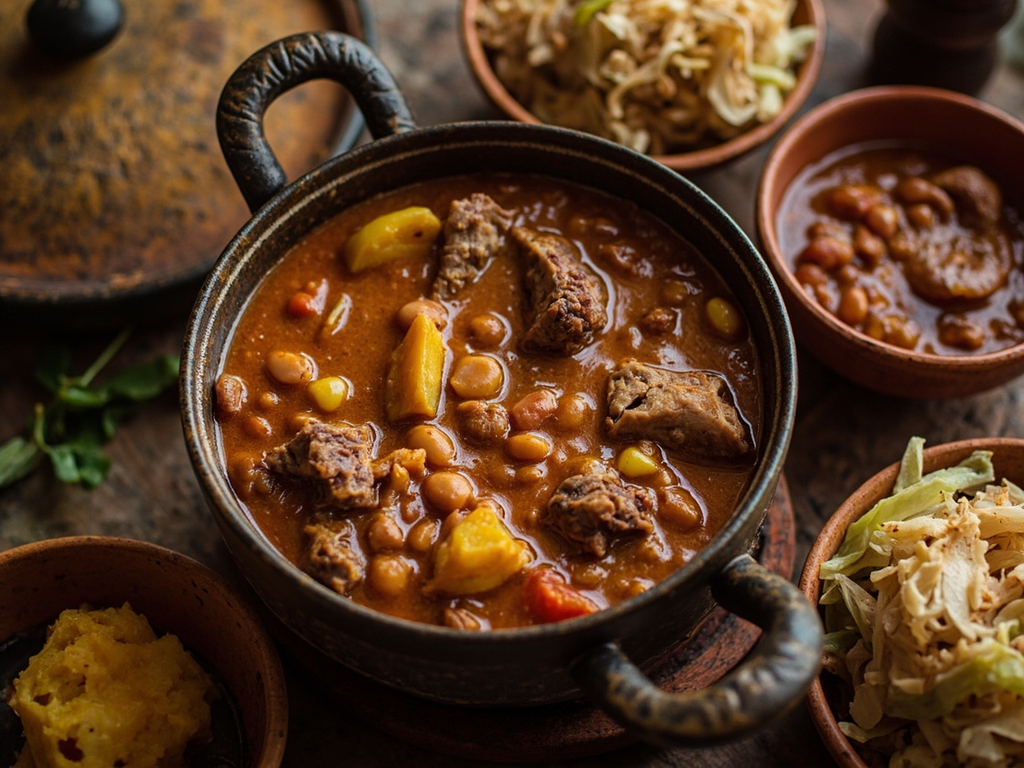
A slow, deep stew of crushed white corn and beans, enriched with several meats, smoked sausage, cabbage, and sweet potato. The dish simmers for hours until everything melts together into a thick, comforting texture.
Bô, vem cá, sit down, I'll serve you. Cachupa, my girl, can't be rushed — like morna, it takes its time. I soak the milho the night before, and the next day it sings softly on the fire while I smoke my cigarette. At my house in Mindelo, we don't ask how many are coming: we always make enough for twice as many, because an open door means one more mouth to feed. Taste it, and you'll understand why I came back home when the whole world wanted to keep me.
- •Maïs blanc concassé (milho) — un grand bol, trempé la veille (base céréalière du plat)
- •Haricots (feijão pedra, feijão congo) — deux poignées, trempés (légumineuses, liant et protéines)
- •Porc et bœuf en morceaux — selon ce qu'on a (viandes mijotées)
- •Saucisse fumée (linguiça) — quelques tronçons (saveur fumée signature)
- •Chou, patate douce, manioc — à parts généreuses (légumes-racines)
- •Huile, oignon, ail, feuille de laurier — ce qu'il faut (assaisonnement)
Cachupa rica des jours de fête (Festive rich cachupa)
A slow, deep stew of crushed white corn and beans, enriched with several meats, smoked sausage, cabbage, and sweet potato. The dish simmers for hours until everything melts together into a thick, comforting texture.
Why this dish? Cachupa is THE national dish of Cape Verde, and the “rica” (rich, with meats and sausages) version is the one for special occasions. Cesária, generous and attached to Mindelo, loved to cook and entertain: rich cachupa was the dish of reunions, prepared the day before and simmered all night.
Bô, vem cá, sit down, I'll serve you. Cachupa, my girl, can't be rushed — like morna, it takes its time. I soak the milho the night before, and the next day it sings softly on the fire while I smoke my cigarette. At my house in Mindelo, we don't ask how many are coming: we always make enough for twice as many, because an open door means one more mouth to feed. Taste it, and you'll understand why I came back home when the whole world wanted to keep me.
Ingredients (period version)
- Maïs blanc concassé (milho) — un grand bol, trempé la veille (base céréalière du plat)
- Haricots (feijão pedra, feijão congo) — deux poignées, trempés (légumineuses, liant et protéines)
- Porc et bœuf en morceaux — selon ce qu'on a (viandes mijotées)
- Saucisse fumée (linguiça) — quelques tronçons (saveur fumée signature)
- Chou, patate douce, manioc — à parts généreuses (légumes-racines)
- Huile, oignon, ail, feuille de laurier — ce qu'il faut (assaisonnement)
Ingredients
- Maïs blanc concassé (ou maïs hominy) — 300 g, trempé 12 h (base céréalière)
- Mélange de haricots secs (rouges, blancs) — 200 g, trempés 12 h (légumineuses)
- Échine de porc — 300 g (viande)
- Jarret de bœuf — 300 g (viande, donne le bouillon)
- Saucisse fumée type chorizo doux ou linguiça — 150 g (saveur fumée)
- Chou vert — 1/2 (légume)
- Patate douce + manioc — 1 de chaque (légumes-racines)
- Oignon, 3 gousses d'ail, 2 feuilles de laurier, huile d'olive — 1 oignon, le reste (fond aromatique)
Method
- The day before, separately soak the crushed corn and beans in large volumes of cold water.
- Drain, put corn and beans in a large pot, cover generously with water and bring to a simmer.
- After one hour, add the beef and pork, bay leaf, salt; simmer on low heat for 1 hour 30 minutes.
- Make a refogado: sauté onion and garlic in oil, add to the pot with the smoked sausage.
- Add cabbage, sweet potato, and cassava in chunks; cook for 45 minutes until everything is tender and the broth has thickened.
- Adjust salt, let rest: cachupa is better when it has 'waited.'
How it was made : Born from the encounter of corn brought from America after the 16th century and Portuguese and West African stewing techniques, cachupa used to cook all night in a cast-iron pot over embers. Each family has its own version based on what they can afford: 'pobre' (poor, without meat) or 'rica.'
The contemporary twist : Serve the rich cachupa in a large central dish to share, with a bottle of grogue on the side, and let everyone help themselves — just like at Cesária's table.
Cesária Évora · Charactorium