 flip
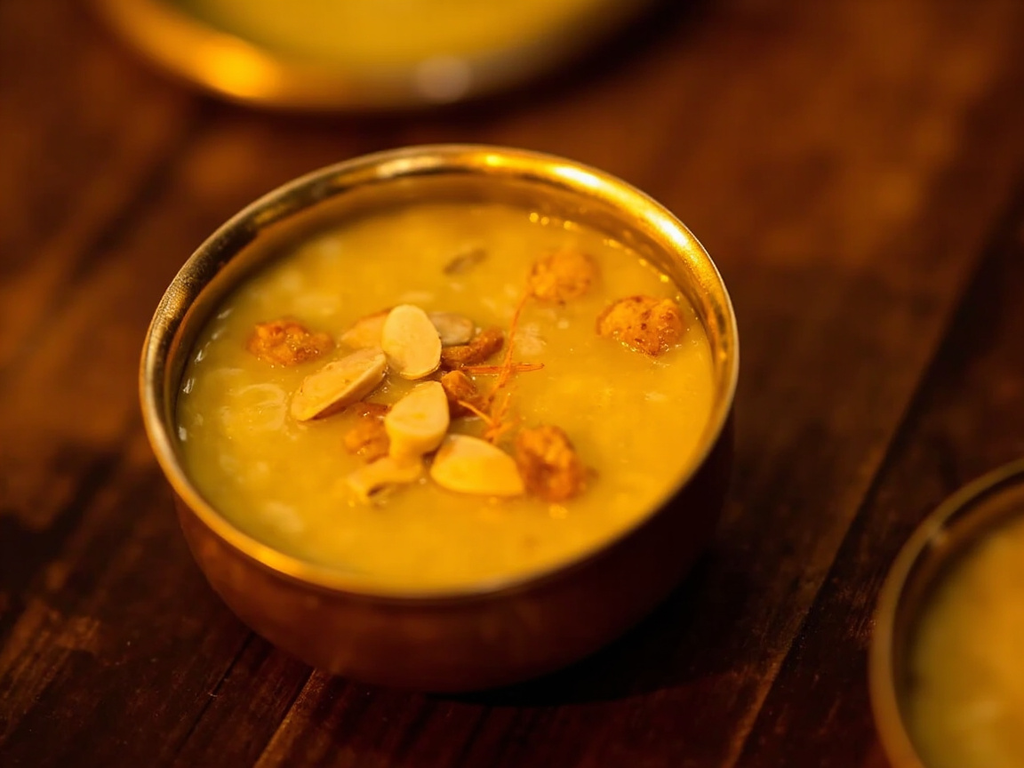
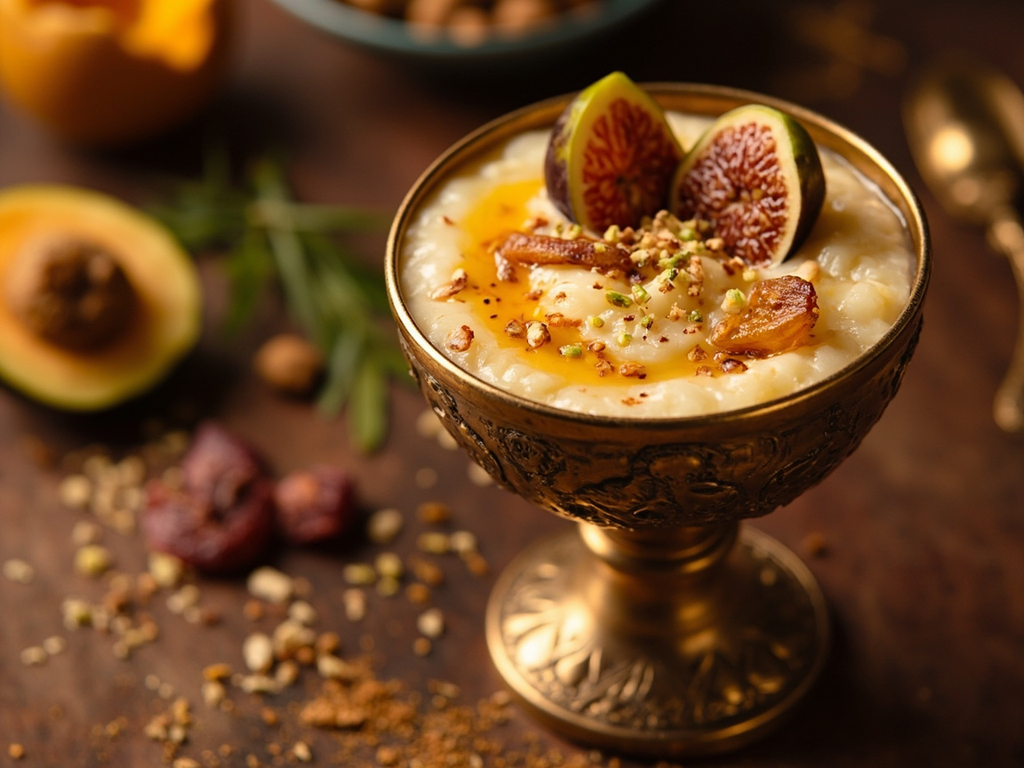
flipRice with Fruits, Milk and Ghee from the Royal Banquet (Ancestral Kheer)
Rice with Fruits, Milk and Ghee from the Royal Banquet (Ancestral Kheer)
Why this dish? Milk, rice, and sugarcane sugar abounded at the Maurya court, and sweet dairy dishes held the status of royal food and offering. At the banquets of Pataliputra where Chandragupta received his generals and his minister Kautilya, a perfumed rice-milk porridge was the ceremonial sweet.
Rice slowly simmered in milk until thickened, sweetened with sugarcane sugar (gur), perfumed with cardamom, and enriched with dried mango and fig pieces. The direct ancestor of kheer.
Approach, guest of my house. When my captains returned victorious from the Indus, I had rice cooked in milk brought to my table until it became thick like molten gold. The sugar of the cane is crumbled in, the fragrant cardamom is thrown, and the mango from our orchards for joy. This is the sweetness of kings, that which is also offered to the gods: take it, and let your tongue know the six tastes as an empire knows its six borders.
- •Rice — a small handful (base)
- •Milk — in abundance (cooking medium)
- •Sugarcane sugar (gur/jaggery) — to taste (sweetener)
- •Cardamom — a few pods (flavor)
- •Dried mango — a few strips (fruit)
- •Figs — a few (fruit)
- •Ghee — a spoonful (richness)
Rice with Fruits, Milk and Ghee from the Royal Banquet (Ancestral Kheer)
Rice slowly simmered in milk until thickened, sweetened with sugarcane sugar (gur), perfumed with cardamom, and enriched with dried mango and fig pieces. The direct ancestor of kheer.
Why this dish? Milk, rice, and sugarcane sugar abounded at the Maurya court, and sweet dairy dishes held the status of royal food and offering. At the banquets of Pataliputra where Chandragupta received his generals and his minister Kautilya, a perfumed rice-milk porridge was the ceremonial sweet.
Approach, guest of my house. When my captains returned victorious from the Indus, I had rice cooked in milk brought to my table until it became thick like molten gold. The sugar of the cane is crumbled in, the fragrant cardamom is thrown, and the mango from our orchards for joy. This is the sweetness of kings, that which is also offered to the gods: take it, and let your tongue know the six tastes as an empire knows its six borders.
Ingredients (period version)
- Rice — a small handful (base)
- Milk — in abundance (cooking medium)
- Sugarcane sugar (gur/jaggery) — to taste (sweetener)
- Cardamom — a few pods (flavor)
- Dried mango — a few strips (fruit)
- Figs — a few (fruit)
- Ghee — a spoonful (richness)
Ingredients
- Basmati rice — 80 g (base)
- Whole milk — 1 liter (cooking medium)
- Jaggery (whole cane sugar) — 80 g (sweetener)
- Green cardamom — 4 pods, crushed (flavor)
- Dried mango — 30 g, in strips (fruit)
- Dried figs — 4, chopped (fruit)
- Ghee — 1 tbsp (richness)
- Crushed pistachios — 1 tbsp (garnish)
Method
- Rinse rice and sauté in ghee for 1 minute.
- Pour in milk, bring to a simmer, and cook on very low heat for 40 minutes, stirring often, until the rice dissolves and the milk reduces.
- Add dried mango and figs halfway through cooking so they plump up.
- Off heat (to prevent curdling), stir in crumbled jaggery and cardamom; stir until dissolved.
- Let cool slightly; the porridge will thicken further.
- Serve warm or chilled, sprinkled with pistachios.
How it was made : Payasam/kheer is mentioned in ancient Indian texts. It was cooked over a wood fire in large bronze cauldrons, sweetened with gur because refined white sugar came later. No New World dried fruits: mango, fig, and cardamom are all indigenous or anciently traded.
The contemporary twist : Served chilled in a cup, topped with a fan of fresh mango: kheer reimagined as a summer dessert.
Chandragupta Maurya · Charactorium