 flip
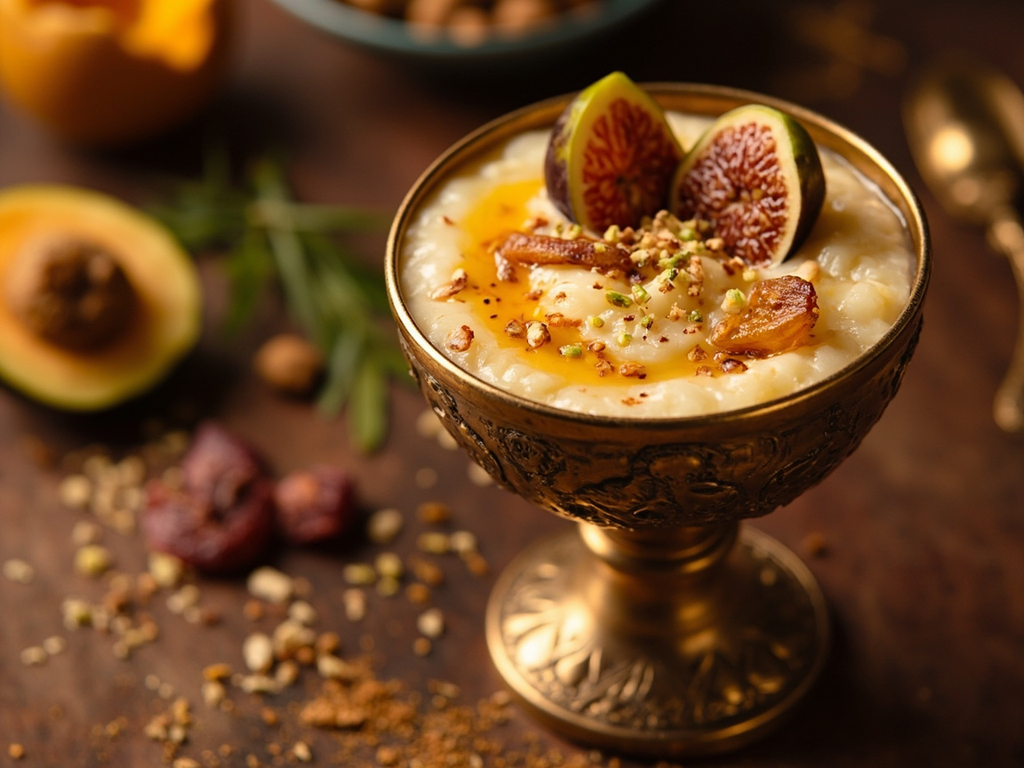
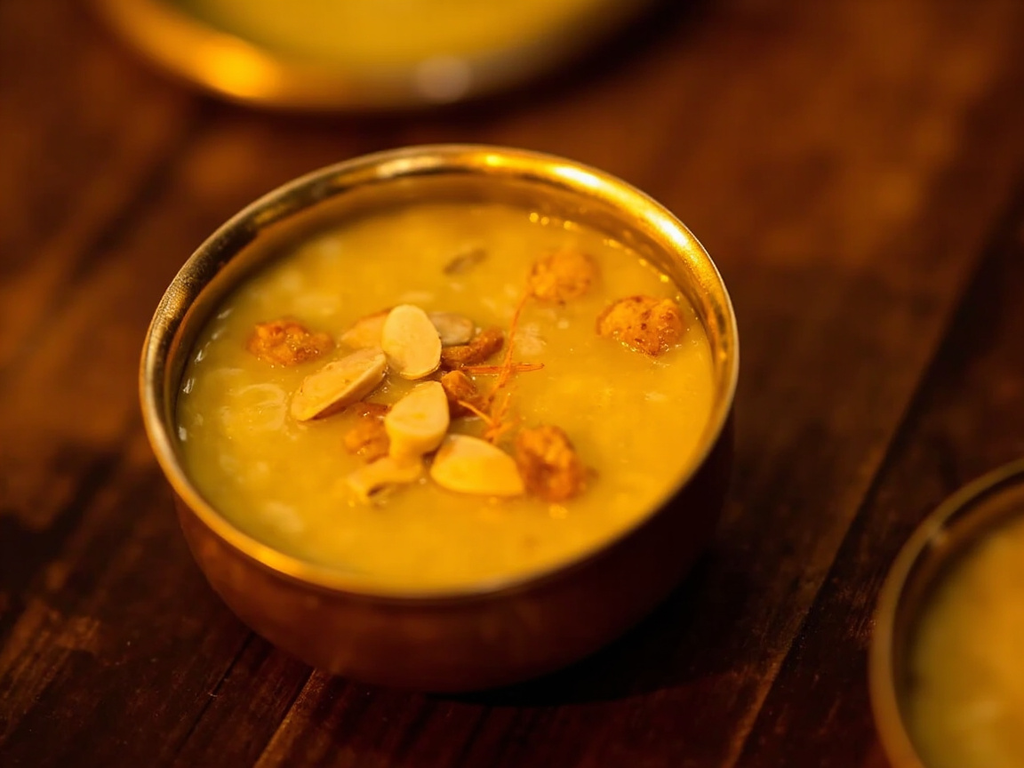
flipPāyasa — rice pudding with cane sugar and cardamom
Pāyasa — rice pudding with cane sugar and cardamom
Why this dish? Pāyasa is THE sacred dish of Buddhism: it is a bowl of rice pudding (kheer) that the young Sujata offered to the Buddha before his Enlightenment. For Ashoka, the first great Buddhist emperor, this milk dessert is the dish of dhamma festivals and offerings to the sangha.
Rice slowly melted in milk until thick and creamy, sweetened with jaggery, perfumed with cardamom and saffron, and studded with raisins and almonds. A comforting sweet dessert, loaded with spiritual meaning.
Do you know, friend, that before his Enlightenment the Sublime One received from a woman a simple bowl of rice cooked in milk? Such is the offering I have carried to the monks, and that is served at my table on dhamma festival days. Let the grain soften long in the milk until it becomes thick as patience; sweeten it with the juice of the cane, perfume it with cardamom. Offer the first portion to one who has nothing: thus sugar also nourishes the soul.
- •Rice (taṇḍula) — a handful (grain)
- •Milk (kshira) — plenty (base)
- •Cane sugar / jaggery (śarkarā, guḍa) — to taste (sweetener)
- •Cardamom (ela) — a few pods (flavor)
- •Saffron (kunkuma) — a few threads (color, aroma)
- •Raisins (drākṣā) — a pinch (garnish)
Pāyasa — rice pudding with cane sugar and cardamom
Rice slowly melted in milk until thick and creamy, sweetened with jaggery, perfumed with cardamom and saffron, and studded with raisins and almonds. A comforting sweet dessert, loaded with spiritual meaning.
Why this dish? Pāyasa is THE sacred dish of Buddhism: it is a bowl of rice pudding (kheer) that the young Sujata offered to the Buddha before his Enlightenment. For Ashoka, the first great Buddhist emperor, this milk dessert is the dish of dhamma festivals and offerings to the sangha.
Do you know, friend, that before his Enlightenment the Sublime One received from a woman a simple bowl of rice cooked in milk? Such is the offering I have carried to the monks, and that is served at my table on dhamma festival days. Let the grain soften long in the milk until it becomes thick as patience; sweeten it with the juice of the cane, perfume it with cardamom. Offer the first portion to one who has nothing: thus sugar also nourishes the soul.
Ingredients (period version)
- Rice (taṇḍula) — a handful (grain)
- Milk (kshira) — plenty (base)
- Cane sugar / jaggery (śarkarā, guḍa) — to taste (sweetener)
- Cardamom (ela) — a few pods (flavor)
- Saffron (kunkuma) — a few threads (color, aroma)
- Raisins (drākṣā) — a pinch (garnish)
Ingredients
- Basmati or short-grain rice — 80 g (grain)
- Whole milk — 1 litre (base)
- Jaggery (whole cane sugar) or brown sugar — 80-100 g (sweetener)
- Ground green cardamom — 1/2 tsp (flavor)
- Saffron — 1 pinch (color, aroma)
- Slivered almonds and raisins — 2 tbsp (garnish)
Method
- Rinse the rice and soak for 15 minutes.
- Bring the milk to a simmer with the saffron, add the drained rice.
- Cook on low heat for 35-45 minutes, stirring often to prevent sticking, until thick and creamy.
- Add the jaggery off the boil, stir until dissolved, then the cardamom.
- Mix in raisins and almonds, serve warm or chilled.
How it was made : Sweet rice pudding is one of the oldest and most continuously attested desserts in India, inseparable from the story of the Buddha's Enlightenment. It was sweetened with jaggery or cane sugar, never modern refined sugar. Saffron came from Kashmir via trade routes.
The contemporary twist : Serve in warm verrines, a saffron thread placed on the surface evoking the saffron robe of monks.
Sources : Story of Sujata's offering to the Buddha (Buddhist tradition, Lalitavistara) · K.T. Achaya, A Historical Dictionary of Indian Food, Oxford University Press, 1998
Ashoka · Charactorium