 flip
flipSpelt Porridge with Honey and Sage
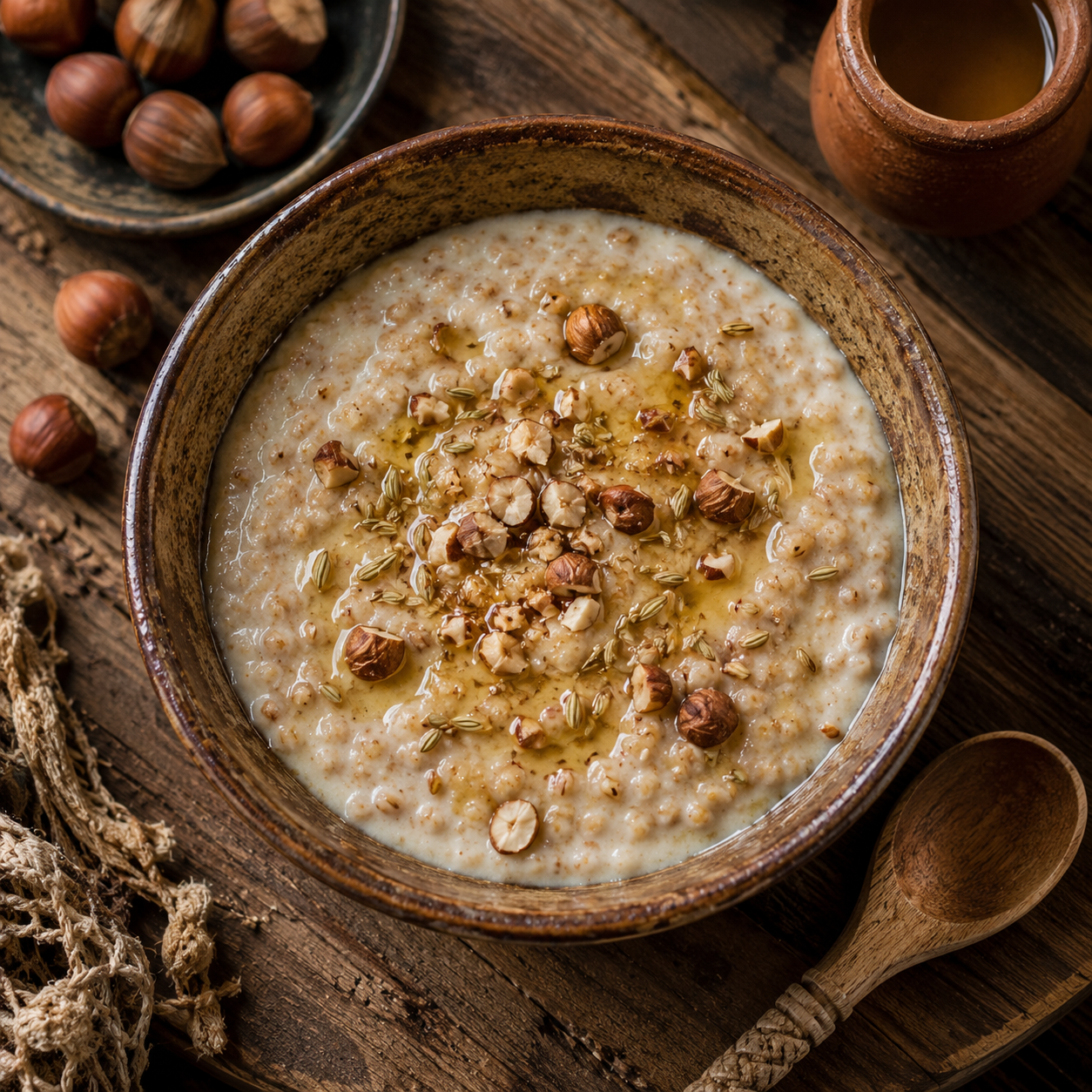
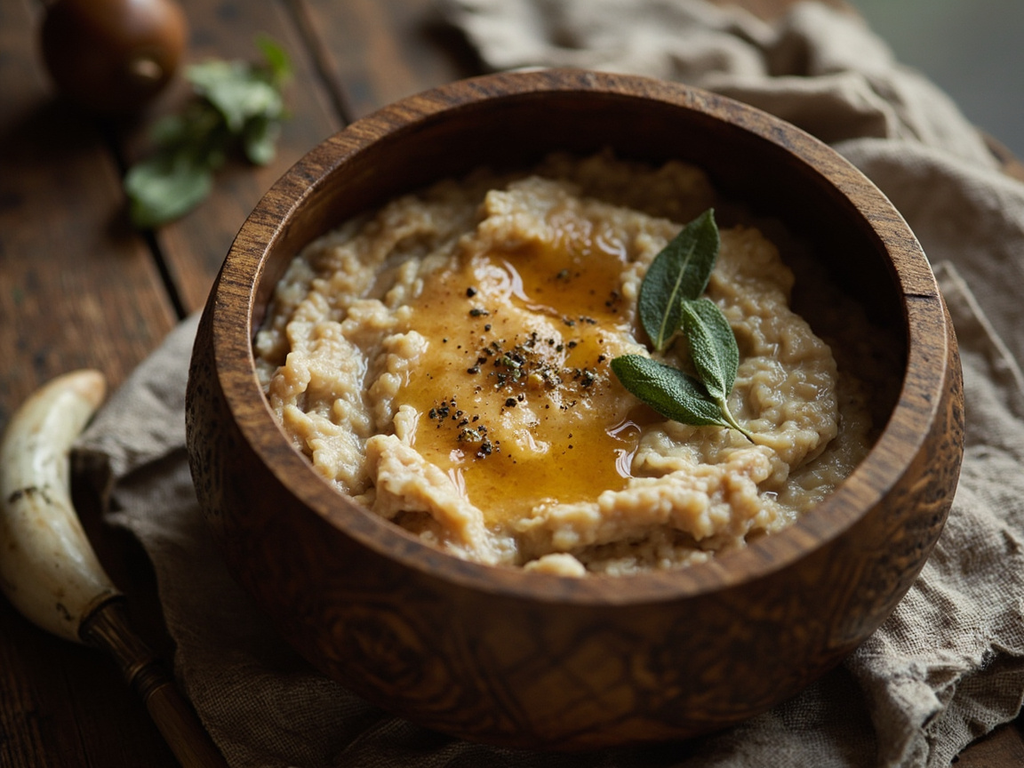
Spelt Porridge with Honey and Sage
Why this dish? Before girding on his sword and riding behind Charlemagne, a paladin eats like the rest of the Frankish host: cereal porridges that fill a warrior's belly. This is the dish of campaign mornings, shared in camp under the banner.
A thick spelt porridge cooked slowly, sweetened with a drizzle of honey and flavored with sage from the garden. Hearty and simple, it is the foundation of Frankish diet, from peasant to knight.
Hark, friend: before the great sword-strokes, the belly must be filled. At dawn in camp, my sergeants would boil the spelt in the cauldron until it grew thick as clay. A little salt, a spoonful of the Emperor's honey, three sage leaves plucked from the garden, and there you have what keeps you in the saddle all day. By my faith, no prince's roast is worth this porridge when the cold bites and the road is long.
- •Spelt grains — a good bowlful (grain base)
- •Water or milk — enough to cover generously (cooking liquid)
- •Honey — a spoonful (sweetness)
- •Fresh sage — a few leaves (flavoring)
- •Salt — a pinch (seasoning)
Spelt Porridge with Honey and Sage
A thick spelt porridge cooked slowly, sweetened with a drizzle of honey and flavored with sage from the garden. Hearty and simple, it is the foundation of Frankish diet, from peasant to knight.
Why this dish? Before girding on his sword and riding behind Charlemagne, a paladin eats like the rest of the Frankish host: cereal porridges that fill a warrior's belly. This is the dish of campaign mornings, shared in camp under the banner.
Hark, friend: before the great sword-strokes, the belly must be filled. At dawn in camp, my sergeants would boil the spelt in the cauldron until it grew thick as clay. A little salt, a spoonful of the Emperor's honey, three sage leaves plucked from the garden, and there you have what keeps you in the saddle all day. By my faith, no prince's roast is worth this porridge when the cold bites and the road is long.
Ingredients (period version)
- Spelt grains — a good bowlful (grain base)
- Water or milk — enough to cover generously (cooking liquid)
- Honey — a spoonful (sweetness)
- Fresh sage — a few leaves (flavoring)
- Salt — a pinch (seasoning)
Ingredients
- Hulled spelt — 200 g (grain base)
- Milk (or water) — 700 ml (cooking liquid)
- Honey — 1 to 2 tbsp (sweetness)
- Fresh sage — 4 leaves, finely chopped (flavoring)
- Salt — 1 pinch (seasoning)
Method
- Soak the spelt for a few hours to reduce cooking time.
- Place it in a saucepan with the milk (or water) and a pinch of salt.
- Cook over low heat for 40–50 minutes, stirring often, until thick and creamy.
- Remove from heat and stir in the honey and chopped sage.
- Serve hot in a wooden or earthenware bowl.
How it was made : *Puls* (cereal porridge) was a staple since antiquity and remained so throughout the early Middle Ages. It was cooked in a cauldron over the fire with spelt, barley, or millet, depending on region and season. Honey provided rare sweetness; salt and garden herbs did the rest.
The contemporary twist : Served in a deep bowl, topped with a brush-drawn veil of honey and a fried sage leaf: a knight's porridge dressed like today's porridge.
Sources : *Capitulare de villis* (c. 795), list of plants on Carolingian royal estates · Massimo Montanari, *The Culture of Food* (original Italian: *La fame e l'abbondanza*)
Roland · Charactorium