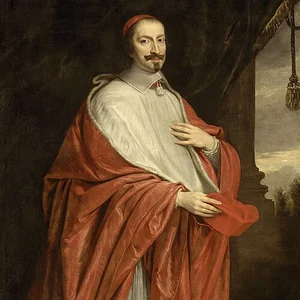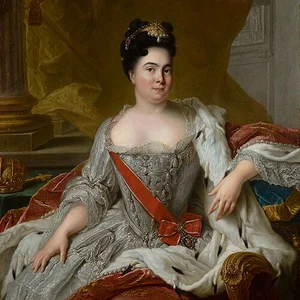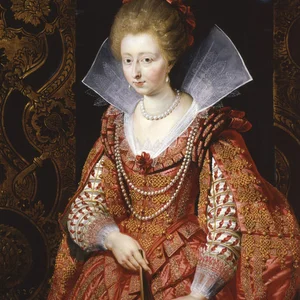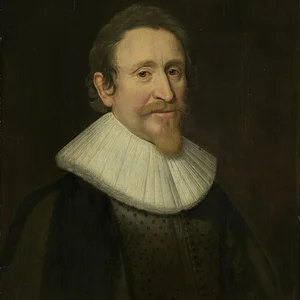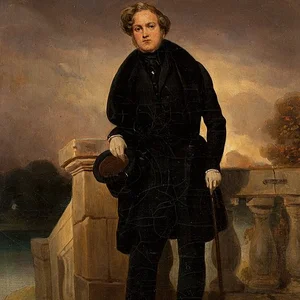

Charles de Mornay was a French-born Swedish court officer active in the 17th and 18th centuries. Of French noble origin, he established himself at the Swedish court during the era of great power (Stormaktstiden). He exemplifies the mobility of European noble elites across the great courts of the continent.
Charles de Mornay(1514 — 1574)
Charles de Mornay
7 min read
Frequently asked questions
Key Facts
- Member of the French noble family de Mornay, connected to the Huguenot Protestant sphere
- Servant of the Swedish court during Sweden's age of great power (Stormaktstiden, c. 1611–1718)
- Represents the phenomenon of noble elite circulation among Protestant courts across Europe
Works & Achievements
Like many Huguenot nobles, Charles de Mornay maintained an active correspondence with foreign courts and Protestant networks, weaving confessional alliances that were essential to the survival of the Reformed movement in France.
The Reformed political assemblies brought together Protestant nobles and pastors to organize the collective defense of their rights. The de Mornay family's participation in these bodies illustrates their confessional commitment and their role in organized resistance.
The management of family lands — collecting revenues, administering seigneurial justice, and protecting tenants — was the central activity of a sixteenth-century gentleman, forming the indispensable economic foundation of his political independence.
Anecdotes
Charles de Mornay arrived at the Swedish court during a period of profound transformation: Gustav Vasa had just broken Danish dominance and was seeking to surround himself with foreign diplomats capable of modernizing his kingdom. Mornay, a bearer of French Renaissance culture, was welcomed as a valuable asset in these reform efforts.
At the Stockholm court, Mornay witnessed the introduction of Lutheranism imposed by Gustav Vasa, who made the Church an instrument of royal power. This religious upheaval, experienced from the inside by courtiers, profoundly transformed the rituals and daily life of the Swedish court.
During diplomatic negotiations between Sweden and the European powers, Charles de Mornay played the role of cultural intermediary, well-versed in the codes of the French court and able to communicate with ambassadors from the great monarchies. His command of Latin and French made him an indispensable diplomatic asset.
The Swedish court under Erik XIV (1560–1568) was renowned for its splendor and intrigue. Mornay was a contemporary witness to the political tensions that led to the deposition of Erik XIV, accused of madness, and the accession of Johan III in 1568 — a striking episode illustrating the fragility of power even in the most seemingly stable monarchies.
Primary Sources
The Swedish diplomatic archives of the 16th century contain traces of the activity of foreign court officers, some of French origin, serving in administrative and correspondence roles under the Vasa dynasty.
The royal chancellery registers attest to the mediating role played by certain courtiers of French origin established in Stockholm, charged with drafting and transmitting diplomatic dispatches.
The deliberations of the 1527 Riksdag established the Lutheran Reformation in Sweden and the confiscation of ecclesiastical property. The foreign court officers present at that time were direct witnesses to this fundamental rupture.
The chaplain Peder Svart describes the modernization of the Swedish court under Gustav Vasa, mentioning the use of foreign advisers to strengthen royal administration and relations with European courts.
Key Places
Capital of the Kingdom of Sweden and seat of the Vasa court. It was here that Charles de Mornay carried out most of his administrative and diplomatic duties, at the very heart of Swedish power.
The religious and intellectual center of Sweden, Uppsala was home to the archbishopric and a nascent university. Court officials would stay there for major religious ceremonies and ecclesiastical affairs.
A royal residence of the Vasas and the setting for many key political events of the 16th century. It was here, notably, that Erik XIV was imprisoned following his deposition in 1568, in the presence of court officials.
An indispensable Hanseatic city for commercial and diplomatic relations around the Baltic Sea. Swedish diplomatic missions frequently passed through it, and an official such as Mornay may well have stayed there.
The likely birthplace or place of education of Mornay, Paris was the home of the French Renaissance culture he embodied, and the center of Franco-Swedish diplomatic contacts.
Typical Objects

An essential instrument for any administrative officer, the seal authenticated official documents. Mornay used a seal bearing the arms of his office to validate diplomatic correspondence and royal acts.

A book in which diplomatic letters were copied or catalogued. An officer like Mornay kept these registers up to date to ensure continuity in relations between Sweden and other European courts.

Nautical and terrestrial charts were indispensable at a court oriented toward the Baltic Sea and maritime trade. Mornay consulted them to follow the geopolitical stakes of the region.

Court dress followed French and Italian Renaissance fashions: embroidered doublet, hose, and fur-lined cloak. As a courtier of French origin, Mornay wore clothing that signaled his rank and refined European culture.

After the Reformation, Protestant courts such as Sweden's adopted translated Bibles and Lutheran devotional books. Mornay, moving in this reformed milieu, almost certainly owned a copy.

Court banquets were occasions for diplomacy and the assertion of prestige. Cups of precious metal, exchanged as diplomatic gifts, were common objects in the entourage of a high-ranking officer.
School Curriculum
Vocabulary & Tags
Key Vocabulary
Tags
Daily Life
Morning
The day of a Swedish court officer in the sixteenth century began early with a collective Lutheran prayer, the Reformation having transformed the court's religious rituals. Mornay would then join the royal apartments to attend the king's levee and receive his instructions for the day.
Afternoon
The afternoon was devoted to administrative duties: drafting diplomatic correspondence in Latin or French, reading dispatches from other European courts, and meeting with royal councillors. Mornay's command of languages and diplomatic protocols made him an essential cog in the chancellery.
Evening
Evenings at the Vasa court often unfolded amid banquets or assemblies where politics, religion, and culture were debated. Mornay, a cultivated courtier of French origin, contributed to these exchanges and took part in the entertainments — music, card games, or readings aloud.
Food
The sixteenth-century Swedish royal table was rich in fish from the Baltic Sea (herring, pike), smoked meats, and local ales. Mornay, accustomed to French cuisine, adapted to these Nordic specialities while perhaps introducing culinary refinements during diplomatic receptions.
Clothing
Court dress followed the fashions of the European Renaissance: embroidered doublets, trunk hose, and fur-lined cloaks indispensable against Sweden's harsh winters. Mornay wore garments that signalled his rank while also reflecting his French origins and upbringing.
Housing
Court officers resided in or near the royal palaces, most notably Stockholm Castle (Tre Kronor). These apartments, though more austere than those of southern courts, were heated by imposing fireplaces and furnished to the standards expected of the European nobility.
Historical Timeline
Period Vocabulary
Liens externes & ressources
Références
Œuvres
Réseau de correspondances avec les cours protestantes d'Europe
1555-1574
Participation aux assemblées politiques huguenotes
1562-1574
Administration du domaine seigneurial
1540-1574