 flip
flipLarder salt pork
Larder salt pork
Why this dish? Before the cold came, every well-off Parisian household stocked its larder with salted meats to get through the winter without depending on the market. This salted meat, later cooked with cabbage or lentils, was the reliable staple of a household like Perrault's, a father of a large family.
A pork belly long rubbed with salt, saltpeter, and aromatics, which keeps for weeks, then is gently cooked with vegetables. The preservation reflex before the refrigerator.
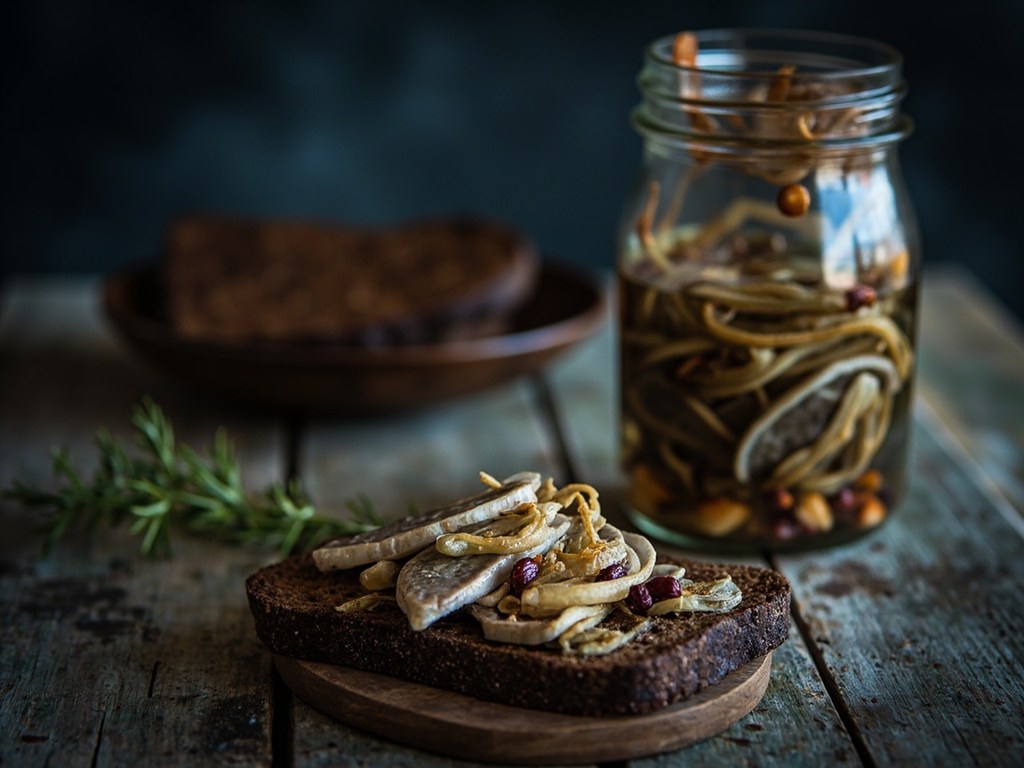
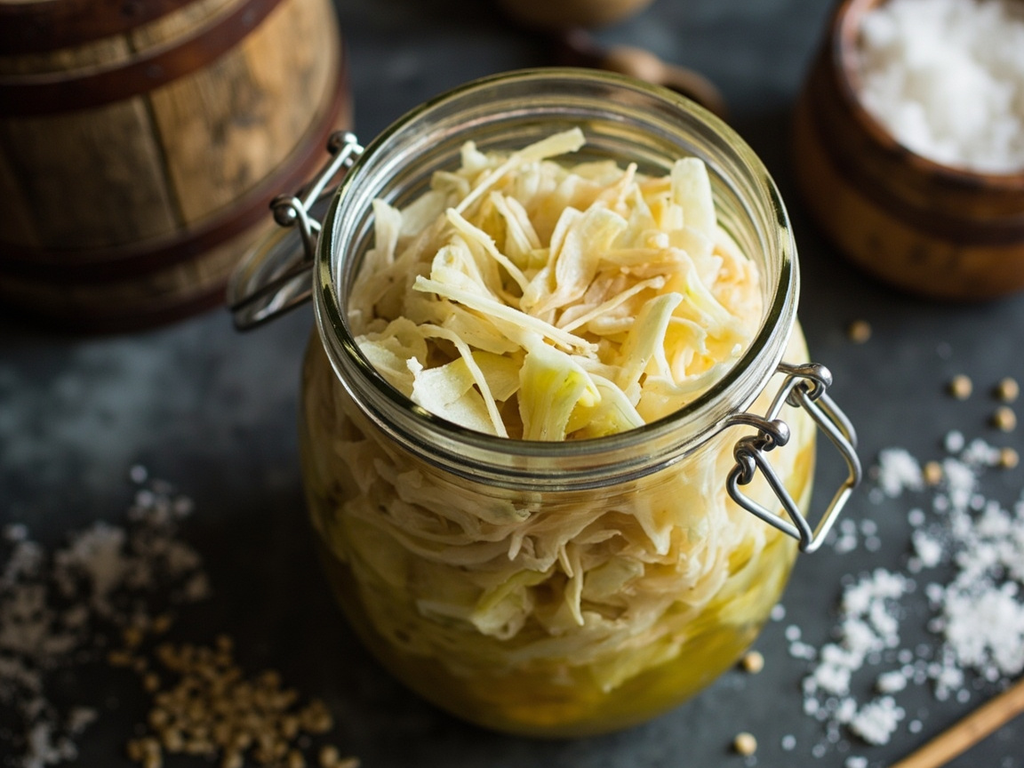
Before winter closes the roads and makes everything dear at market, the provident man stocks his larder. Take a fine piece of pork, rub it with coarse salt without sparing, add bay, juniper, thyme from the garrigue, and let the salt do its slow work in a cool vat. In the depth of the bad season, you will desalt it in clear water and let it simmer with cabbages: here is a dish that costs nothing and feeds an entire household. Wisdom, you see, is cooked in advance.
- •Pork belly — a fine piece (meat)
- •Coarse salt — abundantly (preservation)
- •Saltpeter — a pinch (color and keeping)
- •Juniper berries — a handful (aromatic)
- •Bay and thyme — a few branches (aromatic)
- •Cabbage — according to the household (accompaniment)
Larder salt pork
A pork belly long rubbed with salt, saltpeter, and aromatics, which keeps for weeks, then is gently cooked with vegetables. The preservation reflex before the refrigerator.
Why this dish? Before the cold came, every well-off Parisian household stocked its larder with salted meats to get through the winter without depending on the market. This salted meat, later cooked with cabbage or lentils, was the reliable staple of a household like Perrault's, a father of a large family.
Before winter closes the roads and makes everything dear at market, the provident man stocks his larder. Take a fine piece of pork, rub it with coarse salt without sparing, add bay, juniper, thyme from the garrigue, and let the salt do its slow work in a cool vat. In the depth of the bad season, you will desalt it in clear water and let it simmer with cabbages: here is a dish that costs nothing and feeds an entire household. Wisdom, you see, is cooked in advance.
Ingredients (period version)
- Pork belly — a fine piece (meat)
- Coarse salt — abundantly (preservation)
- Saltpeter — a pinch (color and keeping)
- Juniper berries — a handful (aromatic)
- Bay and thyme — a few branches (aromatic)
- Cabbage — according to the household (accompaniment)
Ingredients
- Pork belly — 1 kg (meat)
- Coarse salt — 500 g (preservation)
- Curing salt (optional) — 1 teaspoon (color and keeping)
- Juniper berries — 1 tablespoon (aromatic)
- Bay leaves — 3 (aromatic)
- Thyme — a few sprigs (aromatic)
- Green cabbage — 1 (accompaniment)
Method
- Rub the pork belly with the salt mixture and crushed aromatics.
- Place it in a container, covered with salt, and refrigerate for 4 to 7 days (turning it each day).
- Rinse and desalt the meat in cold water for 12 to 24 hours, changing the water several times.
- Cook in simmering water with bay and juniper for about 1 hour 30 minutes.
- Add the shredded cabbage near the end of cooking and let it confit together for 30 minutes.
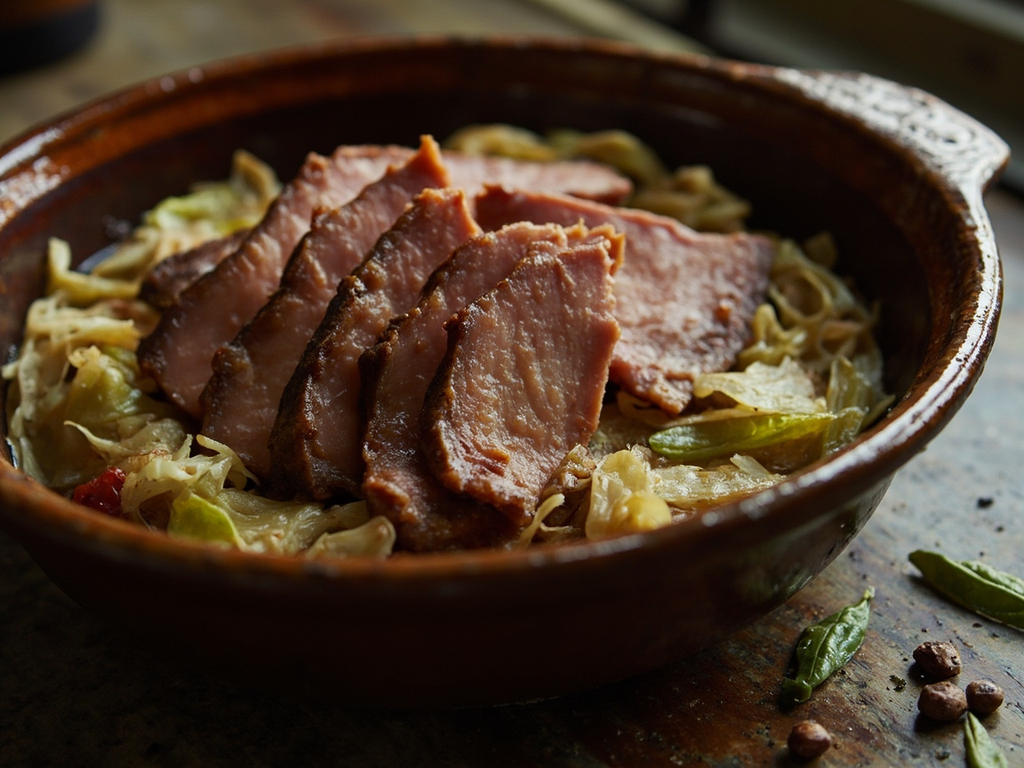
- Slice and serve hot with its cabbage.
How it was made : Without artificial cold, salting was THE meat preservation technique. Saltpeter (nitrate) kept the pink color and prevented spoilage; it was known empirically long before its chemistry was understood. Cities like Paris depended on these reserves to get through winter.
The contemporary twist : Pan-fry the desalted slices for caramelized crispness, served on a bed of buttery braised cabbage. Reduce the salting time to 3 days for a milder 'demi-sel'.
Sources : Nicolas de Bonnefons, Les Délices de la campagne, 1654 · La Varenne, Le Cuisinier françois, 1651
Charles Perrault · Charactorium