 flip
flipCaptain's Sauerkraut
Captain's Sauerkraut
Why this dish? Cook embarked dozens of barrels of sauerkraut on the Endeavour (1768). The sailors mistrusted it; he first had it served at the officers' table, and made it so desirable that the crew eventually demanded it. On his return, he had not lost a single man to scurvy — a resounding feat that won him a medal from the Royal Society.
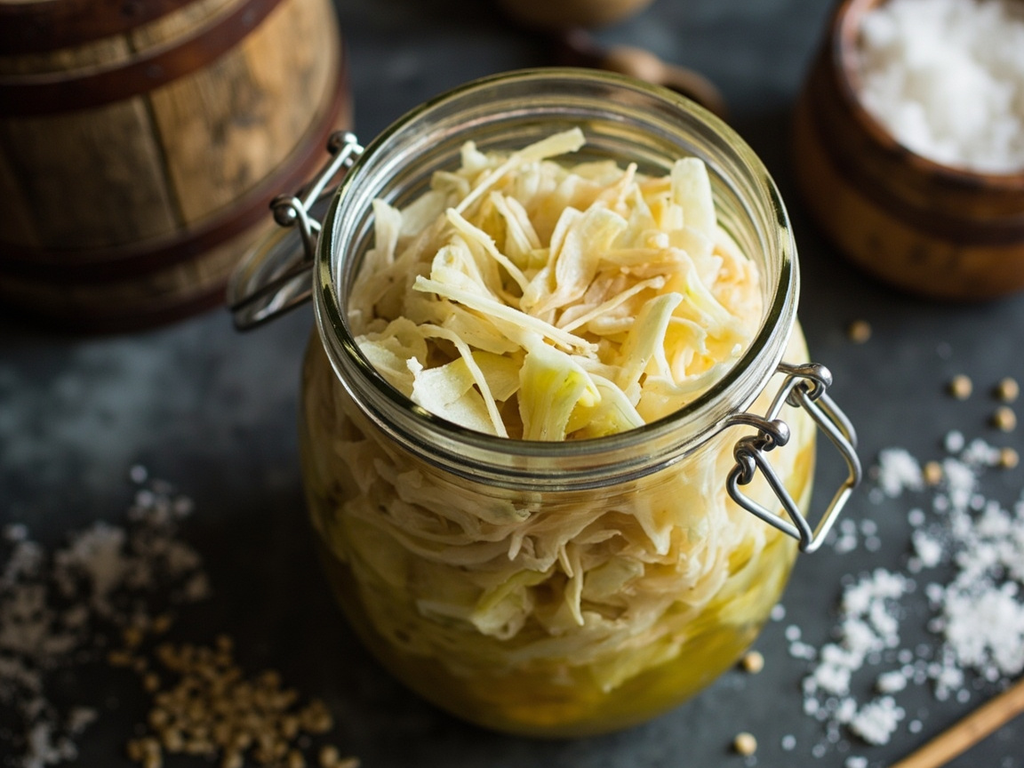
Finely cut cabbage, salted and packed, left to ferment away from air: bacteria transform its sugars into lactic acid, preserving it for months and retaining some of its vitamin C. It was, without yet understanding the chemistry, a weapon against the "plague of the seas".
This is the provision I am proudest of, more than any chart I have drawn. You chop the cabbage fine, you tread it with salt in the barrel until it gives up its water, and nature does the rest, sealed from the air. My men first looked sourly upon it — a sailor distrusts any food he does not know. So I had it brought to my own table, and be sure that as soon as a thing is thought good enough for officers, the man on the forecastle wants his share. I brought my crews back without losing a single man to scurvy, and it is this barrel that deserves the thanks.
- •White cabbage — in large quantity (vegetable to ferment)
- •Sea salt — about a handful per large cabbage (preservation and fermentation agent)
- •Caraway or juniper seeds — a pinch (flavour (optional))
Captain's Sauerkraut
Finely cut cabbage, salted and packed, left to ferment away from air: bacteria transform its sugars into lactic acid, preserving it for months and retaining some of its vitamin C. It was, without yet understanding the chemistry, a weapon against the "plague of the seas".
Why this dish? Cook embarked dozens of barrels of sauerkraut on the Endeavour (1768). The sailors mistrusted it; he first had it served at the officers' table, and made it so desirable that the crew eventually demanded it. On his return, he had not lost a single man to scurvy — a resounding feat that won him a medal from the Royal Society.
This is the provision I am proudest of, more than any chart I have drawn. You chop the cabbage fine, you tread it with salt in the barrel until it gives up its water, and nature does the rest, sealed from the air. My men first looked sourly upon it — a sailor distrusts any food he does not know. So I had it brought to my own table, and be sure that as soon as a thing is thought good enough for officers, the man on the forecastle wants his share. I brought my crews back without losing a single man to scurvy, and it is this barrel that deserves the thanks.
Ingredients (period version)
- White cabbage — in large quantity (vegetable to ferment)
- Sea salt — about a handful per large cabbage (preservation and fermentation agent)
- Caraway or juniper seeds — a pinch (flavour (optional))
Ingredients
- White cabbage — 1 kg, shredded (vegetable to ferment)
- Fine non-iodized salt — 20 g (2% of weight) (fermentation brine)
- Caraway seeds or juniper berries — 1 tsp (flavour)
- Fermentation jar with weight — 1 (equipment)
Method
- Shred the cabbage very finely, place in a large bowl.
- Add the salt and massage vigorously for 10 minutes until the cabbage releases a lot of liquid.
- Add caraway or juniper, pack the cabbage and its juice into a clean jar.
- Weight down so the cabbage remains submerged under its brine (no contact with air).
- Leave to ferment 3 to 6 weeks at room temperature (18-20 °C), taste, then store cool.
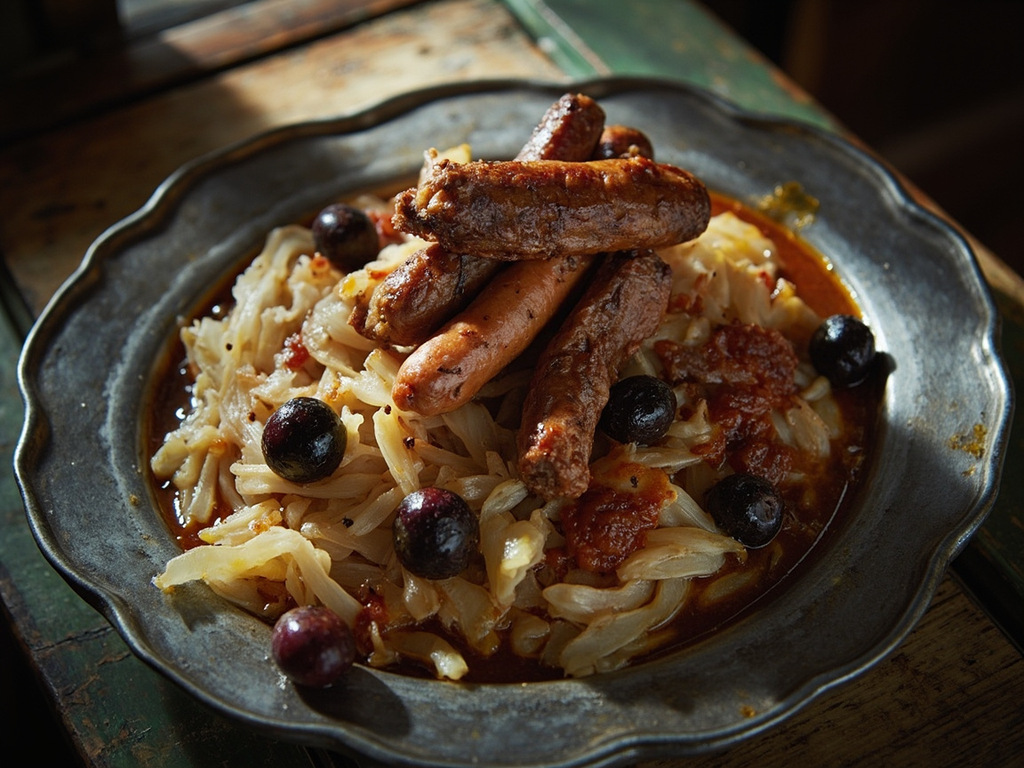
- Serve raw as a salad or briefly warmed.
How it was made : The barrel was packed by hand, sometimes with washed bare feet, and sealed under a press. No one spoke of vitamins or lactobacilli — vitamin C was only identified in the 20th century. Cook acted on empirical observation: he had noticed that men fed fresh or fermented provisions did not fall ill.
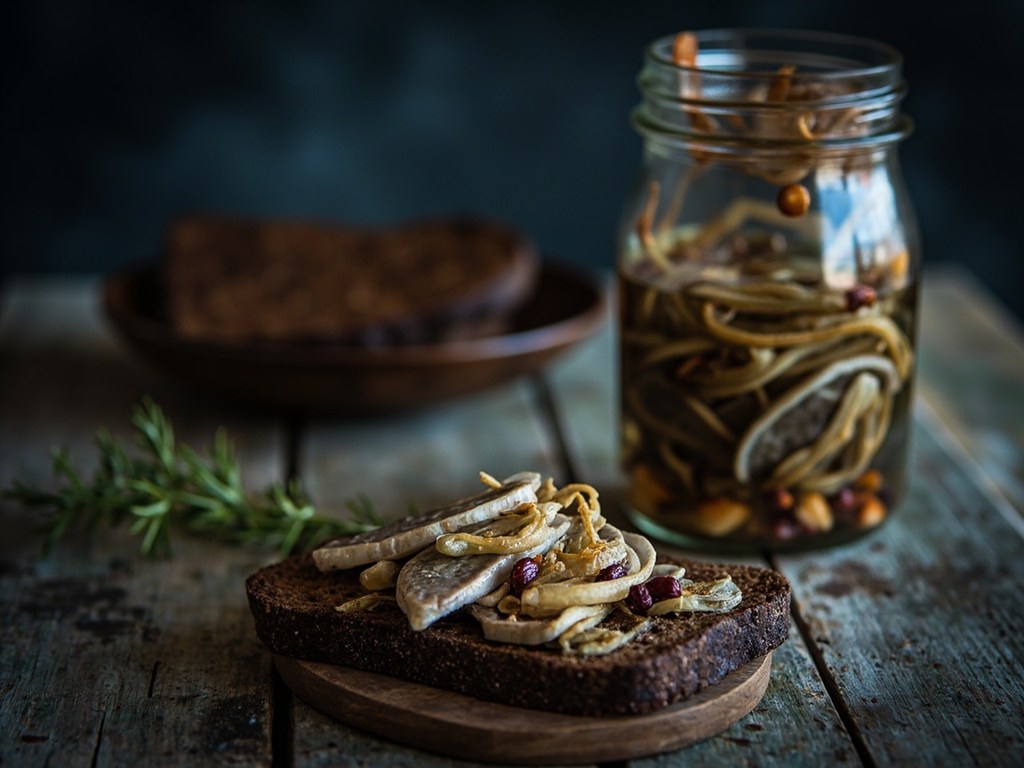
The contemporary twist : Presented in a small individual jar with a label "Anti-scorbutic ration no. 1768", like an expedition preserve.
Sources : J. C. Beaglehole (ed.), The Journals of Captain James Cook · James Lind, A Treatise of the Scurvy (1753) · J. C. Drummond & A. Wilbraham, The Englishman's Food
James Cook · Charactorium