 flip
flipSmall Fish in Escabeche
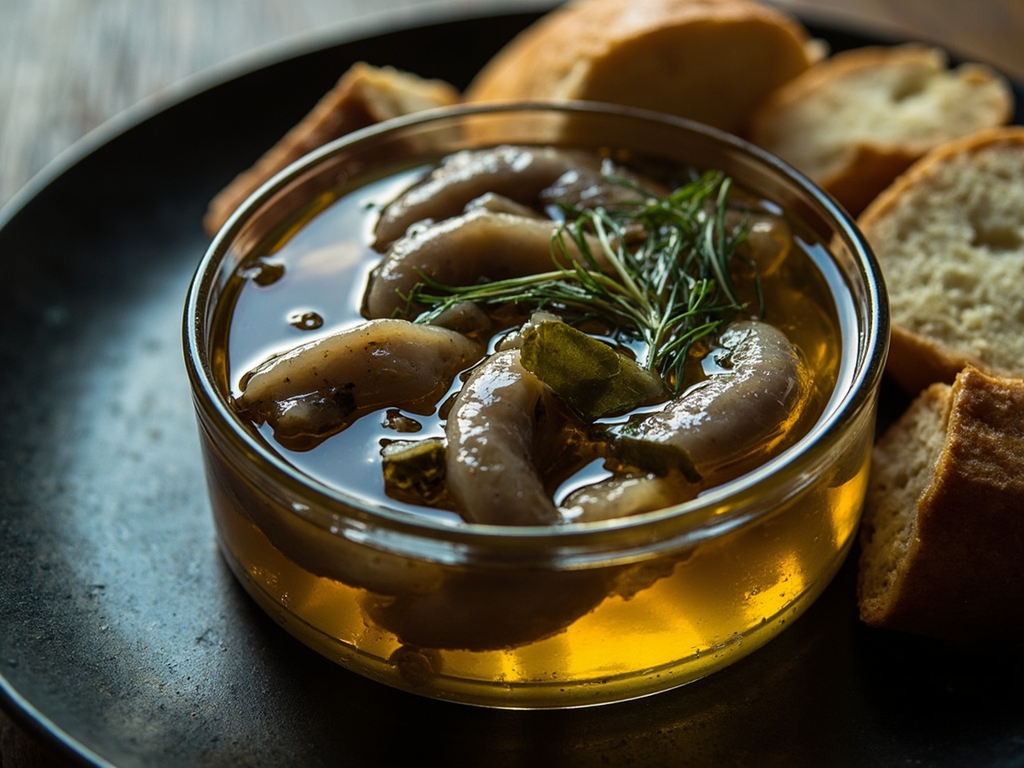
Small Fish in Escabeche
Why this dish? Lamarck studied invertebrates and mollusk shells all his life; the small aquatic creatures were familiar to him. Preserving small fish in vinegar was, for a modest purse, a way to keep fresh food for several days without ice or costly brine.
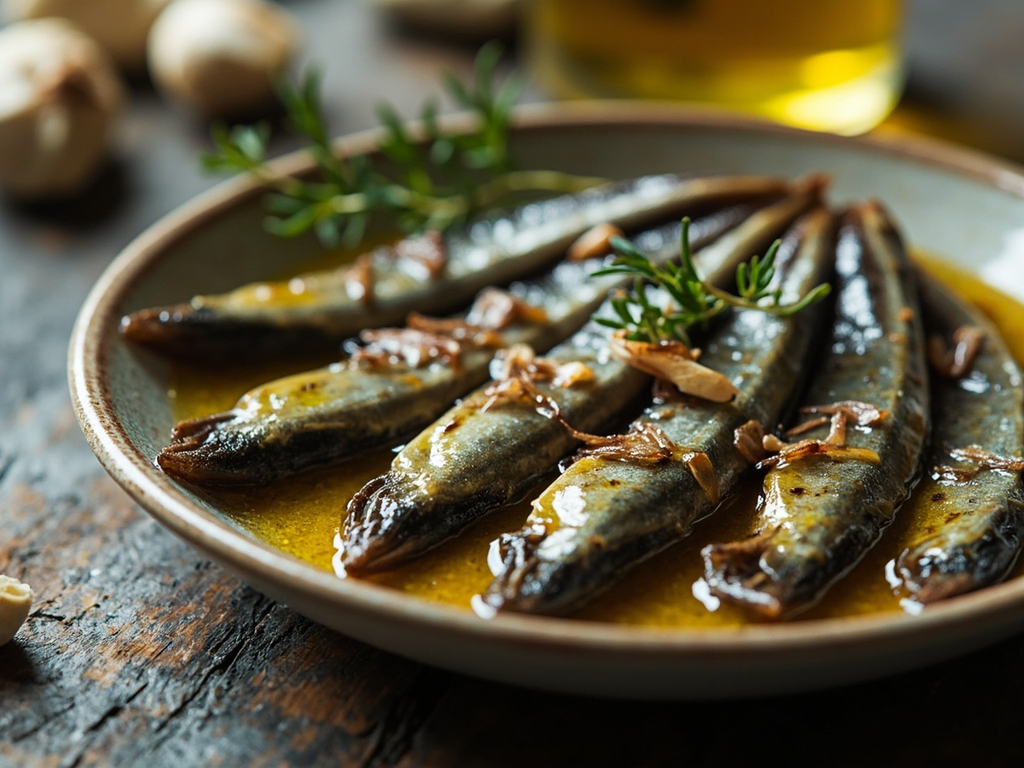
Small fish fried and then submerged in a warm vinegar infused with herbs and aromatics, which tenderizes and preserves them. Eaten cold, over several days.
You will always find some mollusk or some fish at hand with me, for these are the great people I have devoted my life to describing. These small fish, I first brown them, then lay them in a warm vinegar where I have thrown bay leaf, garlic, and peppercorns. The acid seizes them and keeps them sound for a good week, without ice or expense. Learn this: what adapts to its environment preserves itself better — a truth I have seen in animals as in my pantry.
- •Small fish (smelts, bleak, small mackerel) — a fry (base)
- •Flour — for coating (crust before frying)
- •Oil or lard — for frying (cooking)
- •Wine vinegar — enough to cover (preserving agent)
- •Garlic, bay leaf, thyme, peppercorns — to taste (aromatics)
- •Salt — to taste (seasoning)
Small Fish in Escabeche
Small fish fried and then submerged in a warm vinegar infused with herbs and aromatics, which tenderizes and preserves them. Eaten cold, over several days.
Why this dish? Lamarck studied invertebrates and mollusk shells all his life; the small aquatic creatures were familiar to him. Preserving small fish in vinegar was, for a modest purse, a way to keep fresh food for several days without ice or costly brine.
You will always find some mollusk or some fish at hand with me, for these are the great people I have devoted my life to describing. These small fish, I first brown them, then lay them in a warm vinegar where I have thrown bay leaf, garlic, and peppercorns. The acid seizes them and keeps them sound for a good week, without ice or expense. Learn this: what adapts to its environment preserves itself better — a truth I have seen in animals as in my pantry.
Ingredients (period version)
- Small fish (smelts, bleak, small mackerel) — a fry (base)
- Flour — for coating (crust before frying)
- Oil or lard — for frying (cooking)
- Wine vinegar — enough to cover (preserving agent)
- Garlic, bay leaf, thyme, peppercorns — to taste (aromatics)
- Salt — to taste (seasoning)
Ingredients
- Small fish (smelts, sardines, mackerel) — 500 g (base)
- Flour — 3 tbsp (coating)
- Olive oil — 15 cl (frying + marinade)
- White wine vinegar — 20 cl (preservation / acidity)
- Garlic — 3 cloves, crushed (aromatic)
- Bay leaf + thyme — 2 leaves + 2 sprigs (aromatics)
- Peppercorns, salt — 1 tsp + to taste (seasoning)
Method
- Salt and flour the small fish, then brown them in hot oil. Drain and arrange them in a shallow dish or jar.
- In the same oil, lightly brown the garlic, add bay leaf, thyme, and peppercorns, then pour in the vinegar. Let simmer for 2 minutes.
- Pour this warm marinade over the fish until they are covered.
- Let cool, cover, and refrigerate for at least 24 hours before serving.
- Keeps for 4 to 6 days in the fridge; serve cold with bread.
How it was made : Escabeche, inherited from Mediterranean cuisines (and from the Arabic word *sikbâj*), spread throughout France's ports and countryside as a preservation method before refrigeration. The vinegar acidifies the flesh and blocks putrefaction, extending storage by several days.
The contemporary twist : Arrange the fish on a fine herb purée and drizzle with a reduction of their marinade: naturalist's tapas for an aperitif.
Jean-Baptiste Lamarck · Charactorium