 flip
flipMeria of kid goat with burnt herbs
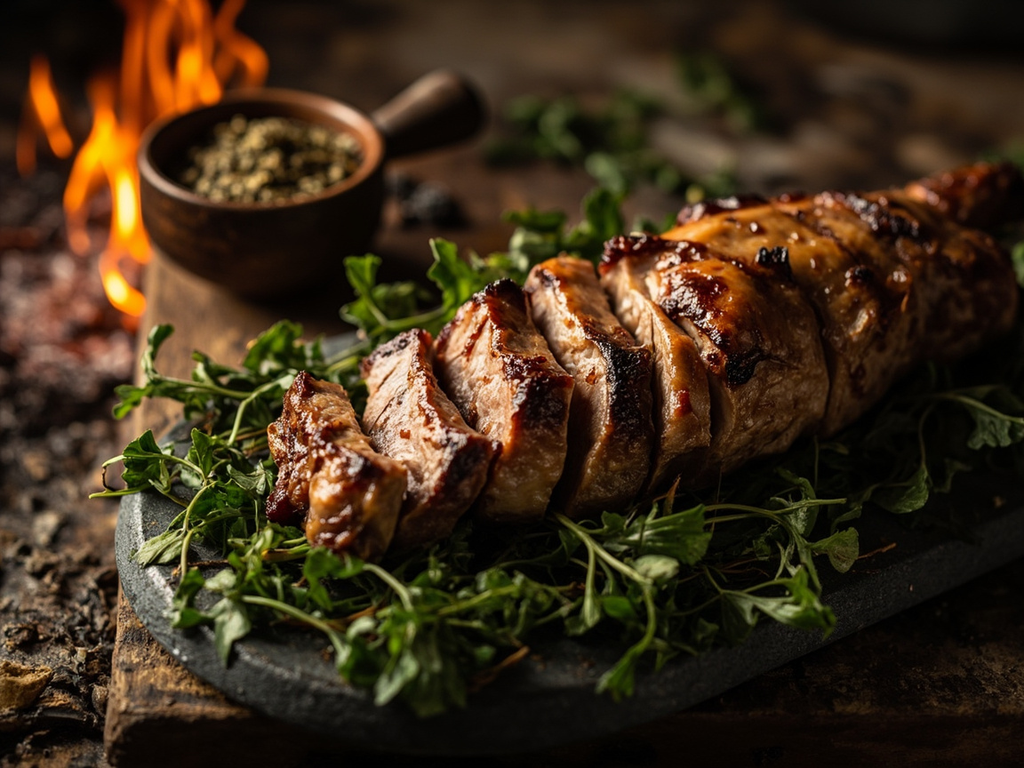
Meria of kid goat with burnt herbs
Why this dish? "Chimera" literally means "young goat" in Greek, and the beast is half-goat. The Lycian shepherds, whose flocks it ravaged, burned the bones wrapped in fat on the altar as an offering to the gods (the meria), then shared the roasted meat. Offering it a kid goat is offering the Chimera a bit of itself.
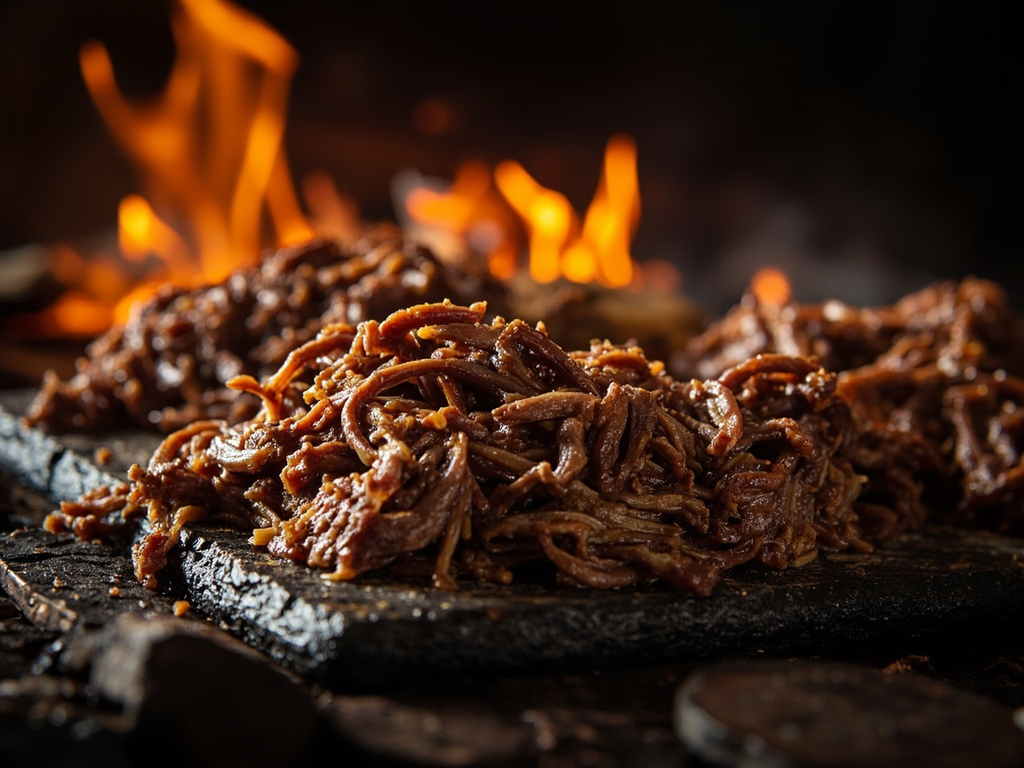
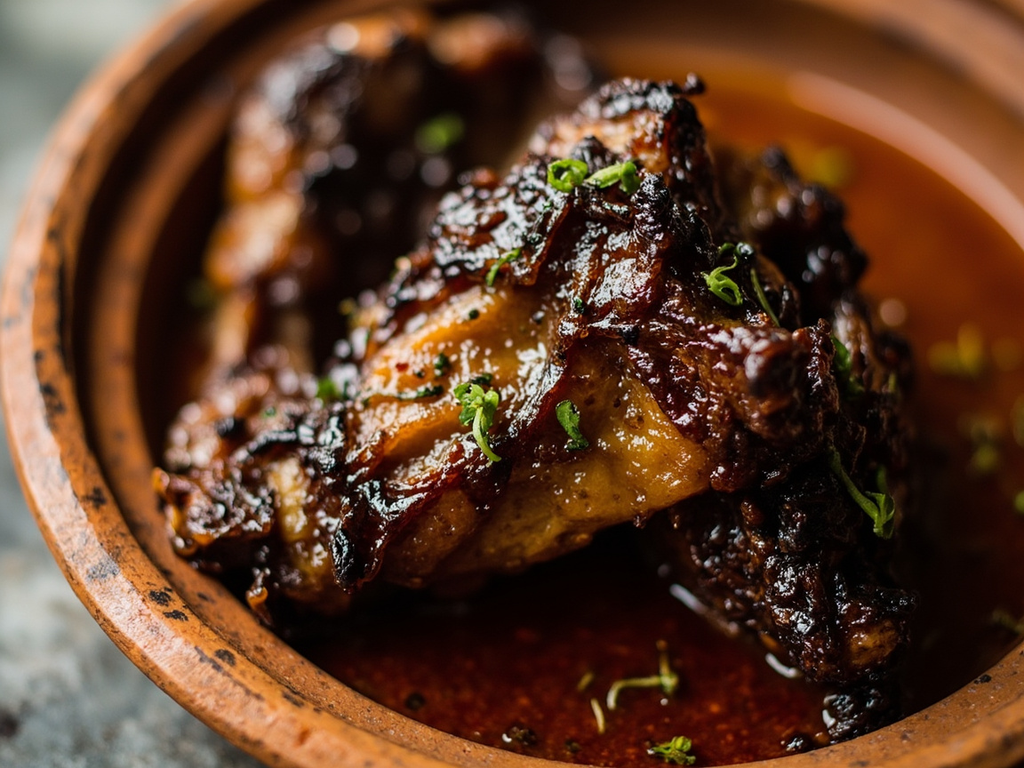
Shoulder of kid goat rubbed with salt, coriander, and thyme, slow-roasted and glazed with honey until the skin crackles and blackens at the tips — as if passed through the breath of a monster.
Approach, mortal, do not be afraid — for this time. I was born of stormy Typhon and serpentine Echidna, and goat's flesh is my own flesh. On the slopes of Lycia, I would blast flocks with a breath, and the beast would fall half-charred before it could even bleat; such is my art of fire, which your cooks clumsily imitate with their embers. Rub the kid with salt and coriander, let my thyme honey coat it in dark gold, and let the skin bite like blackened scales. Eat, and remember who showed you the fire.
- •Kid goat (young goat) — one shoulder (sacrificial meat, tender flesh)
- •Sea salt — by hand (seasoning and surface preservation)
- •Coriander seeds — a pinch, crushed (marinade spice attested in Greece)
- •Wild thyme — a handful (herb of the Lycian hills)
- •Thyme honey — a drizzle (glaze and caramelization)
- •Wine — a little (for basting during cooking)
Meria of kid goat with burnt herbs
Shoulder of kid goat rubbed with salt, coriander, and thyme, slow-roasted and glazed with honey until the skin crackles and blackens at the tips — as if passed through the breath of a monster.
Why this dish? "Chimera" literally means "young goat" in Greek, and the beast is half-goat. The Lycian shepherds, whose flocks it ravaged, burned the bones wrapped in fat on the altar as an offering to the gods (the meria), then shared the roasted meat. Offering it a kid goat is offering the Chimera a bit of itself.
Approach, mortal, do not be afraid — for this time. I was born of stormy Typhon and serpentine Echidna, and goat's flesh is my own flesh. On the slopes of Lycia, I would blast flocks with a breath, and the beast would fall half-charred before it could even bleat; such is my art of fire, which your cooks clumsily imitate with their embers. Rub the kid with salt and coriander, let my thyme honey coat it in dark gold, and let the skin bite like blackened scales. Eat, and remember who showed you the fire.
Ingredients (period version)
- Kid goat (young goat) — one shoulder (sacrificial meat, tender flesh)
- Sea salt — by hand (seasoning and surface preservation)
- Coriander seeds — a pinch, crushed (marinade spice attested in Greece)
- Wild thyme — a handful (herb of the Lycian hills)
- Thyme honey — a drizzle (glaze and caramelization)
- Wine — a little (for basting during cooking)
Ingredients
- Shoulder of kid goat (or lamb) — 1.5 kg (main piece)
- Coarse sea salt — 2 tsp (seasoning)
- Coriander seeds — 1 tbsp, crushed (spice)
- Fresh thyme — 2 tbsp (herb)
- Thyme honey — 2 tbsp (glaze)
- Dry white wine — 200 ml (basting)
- Olive oil — 3 tbsp (fat)
Method
- Rub the shoulder with olive oil, salt, crushed coriander, and thyme. Let rest for 1 hour at room temperature.
- Sear the piece on all sides in a very hot Dutch oven or dish to brown.
- Pour in the wine, cover, and roast in the oven at 150°C for 2.5 to 3 hours, basting regularly with the juices.
- Uncover, brush generously with thyme honey, and increase to 220°C for 10–15 minutes to glaze and blacken the tips.
- Let rest for 10 minutes, then shred the meat and serve with the juices.
How it was made : During a Greek thysia, the animal was slaughtered on the altar, its thigh bones (meria) wrapped in fat and burned as an offering to the gods; the rest was roasted on a spit or boiled and shared among the faithful. Honey and wine were already used for libations and glazes. Kid goat, a festive meat rather than everyday fare, was reserved for great occasions.
The contemporary twist : Serve the whole shoulder on a board, sprinkled with fresh thyme petals, and call it "the Chimera's portion": the blackened honey crust evokes the flame from its maw.
Sources : Homer, Iliad (descriptions of sacrifices and roasting) · Andrew Dalby, Siren Feasts: A History of Food and Gastronomy in Greece (1996)
Chimera · Charactorium