 flip
Ofe Nsala (white pepper soup with yam)
Ofe Nsala (white pepper soup with yam)
Why this dish? In the Igbo culture Achebe knew, this clear, heavily spiced broth — without palm oil — was the dish for convalescents and, traditionally, for new mothers after childbirth. A healing cuisine, separate from festive soup, that complements the ever-present yam at his table.
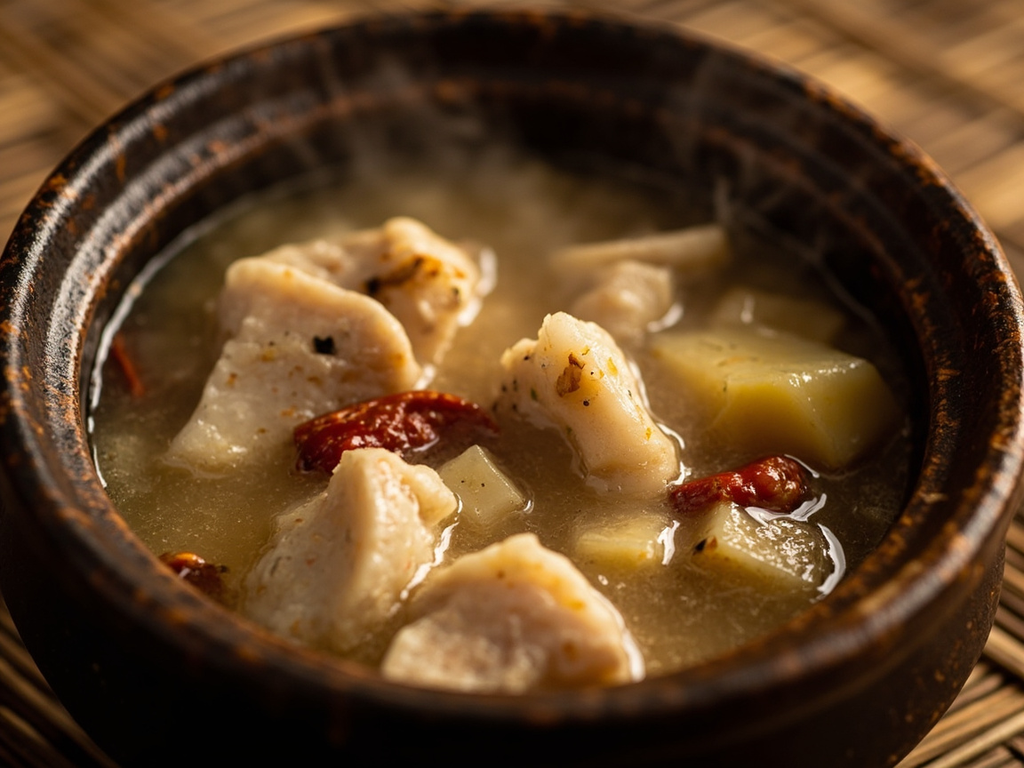
A clear, steaming broth of fish or poultry, oil-free, thickened with a few crushed yam pieces, perfumed with forest spices (uziza, uda, ehuru) and loaded with chili. Reputed to clear the nose, warm, and restore strength.
When the body is weak, we do not give it the heavy red soup: we give it nsala, clear as a good intention. No palm oil here — only fresh fish, yam crushed to thicken, and forest spices that warm to the bone. Add enough chili to make you cry a little: they say chili chases what weighs on the chest. This is the broth brought to a woman who has just given birth, and to an elder recovering from illness.
- •Fresh fish (catfish) or poultry — according to guests (protein base of the broth)
- •Yam — a few pieces (thickener (crushed into the broth))
- •Uda, uziza, ehuru (forest spices) — to taste (signature medicinal aroma)
- •Fresh chili — generous (heat)
- •Onion, dried shrimp, salt — to taste (umami base)
Ofe Nsala (white pepper soup with yam)
A clear, steaming broth of fish or poultry, oil-free, thickened with a few crushed yam pieces, perfumed with forest spices (uziza, uda, ehuru) and loaded with chili. Reputed to clear the nose, warm, and restore strength.
Why this dish? In the Igbo culture Achebe knew, this clear, heavily spiced broth — without palm oil — was the dish for convalescents and, traditionally, for new mothers after childbirth. A healing cuisine, separate from festive soup, that complements the ever-present yam at his table.
When the body is weak, we do not give it the heavy red soup: we give it nsala, clear as a good intention. No palm oil here — only fresh fish, yam crushed to thicken, and forest spices that warm to the bone. Add enough chili to make you cry a little: they say chili chases what weighs on the chest. This is the broth brought to a woman who has just given birth, and to an elder recovering from illness.
Ingredients (period version)
- Fresh fish (catfish) or poultry — according to guests (protein base of the broth)
- Yam — a few pieces (thickener (crushed into the broth))
- Uda, uziza, ehuru (forest spices) — to taste (signature medicinal aroma)
- Fresh chili — generous (heat)
- Onion, dried shrimp, salt — to taste (umami base)
Ingredients
- Catfish fillet or free-range chicken — 500 g (broth base)
- White yam — 200 g (thickener)
- Grains of paradise / uda pepper / uziza (African grocery) — 1 tsp total (aroma)
- Scotch bonnet chili — 1 to 2 (heat)
- Onion, dried shrimp powder, bouillon cube, salt — 1 onion, 1 tbsp, 1/2 cube (base)
Method
- Peel and cut the yam into pieces; boil a portion until tender, then mash into a puree to thicken.
- In a pot, bring water to a simmer with the onion, shrimp powder, ground forest spices, and chili.
- Add the fish or chicken and poach gently until cooked (no oil).
- Stir in the mashed yam to bind the broth, add the remaining yam pieces, and simmer for 10 minutes.
- Adjust salt and chili; serve very hot, alone or with a little fufu.
How it was made : Nsala ('white soup') is distinguished by the absence of palm oil and the use of aromatic forest spices (uda, uziza, ehuru, reputed to have tonic and galactagogue properties). Traditionally prepared for new mothers and convalescents, it was thickened with pounded yam rather than flour.
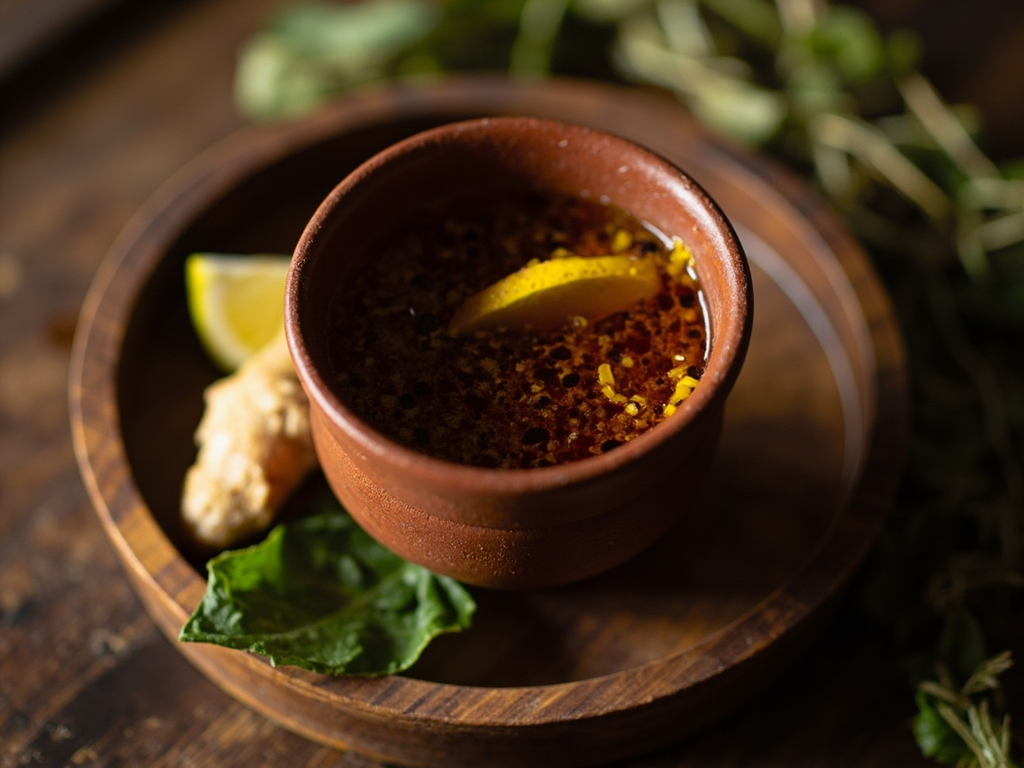
The contemporary twist : Serve it in a steaming bowl with a lime wedge and a sprinkle of fresh uziza: a 'detox pepper soup' that clears the mind.
Chinua Achebe · Charactorium