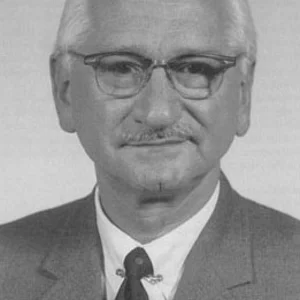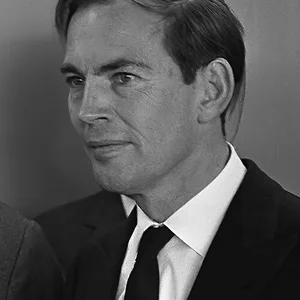

Christiaan Barnard was a South African cardiac surgeon. On December 3, 1967, in Cape Town, he performed the first human heart transplant in history, becoming a worldwide figure of modern surgery.
Christiaan Barnard(1922 — 2001)
Christiaan Barnard
Autriche, Afrique du Sud
5 min read
Frequently asked questions
Key Facts
- Born on November 8, 1922, in Beaufort West (South Africa)
- December 3, 1967: performed the first human heart transplant on Louis Washkansky at Groote Schuur Hospital in Cape Town
- The first transplant patient survived 18 days before dying of pneumonia
- His later operations achieved survival times of several months and then years, validating the technique
- Died on September 2, 2001, in Paphos (Cyprus)
Works & Achievements
Transplant of Denise Darvall's heart into Louis Washkansky: the first in the history of humankind, opening the era of vital-organ transplantation.
Second transplant, whose patient survived 19 months and returned home, demonstrating the longer-term viability of the operation.
Scientific report describing the technique and the course of the first transplant, a founding reference of transplant surgery.
Innovative technique consisting of grafting a second heart to support the diseased one, without removing the latter, in order to assist circulation.
An account of his life and of the 1967 feat, a worldwide bestseller that contributed to his international fame.
A book aimed at the general public explaining how the human body works, reflecting his commitment to spreading scientific knowledge.
Anecdotes
On 3 December 1967, at Groote Schuur Hospital in Cape Town, Christiaan Barnard transplanted the heart of Denise Darvall, a young woman killed in a car accident, into the chest of Louis Washkansky. The operation was a technical success, but Washkansky died 18 days later of pneumonia, his immune system weakened by the anti-rejection drugs.
Overnight, Barnard became a global celebrity: photographed with movie stars and received by heads of state, he embodied the glamour of modern medicine. Handsome and charismatic, he joked that he had gone from being a surgeon to a star in just a few hours.
A poor child from Beaufort West and the son of a minister, the young Christiaan walked to school barefoot to save wear on his shoes. His younger brother died of a heart condition, an event that lastingly shaped his calling for heart surgery.
His second transplant patient, the dentist Philip Blaiberg, survived 19 months and was able to return home, proving that a heart transplant could offer a real second life. This extended survival silenced some of the skeptics who had judged the operation premature.
Stricken with rheumatoid arthritis that deformed his hands, Barnard had to give up operating by the end of the 1970s. He then turned to research on aging and the promotion of science, far from the operating room.
Primary Sources
I knew that if I succeeded, I would be acclaimed, and that if I failed, I would be condemned. But the patient was going to die anyway: he had nothing to lose.
A human heart transplant has been successfully performed on a 53-year-old patient, Louis Washkansky, who is in a satisfactory condition.
“A Human Cardiac Transplant: An Interim Report of a Successful Operation Performed at Groote Schuur Hospital, Cape Town” — a report describing the first human heart transplant.
Key Places
Small Karoo town where Barnard was born in 1922, into a modest pastor's family. His impoverished childhood forged his determination.
Hospital where Barnard performed the first human heart transplant on 3 December 1967. The operating theatre is now a museum.
Institution where Barnard studied medicine and worked as a researcher and surgeon. The hub of South African cardiac medicine.
Where Barnard trained in experimental heart surgery in the late 1950s, under the guidance of American pioneers. There he discovered the heart-lung machine.
Seaside resort where Barnard died in 2001 of an asthma attack while on holiday.
Typical Objects

Thin, sharp blade allowing precise incisions in tissue. The emblematic tool of the surgical act.

Cardiopulmonary bypass machine that oxygenates and circulates the blood while the patient's heart is stopped. Without it, a heart transplant would be impossible.

Substances such as cortisone and azathioprine that slow down the immune system to prevent rejection of the transplanted organ. Getting the dosage right was the vital challenge of the earliest transplants.

Operating-room attire ensuring asepsis to prevent any infection. The mask and cap complete the modern surgeon's outfit.

Device that records the heart's electrical activity as a trace. It allows the transplanted heart's beat to be monitored and abnormalities to be detected.

Very fine thread used to stitch blood vessels and the heart muscle back together with extreme precision. Joining the donor's and recipient's arteries required tiny stitches.
School Curriculum
Vocabulary & Tags
Key Vocabulary
Tags
Daily Life
Morning
Up very early for patient rounds and surgery preparation. Barnard studied medical files and test results before heading to the operating room, where heart procedures could last several hours.
Afternoon
Consultations, supervision of his team, and research work in the laboratory, notably on dogs to perfect transplant techniques. The afternoon blended patient care, teaching, and experimentation.
Evening
After 1967, his evenings filled up with social engagements: dinners, lectures, interviews, and international travel tied to his sudden fame. He nevertheless remained attentive to the condition of his transplant patients.
Food
The classic Western diet of twentieth-century South Africa. After becoming a researcher on aging, he later took an interest in nutrition and healthy lifestyle habits.
Clothing
At work, the sterile white coat, surgical cap, and mask of the operating room. In public, elegant suits that matched his image as a star surgeon photographed in magazines.
Housing
Urban dwellings in Cape Town, then comfortable residences as his fortune and fame grew. He notably owned a farm, keeping a connection to his rural roots in the Karoo.
Historical Timeline
Period Vocabulary
Liens externes & ressources
Références
Œuvres
Première transplantation cardiaque humaine
3 décembre 1967
« A Human Cardiac Transplant » (South African Medical Journal)
1967
Transplantation cardiaque hétérotopique (« cœur jumeau »)
1974
« One Life » (autobiographie)
1969
« The Body Machine » (ouvrage de vulgarisation)
1981