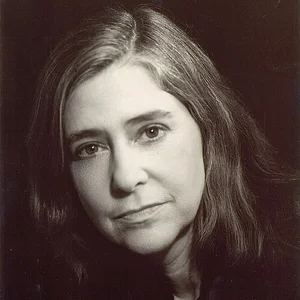

Margaret Hamilton is a pioneering American computer scientist and engineer in the field of software engineering. She led the team that developed the onboard navigation software for the Apollo missions, directly contributing to the 1969 Moon landing. She is considered one of the founders of software engineering as a discipline.
Margaret Hamilton(1936 — ?)
Margaret Hamilton
États-Unis
7 min read
Frequently asked questions
Key Facts
- Born in 1936 in Paoli, Indiana, she studied mathematics at Earlham College
- From 1961, she joined MIT and worked for NASA on the Apollo program
- In 1969, her navigation software was critical to the success of Apollo 11: it handled a critical alarm and enabled the Moon landing
- She coined the term 'software engineering' to give the discipline the same standing and recognition as hardware engineering
- In 2016, she received the Presidential Medal of Freedom from Barack Obama
Works & Achievements
The complete suite of onboard software for the Apollo spacecraft, designed under Hamilton's leadership. It handled navigation, lunar landing, emergency procedures, and Earth return for all lunar missions.
A critical feature developed by Hamilton despite initial resistance from NASA, which saved Apollo 8 and enabled the successful lunar landing of Apollo 11 in the face of the 1202 alarm.
A formal software development method based on mathematical axioms, aimed at preventing errors from the design stage. Hamilton founded her company to commercialize and disseminate this approach.
A modeling language and software development environment created by Hamilton, continuing her vision of rigorous, preventive software engineering grounded in mathematical foundations.
Hamilton is credited with coining and popularizing the term 'software engineering', establishing the idea that software development must meet the same reliability standards as traditional engineering.
Anecdotes
Margaret Hamilton used to bring her daughter Lauren to the MIT laboratory on nights and weekends while she worked on the Apollo software. One day, Lauren pressed a key that simulated a crash of the in-flight navigation program. Hamilton wanted to add a safeguard against this error, but NASA refused, believing astronauts would never make such a mistake. During Apollo 8, astronaut Jim Lovell inadvertently erased exactly that data, but the recovery program Hamilton had developed anyway saved the mission.
During the Apollo 11 moon landing in July 1969, just three minutes from the lunar surface, the onboard computers began displaying critical alarms (code 1202). It was the software designed by Hamilton that detected the processor overload and automatically decided to prioritize the tasks essential to landing, allowing Neil Armstrong to set down the module. Without this autonomous software decision, the mission would have had to be aborted.
Margaret Hamilton is credited with coining the term 'software engineering'. In the 1960s, programming was not considered a true engineering discipline. She used this expression to advocate for the rigor and reliability her team brought to software development, which was responsible for human lives. The term, initially met with skepticism, is today universal in the computing industry.
In 2016, Barack Obama awarded her the Presidential Medal of Freedom, the highest civilian honor in the United States. The iconic photo that circulated online on that occasion showed Hamilton standing next to a stack of printed documents representing the Apollo software source code, as tall as she was. The image went viral and reintroduced her crucial role to millions of people who had never heard her name.
Hamilton led a predominantly female team at MIT, at a time when women were severely underrepresented in science and engineering. She had to constantly prove the reliability of her software to skeptical aeronautical engineers. She imposed testing and documentation standards so rigorous that the Apollo software experienced no critical bugs in flight across all 17 missions of the program.
Primary Sources
The software detects errors and recovers from them in real time, allowing the mission to continue even in the presence of hardware or software failures. Priority scheduling ensures that critical tasks are always executed first.
The 1202 alarm indicated that the computer was being asked to do more than it could handle in the time allotted. The system automatically discarded lower-priority tasks and focused on those necessary for landing.
Margaret Hamilton's work on the Apollo program and her coinage of the term 'software engineering' helped pioneer the field. Her contributions transformed the way we think about computing.
The guidance software must operate reliably under extreme conditions, with no possibility of ground intervention. Fault detection and autonomous error correction are therefore fundamental design requirements.
Key Places
Hamilton's main workplace throughout the Apollo years. This is where she led the guidance software development team, with teams often working through the night.
Launch base for the Apollo missions. The software developed by Hamilton was loaded onto the spacecraft before each liftoff.
The room from which NASA engineers monitored flights in real time. During the Apollo 11 1202 alarm, ground teams coordinated from here with Hamilton's software.
Margaret Hamilton's hometown, a small town in the American Midwest where she grew up before going on to study mathematics.
Apollo 11's landing site, where Hamilton's software allowed Neil Armstrong and Buzz Aldrin to land safely on July 20, 1969.
Typical Objects

Onboard computer carried aboard Apollo spacecraft, weighing 32 kg with 4 KB of RAM. Hamilton and her team developed all the navigation and control software stored on it.

Physical media used to program computers in the 1960s. Hamilton's teams transcribed their code onto these cards before loading it onto the machines.

Paper printouts of the Apollo software source code, which Hamilton and her colleagues annotated and checked manually. The stack of these listings, as tall as she was, became the iconic image of her work.

Test console used at MIT to simulate flight conditions and test software behavior in emergency or failure scenarios.

Text-based communication machine used in control centers of the era to exchange data between ground teams and computing centers.

Reference document used by astronauts and engineers, into which the software emergency procedures developed by Hamilton were integrated after validation.
School Curriculum
Vocabulary & Tags
Key Vocabulary
Tags
Daily Life
Morning
Margaret Hamilton drops her daughter Lauren off at school, then drives to the MIT Instrumentation Laboratory in Cambridge. She begins by reviewing the printed code listings from the previous day, annotating segments to correct or optimize before the morning team meeting.
Afternoon
The afternoon is dedicated to testing on simulators and collective debugging sessions. Hamilton coordinates the various subgroups of her team, reviews error-handling procedures, and writes technical specifications for NASA's aeronautical engineers.
Evening
On evenings and weekends, Hamilton often returns to the laboratory with Lauren to continue working outside of peak hours. She takes advantage of the quiet to write documentation, run lengthy test sequences, and think through failure scenarios not yet covered by the software.
Food
Typical American diet of the 1960s: sandwiches and coffee served at the MIT cafeteria during long workdays, family dinners in the evening with home-style dishes (meat, canned vegetables, homemade desserts). Little time for cooking during periods of intense activity leading up to launches.
Clothing
At the office, Hamilton wears the feminine professional attire of the era: straight dresses or understated suits, often in wool or polyester, with moderate heels. She is frequently photographed in printed dresses in the computer rooms, standing in contrast to the white shirts of her male colleagues.
Housing
Hamilton lives in the suburbs of Boston with her husband James Cox Hamilton and their daughter Lauren. A middle-class home in a typical New England single-family house with a garden, characteristic of the residential neighborhoods where MIT professors and engineers lived at the time.
Historical Timeline
Period Vocabulary
Visual Style
Esthétique NASA des années 1960 : photographie contrastée en noir et blanc, salles de contrôle aux néons blafards, ingénieurs en chemise blanche penchés sur des listings de code, schémas de circuits et organigrammes sur les murs.
Sound Ambience
Ambiance d'une salle informatique des années 1960 au MIT : bourdonnement des mainframes, cliquetis des lecteurs de cartes perforées, machines à écrire et téléimprimeurs, voix feutrées d'ingénieurs travaillant la nuit sur le code Apollo.
Liens externes & ressources
Références
Œuvres
Logiciel de guidage et navigation Apollo (AGC Software)
1963–1972
Système de détection et récupération d'erreurs en vol
1968
Higher Order Software (HOS) — méthodologie USE.IT
1976
Hamilton Technologies — Universal Systems Language (USL)
1986
Formalisation du terme 'Software Engineering'
Années 1960