 flip
flipNaan-e Afghani — Neighbourhood Oven Flatbread
Naan-e Afghani — Neighbourhood Oven Flatbread
Why this dish? Bread is the foundation of every shared meal. In the alleys of Kabul and Peshawar that Lamb walked so often, the smell of naan emerging from the tandoor marks the rhythm of the day: you buy it in the morning, keep a piece in your pocket, use it as a spoon.
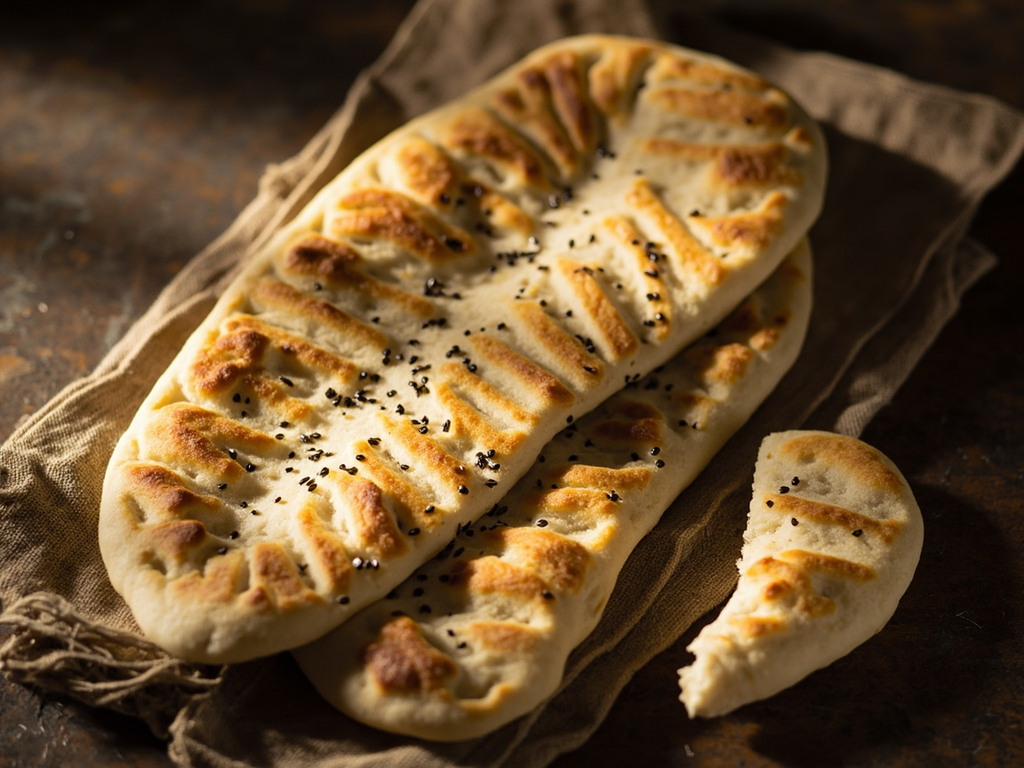
A large, elongated flatbread, striped with finger marks and dotted with nigella seeds, crispy on the outside and soft inside, baked stuck to the burning wall of a clay oven.
Bread, here, is never thrown away — a piece that falls to the ground, you pick it up and touch it to your forehead as a sign of respect. I bought mine from the corner bakery, still burning hot, and used it for dipping, for scooping, for holding a little warmth in my hands on icy mornings. Look at the long ridges traced with a finger and the little black seeds on top: that is the baker's signature. Every meal begins with it, and sharing it is already a conversation.
- •Wheat flour — according to the batch (base)
- •Sourdough or yeast — a little (leavening)
- •Warm water — for the dough (hydration)
- •Salt — a pinch (seasoning)
- •Nigella seeds (siah dana) — to sprinkle (garnish)
Naan-e Afghani — Neighbourhood Oven Flatbread
A large, elongated flatbread, striped with finger marks and dotted with nigella seeds, crispy on the outside and soft inside, baked stuck to the burning wall of a clay oven.
Why this dish? Bread is the foundation of every shared meal. In the alleys of Kabul and Peshawar that Lamb walked so often, the smell of naan emerging from the tandoor marks the rhythm of the day: you buy it in the morning, keep a piece in your pocket, use it as a spoon.
Bread, here, is never thrown away — a piece that falls to the ground, you pick it up and touch it to your forehead as a sign of respect. I bought mine from the corner bakery, still burning hot, and used it for dipping, for scooping, for holding a little warmth in my hands on icy mornings. Look at the long ridges traced with a finger and the little black seeds on top: that is the baker's signature. Every meal begins with it, and sharing it is already a conversation.
Ingredients (period version)
- Wheat flour — according to the batch (base)
- Sourdough or yeast — a little (leavening)
- Warm water — for the dough (hydration)
- Salt — a pinch (seasoning)
- Nigella seeds (siah dana) — to sprinkle (garnish)
Ingredients
- All-purpose wheat flour — 500 g (base)
- Active dry yeast — 1 packet (7 g) (leavening)
- Warm water — 300 ml (hydration)
- Salt — 1.5 tsp (seasoning)
- Nigella seeds (and/or sesame) — 1 tbsp (garnish)
- Oil — 1 tbsp (dough)
Method
- Dissolve the yeast in warm water, let it foam for 5 min.
- Mix flour and salt, add the yeasted water and oil, knead for 10 min until the dough is soft.
- Cover and let rise for 1 h 30 until doubled.
- Punch down, shape into 2 large elongated ovals on a floured baking sheet.
- With your fingertips, draw long parallel grooves in the dough, brush with a little water and sprinkle with nigella seeds.
- Bake in a very hot oven (250 °C, on a preheated stone or baking sheet) for 8 to 10 min until golden.
How it was made : Naan is baked stuck to the inner wall of a tandoor, a wood-fired clay oven. The baker slaps the dough on with a sure hand and peels it off when it swells and browns. Each neighbourhood has its oven, and bread is sold by the piece from dawn.
The contemporary twist : Baked on a very hot pizza stone, brushed upon removal with garlic butter — to recreate the softness of the tandoor in a home oven.
Sources : Helen Saberi, Afghan Food & Cookery (2000)
Christina Lamb · Charactorium