 flip
flipAdobong baboy (pork adobo)
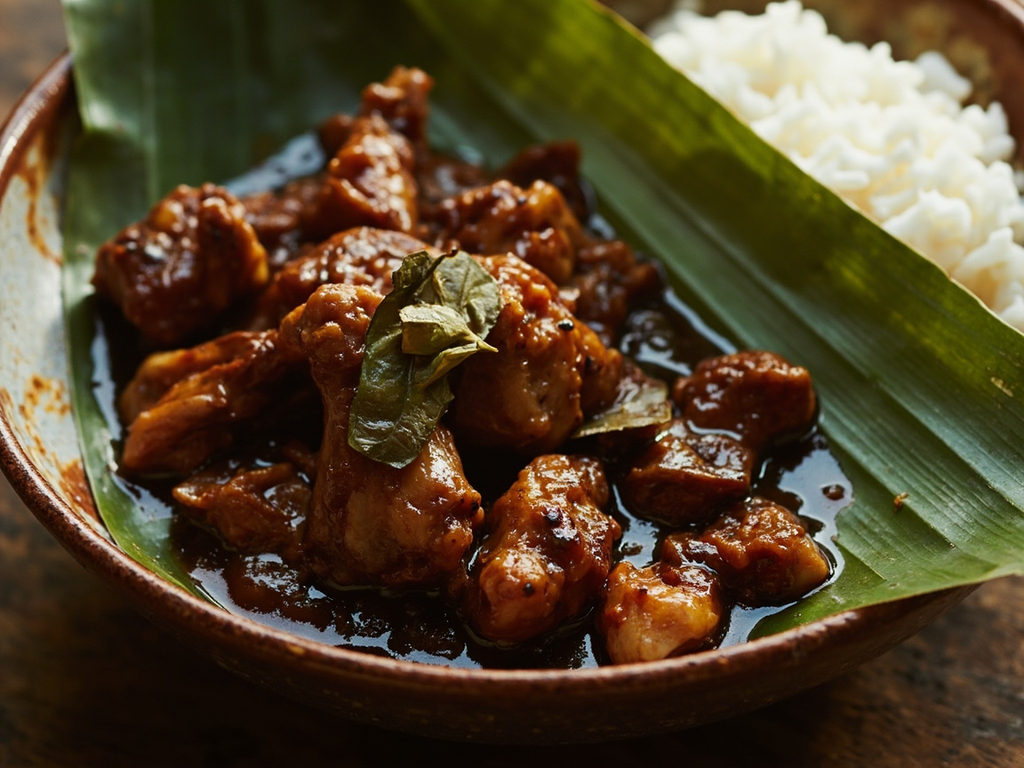
Adobong baboy (pork adobo)
Why this dish? Adobo is the quintessential Filipino dish, eaten at home and in every carinderia in Manila. For a young city dweller like Abra, who strings together studio sessions, it's the comforting reflex: it simmers by itself, keeps well, and is shared with the crew around a big bowl of rice.
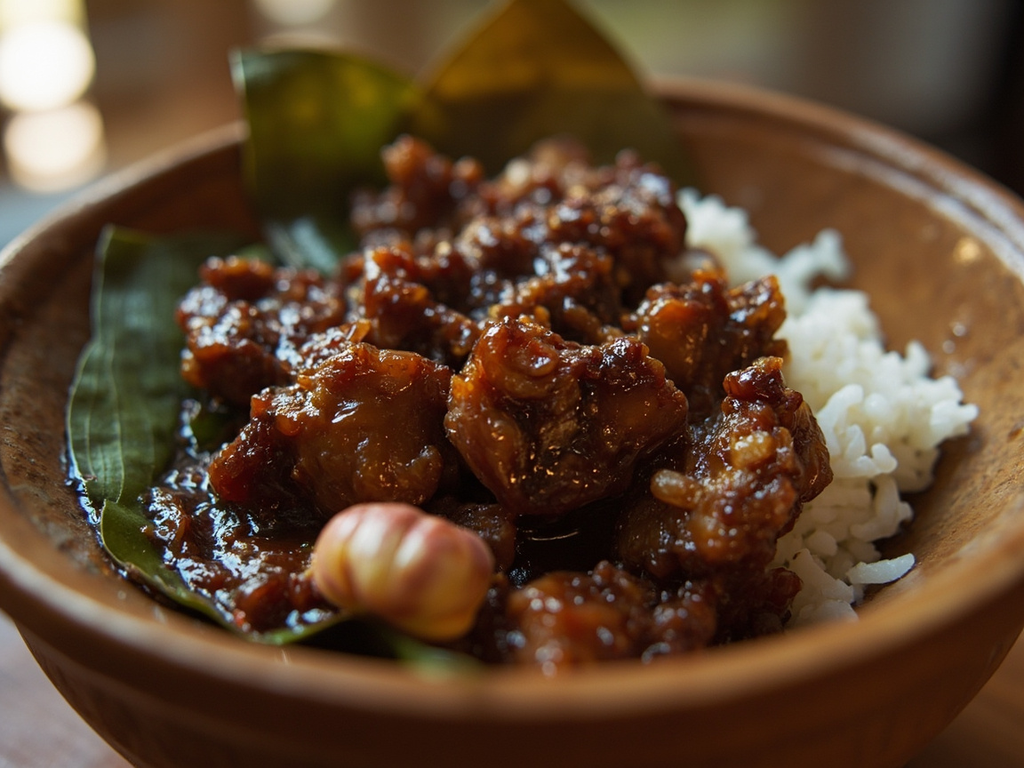
Pork marinated then simmered in vinegar, soy sauce, garlic, and pepper until the sauce becomes syrupy and glossy. The vinegar, as it reduces, loses its sharpness and leaves an irresistible salty-sour depth.
Bro, adobo is the basics, the dish we've all known since we were kids. Back home in Manila, we'd let the pork soak in suka and toyo, throw in garlic, peppercorns, bay leaf, and just let it do its thing – no need to watch it, it simmers while you work on rhymes. The trick is not to stir too fast at the start, or the vinegar bites too hard; let it boil calmly and then it turns mellow. When the sauce sticks to the spoon and shines, you know it's done. We'd put the pot in the middle, steaming rice, and everyone would serve themselves – that's the spirit, we eat together.
- •Pork belly and shoulder — a good piece for the group (meat)
- •Cane vinegar (suka) — a generous splash (acidity, preservation)
- •Soy sauce (toyo) — equal part to vinegar (saltiness, color)
- •Garlic — a whole head (aromatic)
- •Black peppercorns — a generous pinch (spice)
- •Bay leaves — a few (aromatic)
Adobong baboy (pork adobo)
Pork marinated then simmered in vinegar, soy sauce, garlic, and pepper until the sauce becomes syrupy and glossy. The vinegar, as it reduces, loses its sharpness and leaves an irresistible salty-sour depth.
Why this dish? Adobo is the quintessential Filipino dish, eaten at home and in every carinderia in Manila. For a young city dweller like Abra, who strings together studio sessions, it's the comforting reflex: it simmers by itself, keeps well, and is shared with the crew around a big bowl of rice.
Bro, adobo is the basics, the dish we've all known since we were kids. Back home in Manila, we'd let the pork soak in suka and toyo, throw in garlic, peppercorns, bay leaf, and just let it do its thing – no need to watch it, it simmers while you work on rhymes. The trick is not to stir too fast at the start, or the vinegar bites too hard; let it boil calmly and then it turns mellow. When the sauce sticks to the spoon and shines, you know it's done. We'd put the pot in the middle, steaming rice, and everyone would serve themselves – that's the spirit, we eat together.
Ingredients (period version)
- Pork belly and shoulder — a good piece for the group (meat)
- Cane vinegar (suka) — a generous splash (acidity, preservation)
- Soy sauce (toyo) — equal part to vinegar (saltiness, color)
- Garlic — a whole head (aromatic)
- Black peppercorns — a generous pinch (spice)
- Bay leaves — a few (aromatic)
Ingredients
- Pork belly, cubed — 1 kg (meat)
- Cane vinegar (or cider vinegar) — 120 ml (acidity)
- Soy sauce — 120 ml (saltiness, color)
- Garlic — 1 head, crushed (aromatic)
- Black peppercorns — 1 tbsp (spice)
- Bay leaves — 3 (aromatic)
- Water — 250 ml (cooking liquid)
Method
- Marinate the pork cubes for 30 min in soy sauce, vinegar, garlic, pepper, and bay leaves.
- Pour everything into a pot with water, bring to a boil WITHOUT stirring, then simmer covered for 45 min.
- Uncover and reduce until the sauce thickens and coats the meat.
- For a gourmet finish, brown the pieces in the concentrated sauce at the end.
- Serve hot over a large bowl of white rice.
How it was made : Before refrigerators, cooking meat in vinegar was a preservation method in the tropical climate – hence the name “adobo” given by the Spanish (from adobar, to marinate). The salty-sour technique, however, predates colonization; Filipinos already cooked meat in vinegar and salt.
The contemporary twist : Some Manila chefs deglaze the reduced adobo with a splash of coconut milk (adobong gata) or serve it as crispy flakes on fried rice, streetwear brunch style.
Sources : Doreen G. Fernandez, Tikim: Essays on Philippine Food and Culture, 1994 · Amy Besa & Romy Dorotan, Memories of Philippine Kitchens, 2006
Abra · Charactorium