 flip
flipZhájiàngmiàn (炸酱面) — noodles with soybean paste
Zhájiàngmiàn (炸酱面) — noodles with soybean paste
Why this dish? The quintessential home-style dish of Beijing, from the hutong where Ai Weiwei grew up and later returned to live. A family dish, without ceremony, that an artist who loves to feed his guests can make with his eyes closed.
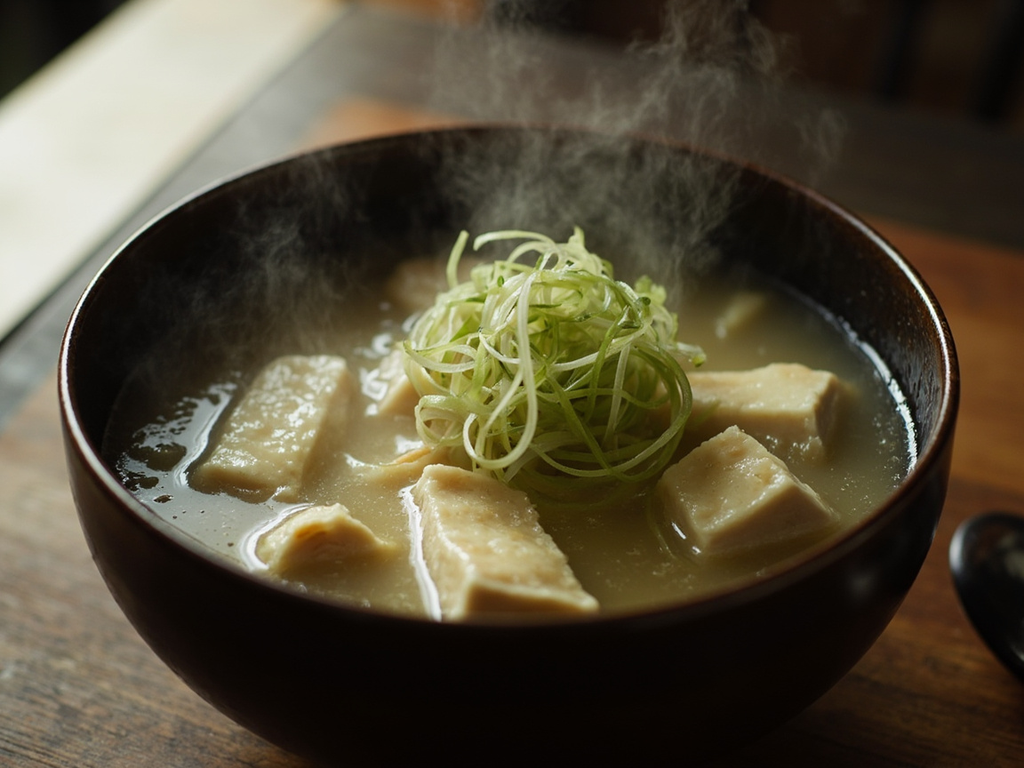
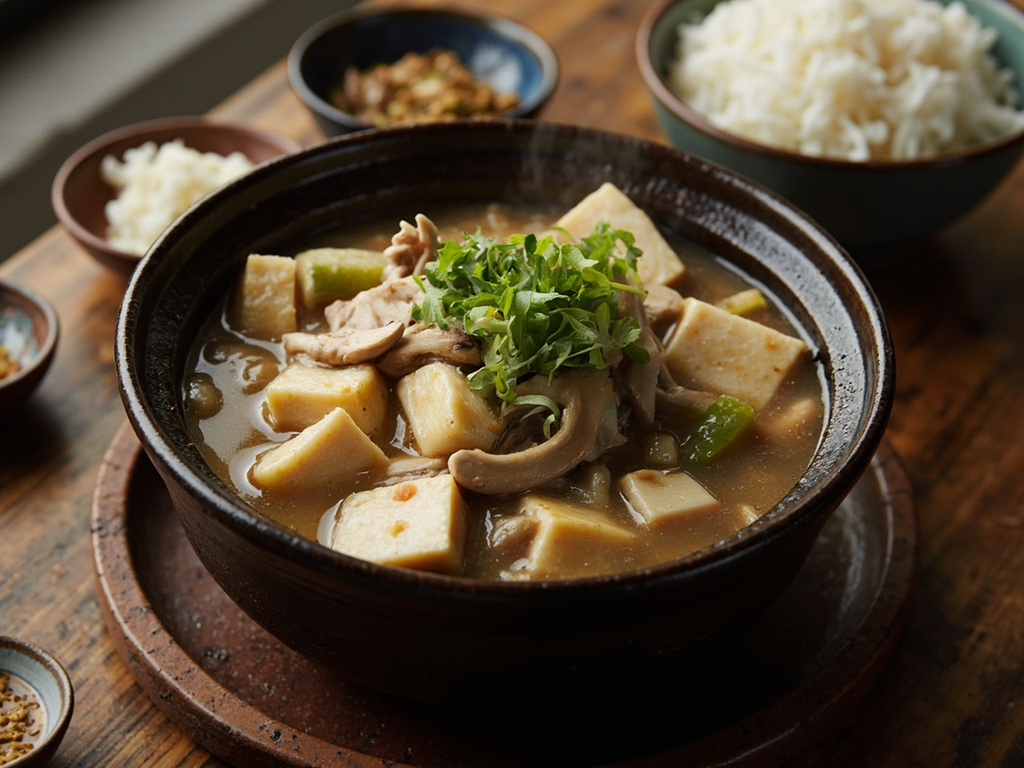
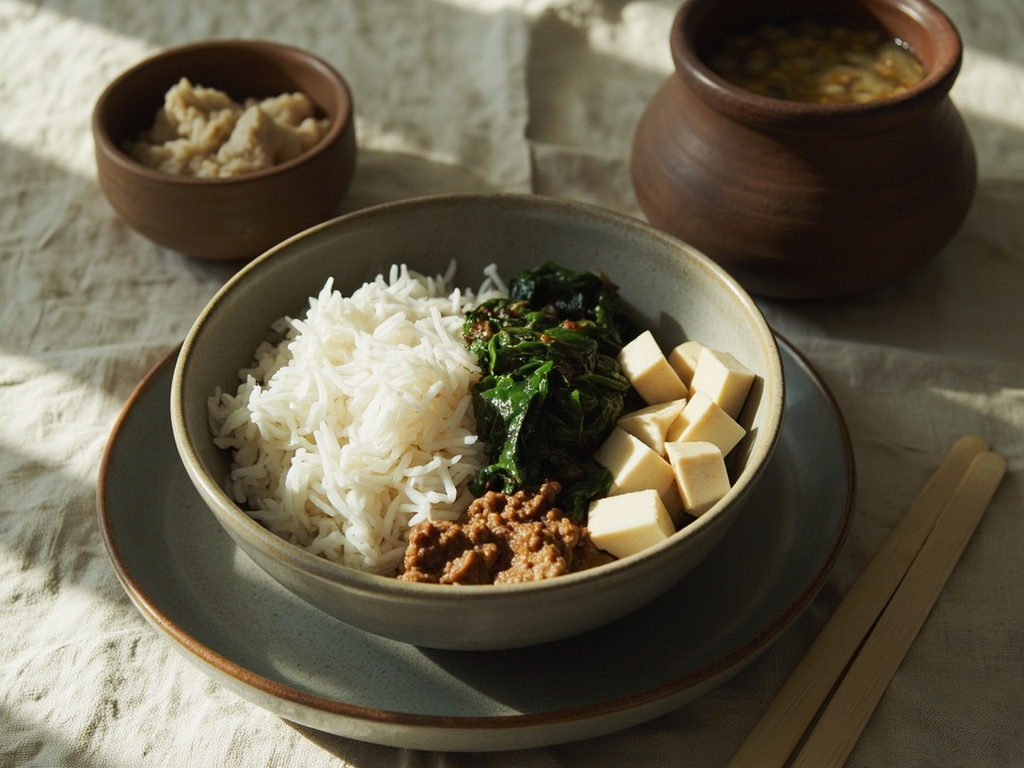
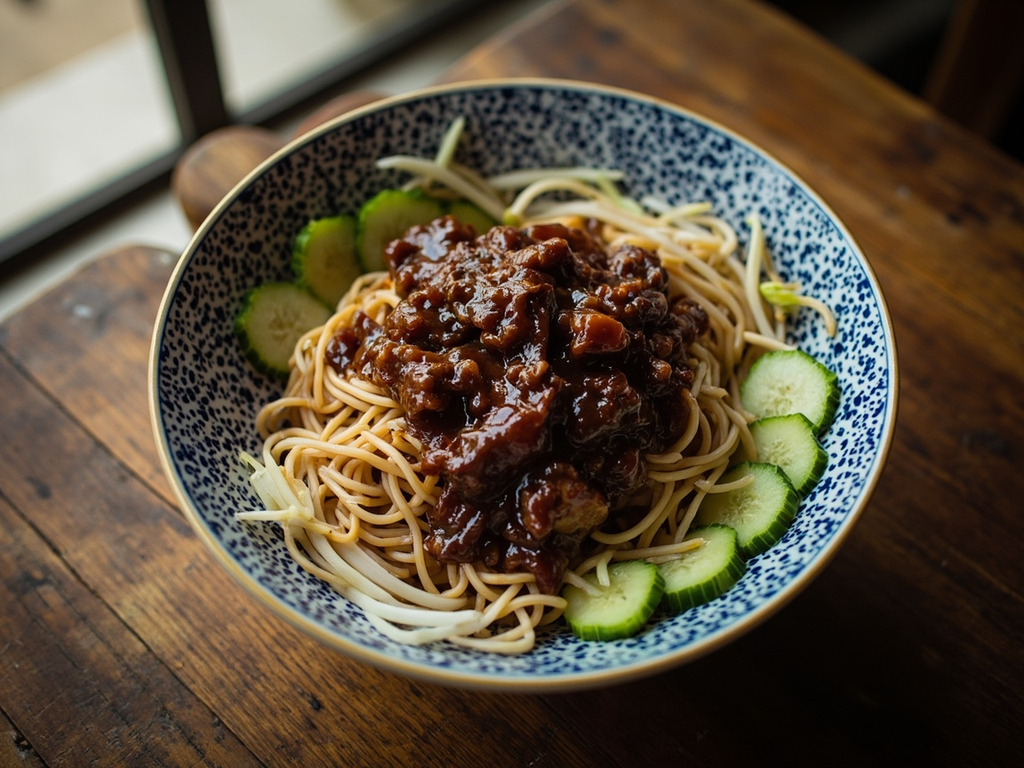
Thick wheat noodles topped with a brown sauce of minced pork slow-cooked in fermented soybean paste, surrounded by a crown of raw crunchy vegetables that each person mixes into their own bowl.
In Beijing, in the alley, this dish needs no explanation: you fry the meat, you throw in the soybean paste, and the smell calls everyone to the table. I make it like my mother did in the courtyard, without measuring anything — the sauce must be salty enough that a small spoonful suffices for a large bowl. Set out the cucumbers, radishes, bean sprouts around, and let each person mix their own way: I don't like telling people how to eat. A full table, chopsticks crossing — that's already a form of freedom.
- •Fresh hand-pulled wheat noodles — for the household (base (fàn))
- •Fermented soybean paste (huángjiàng) and sweet bean paste (tiánmiànjiàng) — two good ladles (signature, sauce base)
- •Pork belly, hand-chopped — one bowl (umami, body of sauce)
- •Scallions, ginger — to taste (aromatics)
- •Cucumber, radish, bean sprouts, fava beans — according to season (fresh garnishes (càimǎ))
Zhájiàngmiàn (炸酱面) — noodles with soybean paste
Thick wheat noodles topped with a brown sauce of minced pork slow-cooked in fermented soybean paste, surrounded by a crown of raw crunchy vegetables that each person mixes into their own bowl.
Why this dish? The quintessential home-style dish of Beijing, from the hutong where Ai Weiwei grew up and later returned to live. A family dish, without ceremony, that an artist who loves to feed his guests can make with his eyes closed.
In Beijing, in the alley, this dish needs no explanation: you fry the meat, you throw in the soybean paste, and the smell calls everyone to the table. I make it like my mother did in the courtyard, without measuring anything — the sauce must be salty enough that a small spoonful suffices for a large bowl. Set out the cucumbers, radishes, bean sprouts around, and let each person mix their own way: I don't like telling people how to eat. A full table, chopsticks crossing — that's already a form of freedom.
Ingredients (period version)
- Fresh hand-pulled wheat noodles — for the household (base (fàn))
- Fermented soybean paste (huángjiàng) and sweet bean paste (tiánmiànjiàng) — two good ladles (signature, sauce base)
- Pork belly, hand-chopped — one bowl (umami, body of sauce)
- Scallions, ginger — to taste (aromatics)
- Cucumber, radish, bean sprouts, fava beans — according to season (fresh garnishes (càimǎ))
Ingredients
- Fresh thick wheat noodles — 400 g (base)
- Fermented soybean paste (huángjiàng or dòubànjiàng) — 4 tbsp (signature)
- Sweet bean paste (tiánmiànjiàng) — 2 tbsp (roundness)
- Minced pork belly — 300 g (body of sauce)
- Scallions — 4 (aromatic)
- Ginger — 1 piece (aromatic)
- Cucumber, radish, bean sprouts — 1 bowl each, julienned (fresh garnishes)
- Neutral oil — 3 tbsp (cooking)
Method
- Dilute the soybean pastes with a little water to form a smooth slurry.
- Sauté ginger and scallion whites in hot oil, add minced pork and sear until browned.
- Pour in the diluted pastes and simmer on low heat for 20–25 minutes: the sauce darkens, thickens, and oil rises to the surface.
- Cook noodles in boiling water, drain (rinse with cold water in summer for guòshuǐmiàn).
- Plate noodles, spoon sauce on top, arrange raw vegetables in a ring. Each person mixes in their own bowl.
How it was made : A popular dish of old Beijing: the soybean paste, fermented in a jar for weeks, provided a savory base all year round. In summer, noodles were rinsed with well water (guòshuǐmiàn) to serve them cold.
The contemporary twist : Serve the sauce in a small separate bowl and the vegetables in neat lines: a graphic presentation, almost an installation, where the diner composes their own edible work.
Ai Weiwei · Charactorium