 flip
flipFichi secchi e mandorle — Dried Figs and Almonds for Lent
Fichi secchi e mandorle — Dried Figs and Almonds for Lent
Why this dish? To get through winter and long fasts without wasting anything, Umbrian convents dried fruits from the orchard. Dried figs and almonds, sweet and nourishing, were the allowed treat and energy reserve of the Poor Ladies — a fruit from the garden that God gives, preserved without artifice.
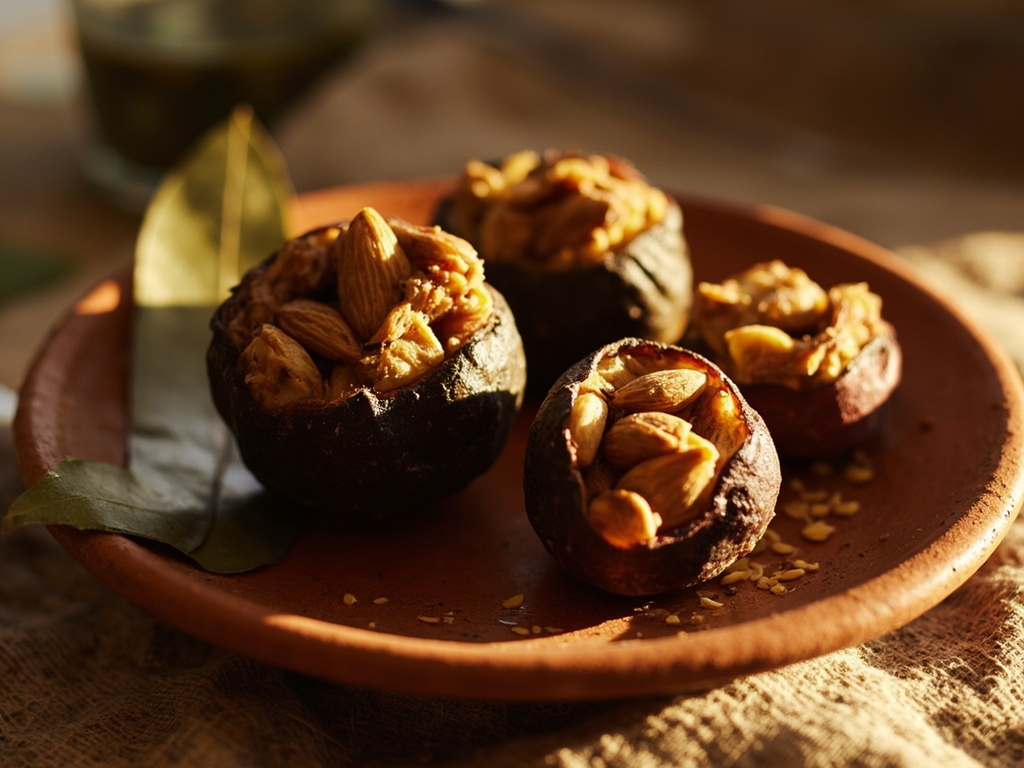
A few figs dried in the sun, folded around an almond, scented with a bay leaf and a hint of fennel. Naturally very sweet, they keep for months and appease hunger with almost nothing. The only indulgence tolerated at a penitential table.
When summer fills our fig trees, my sister, we let nothing of what Providence grants go to waste: we split the figs, lay them in the sun on racks, and store them in the cellar with a bay leaf. When winter comes, a single fig and an almond suffice to trick the hunger in the hollow of a long fast. Taste this sweetness without blushing: it does not come from us, but from the sun that God makes rise on the poor as on the rich.
- •Ripe fresh figs — a full basket (fruit to dry for storage)
- •Shelled almonds — a handful (nourishing core)
- •Bay leaves — a few (scent and preservation)
- •Fennel seeds — a pinch (orchard aroma)
Fichi secchi e mandorle — Dried Figs and Almonds for Lent
A few figs dried in the sun, folded around an almond, scented with a bay leaf and a hint of fennel. Naturally very sweet, they keep for months and appease hunger with almost nothing. The only indulgence tolerated at a penitential table.
Why this dish? To get through winter and long fasts without wasting anything, Umbrian convents dried fruits from the orchard. Dried figs and almonds, sweet and nourishing, were the allowed treat and energy reserve of the Poor Ladies — a fruit from the garden that God gives, preserved without artifice.
When summer fills our fig trees, my sister, we let nothing of what Providence grants go to waste: we split the figs, lay them in the sun on racks, and store them in the cellar with a bay leaf. When winter comes, a single fig and an almond suffice to trick the hunger in the hollow of a long fast. Taste this sweetness without blushing: it does not come from us, but from the sun that God makes rise on the poor as on the rich.
Ingredients (period version)
- Ripe fresh figs — a full basket (fruit to dry for storage)
- Shelled almonds — a handful (nourishing core)
- Bay leaves — a few (scent and preservation)
- Fennel seeds — a pinch (orchard aroma)
Ingredients
- Soft dried figs — 12 figs (base)
- Whole almonds (blanched or not) — 12 almonds (filling)
- Fennel seeds — 1 tsp (scent)
- Bay leaf — 1 or 2 (pantry scent)
Method
- If starting from fresh figs: split them, place flesh-side up on a rack, and dry in the sun for several days (or 6-8 hours in an oven at 60°C, door ajar).
- Lightly toast the almonds in a dry pan to awaken their flavor.
- Open each dried fig and slide an almond inside with a few fennel seeds.
- Press the fig closed gently.
- Store in an airtight jar with a bay leaf: they keep for several weeks.
- Serve as small bites, to break a fast or at the end of a feast meal.
How it was made : Sun-drying figs is one of the oldest preservation techniques in the Mediterranean basin. Rich in sugars and easy to store, dried figs and nuts were an essential reserve for monasteries and a quintessential Lenten food, as they do not count as forbidden "flesh." Honey and dried fruits were the only true sweets before the arrival of refined sugar.
The contemporary twist : Rolled in a little toasted fennel seeds and served with a shard of grilled pane d'orzo, these stuffed figs become a mignardise worthy of a restaurant — "cucina povera" elevated.
Sources : Bruno Laurioux, Manger au Moyen Âge · Massimo Montanari, La faim et l'abondance. Histoire de l'alimentation en Europe
Clare of Assisi · Charactorium