 flip
flipMorabbâ of quince with honey and rose water
Morabbâ of quince with honey and rose water
Why this dish? Avicenna advised eating fresh fruits in season—but out of season, fruits were preserved by confiting. Quince, which he cited for its astringent and stomach-tonic virtues, here becomes a perfumed preserve that lasts through winter.
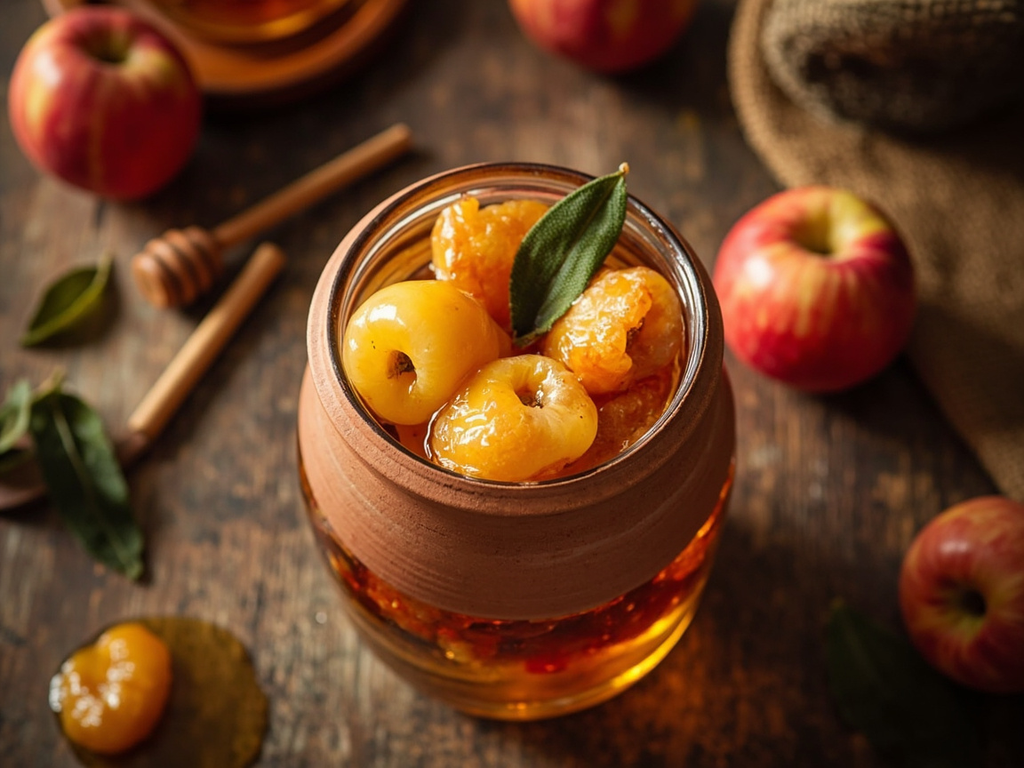
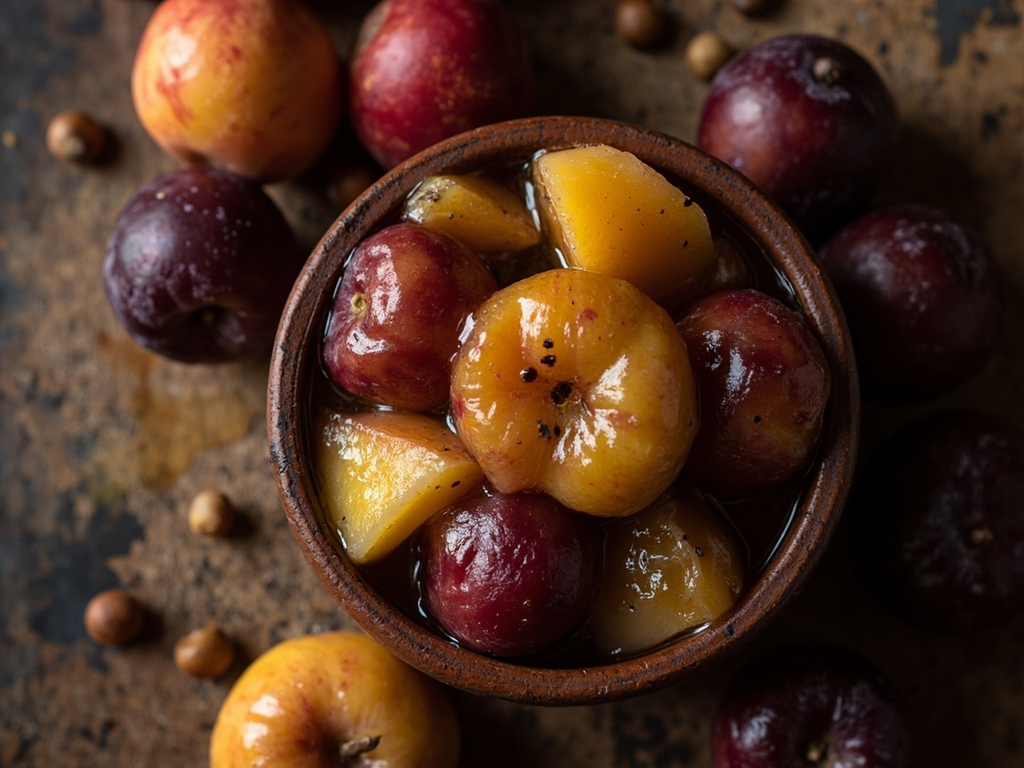
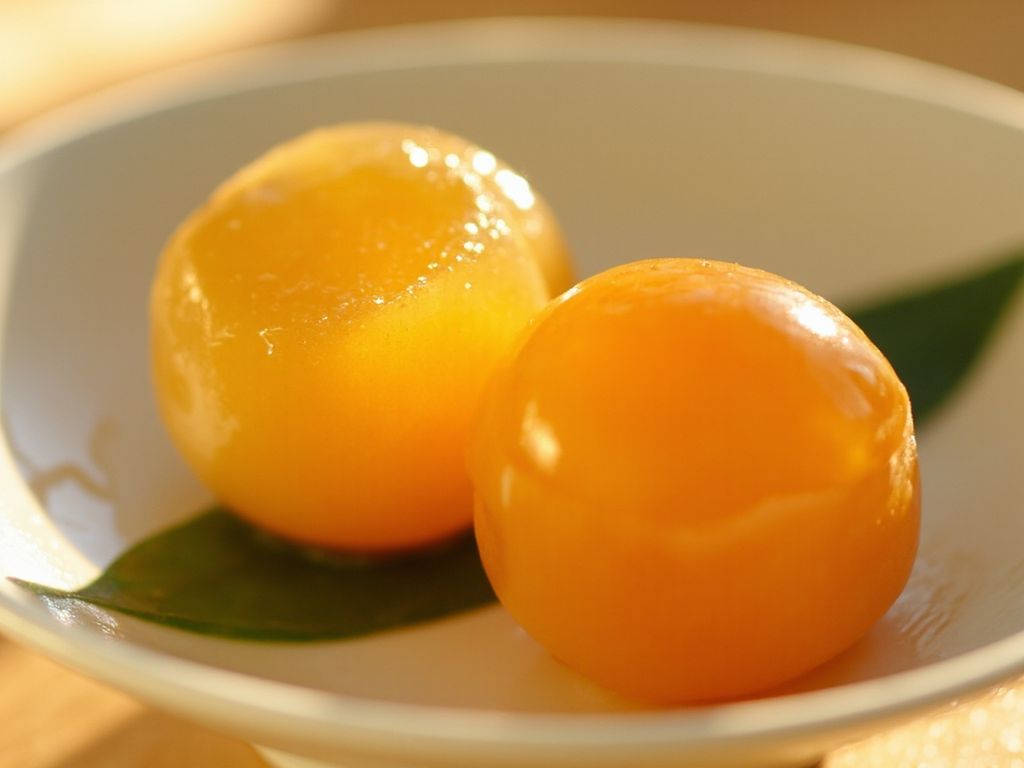
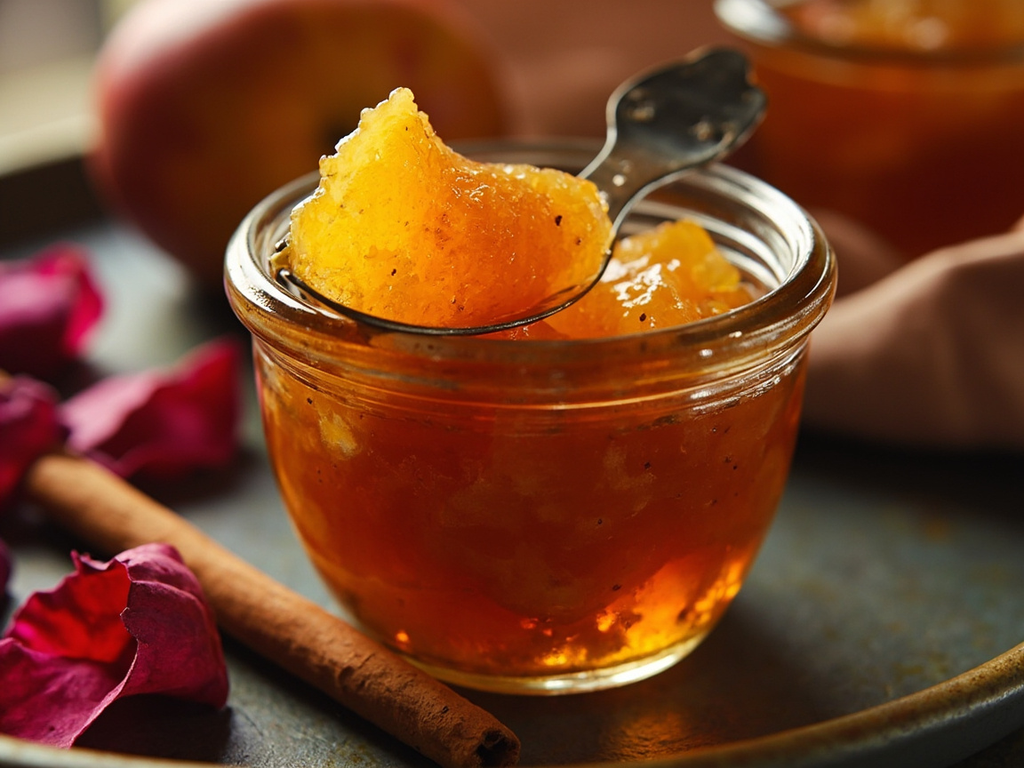
Quince wedges slowly poached in a honey syrup perfumed with rose water and cinnamon until they take on a beautiful amber hue. Stored in jars, this is the sweet preserve that brightens the sufra out of season.
The quince is a cold and astringent fruit, friend to the weakened stomach; yet one must know how to keep it when the tree no longer yields. I would cook it over a low fire in honey until its pale flesh turned amber and the syrup penetrated it entirely. A hint of rose water, a cinnamon stick, and there you have a sweetness that lasts all winter in a jar. Take a spoonful after the meal: it tightens the belly and gladdens the humor.
- •Ripe quinces — three (preserved fruit)
- •Honey — one large bowl (preserving agent)
- •Rose water — a dash (perfume)
- •Cinnamon (bark) — one stick (spice)
- •Lemon juice or verjuice — a little (acidity, set)
- •Water — to cover (syrup)
Morabbâ of quince with honey and rose water
Quince wedges slowly poached in a honey syrup perfumed with rose water and cinnamon until they take on a beautiful amber hue. Stored in jars, this is the sweet preserve that brightens the sufra out of season.
Why this dish? Avicenna advised eating fresh fruits in season—but out of season, fruits were preserved by confiting. Quince, which he cited for its astringent and stomach-tonic virtues, here becomes a perfumed preserve that lasts through winter.
The quince is a cold and astringent fruit, friend to the weakened stomach; yet one must know how to keep it when the tree no longer yields. I would cook it over a low fire in honey until its pale flesh turned amber and the syrup penetrated it entirely. A hint of rose water, a cinnamon stick, and there you have a sweetness that lasts all winter in a jar. Take a spoonful after the meal: it tightens the belly and gladdens the humor.
Ingredients (period version)
- Ripe quinces — three (preserved fruit)
- Honey — one large bowl (preserving agent)
- Rose water — a dash (perfume)
- Cinnamon (bark) — one stick (spice)
- Lemon juice or verjuice — a little (acidity, set)
- Water — to cover (syrup)
Ingredients
- Quinces — 3 (about 900 g) (fruit)
- Honey — 350 g (preserving syrup)
- Water — 400 ml (syrup)
- Rose water — 1 tbsp (perfume)
- Cinnamon stick — 1 (spice)
- Lemon juice — 1 tbsp (acidity)
Method
- Peel the quinces, core them, and cut into wedges (save peels and cores in a muslin bag: they help with setting).
- Bring water, honey, cinnamon, and lemon juice to a simmer; add the quinces and the bag.
- Poach over low heat for 1 h to 1 h 30: the flesh becomes tender and turns amber, the syrup thickens.
- Remove the bag and cinnamon, stir in rose water at the end.
- Pour into scalded jars while hot, seal, and turn upside down; store in a cool place.
How it was made : Confiting fruits in honey (and later, sugar) was the great preservation technique of medieval Persian and Arab cuisines. Quince, rich in pectin, takes particularly well and was prized for its digestive virtues—which Avicenna notes in his writings on foods.
The contemporary twist : Serve the quince morabbâ on fresh cheese or thick yogurt, with a few crushed pistachios: an instant dessert with Persian accents.
Sources : Ibn Sayyār al-Warrāq, Kitāb al-Tabīkh (10th century) · Avicenna, Al-Qānūn fī al-Ṭibb (chapters on foods)
Avicenna · Charactorium