 flip
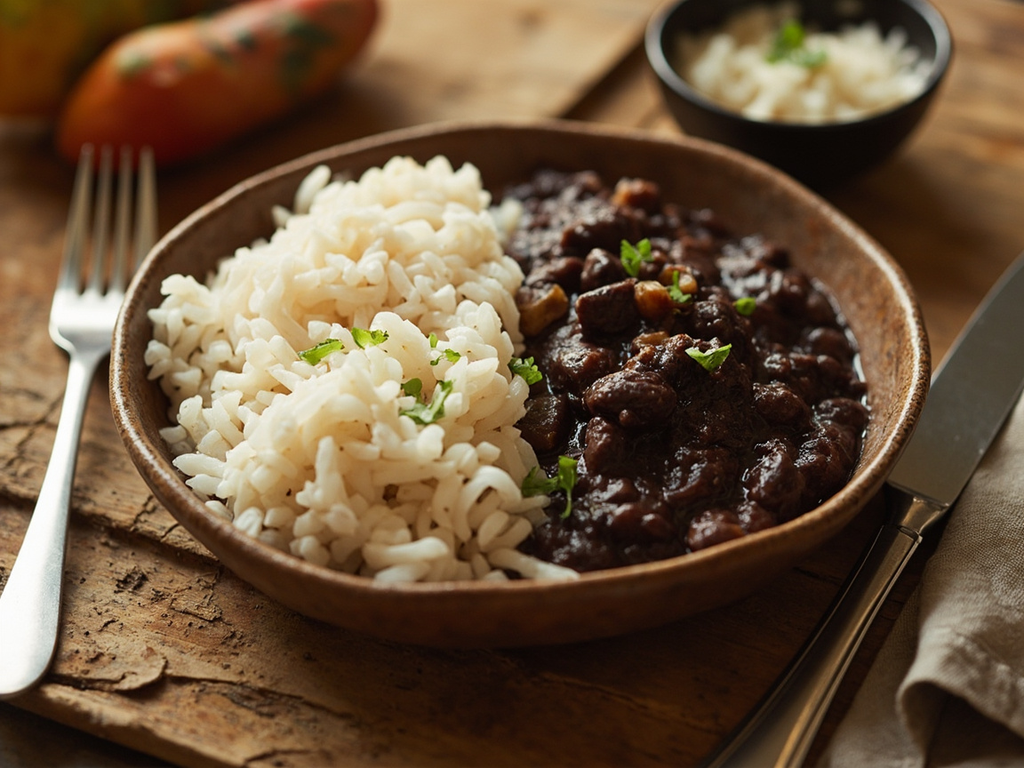
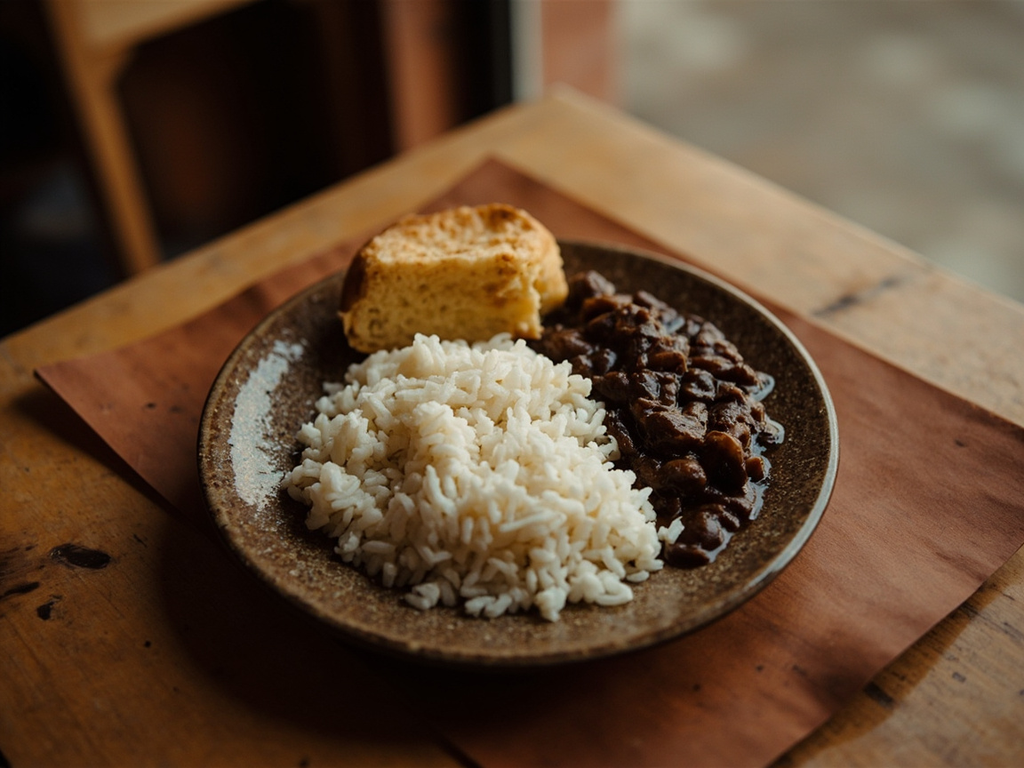
flipArroz com feijão preto (white rice and black beans)
Arroz com feijão preto (white rice and black beans)
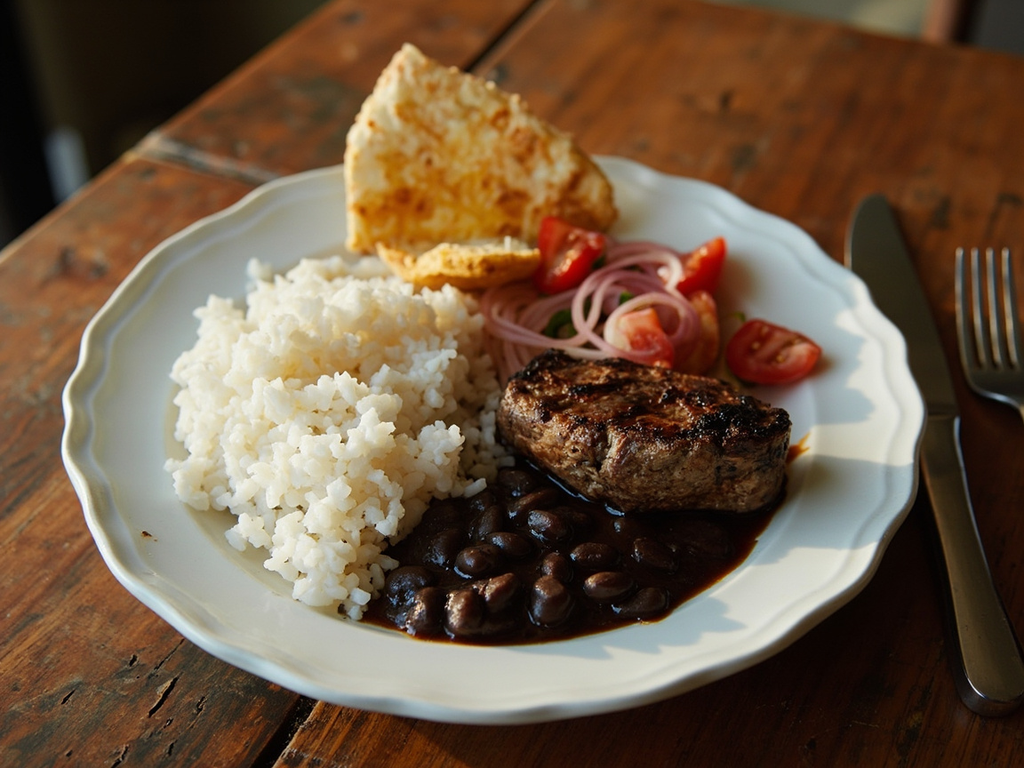
Why this dish? Her anchor is clear: Clarice ate simply, Brazilian-style — rice, black beans, grilled meat. The arroz-feijão duo was her most faithful daily fare.
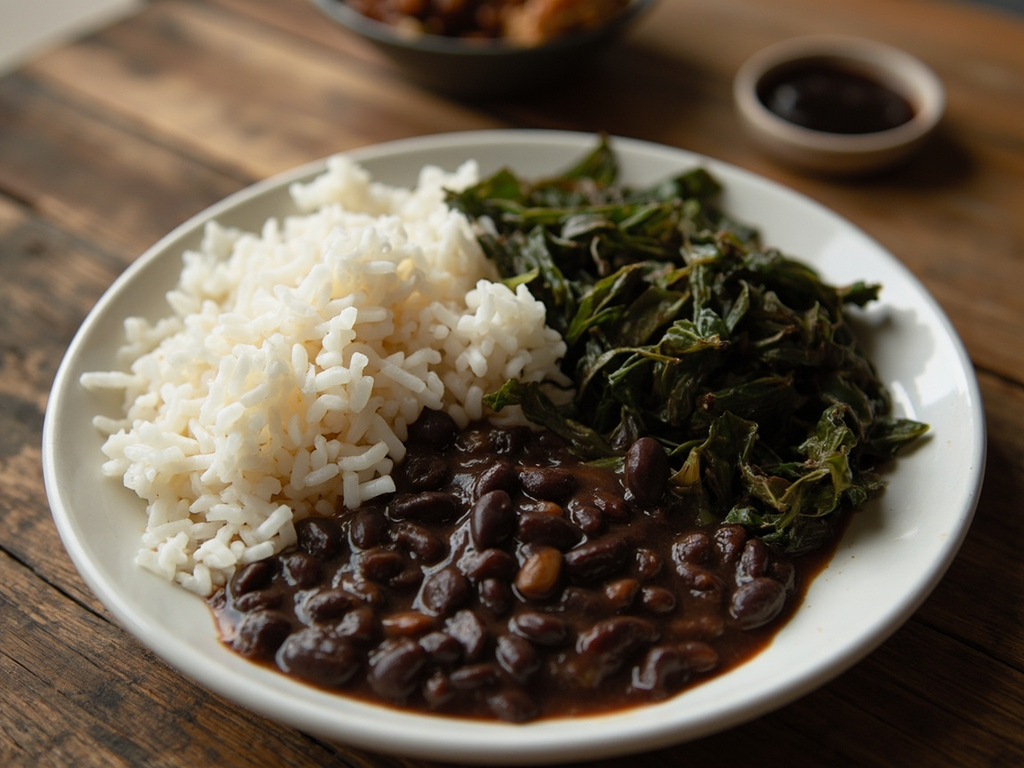
The founding duo of the Brazilian table: fragrant garlicky white rice, and black beans long-simmered until they yield a thick, silky broth. Simple, nourishing, infinitely comforting.
There is nothing more humble and nothing more whole than a plate of rice and black beans. In the morning I put the black grains to soak, and in the afternoon they simmer slowly, they thicken, they almost become a thought. The rice I want light, scented with garlic, because light must keep company with shadow. Eat them together, in the same spoonful: it is there, in the mixture, that the taste of Brazil lives.
- •Dried black beans (feijão preto) — a good handful per person (simmered base)
- •White rice — one cup for two (foundation)
- •Garlic — a few cloves (flavoring)
- •Onion — one (flavoring)
- •Bay leaf — one (aromatic)
- •Lard or oil — a little (fat)
- •Salt — to taste (seasoning)
Arroz com feijão preto (white rice and black beans)
The founding duo of the Brazilian table: fragrant garlicky white rice, and black beans long-simmered until they yield a thick, silky broth. Simple, nourishing, infinitely comforting.
Why this dish? Her anchor is clear: Clarice ate simply, Brazilian-style — rice, black beans, grilled meat. The arroz-feijão duo was her most faithful daily fare.
There is nothing more humble and nothing more whole than a plate of rice and black beans. In the morning I put the black grains to soak, and in the afternoon they simmer slowly, they thicken, they almost become a thought. The rice I want light, scented with garlic, because light must keep company with shadow. Eat them together, in the same spoonful: it is there, in the mixture, that the taste of Brazil lives.
Ingredients (period version)
- Dried black beans (feijão preto) — a good handful per person (simmered base)
- White rice — one cup for two (foundation)
- Garlic — a few cloves (flavoring)
- Onion — one (flavoring)
- Bay leaf — one (aromatic)
- Lard or oil — a little (fat)
- Salt — to taste (seasoning)
Ingredients
- Dried black beans — 250 g (soaked overnight) (simmered base)
- Long-grain white rice — 200 g (foundation)
- Garlic — 4 cloves (flavoring)
- Onion — 1 medium (flavoring)
- Bay leaf — 1 (aromatic)
- Neutral oil or lard — 2 tbsp (fat)
- Salt — to taste (seasoning)
Method
- Soak the black beans overnight, then cook them in plenty of water with the bay leaf until tender (45 min to 1 h, or pressure cooker 20 min).
- Sauté half the minced garlic and onion in a little fat, add a ladleful of beans, mash them, then return to the pot: the broth thickens (refogado technique).
- Salt, let simmer another 10 min for a creamy caldo.
- For the rice: sauté the remaining garlic in oil until golden, add the rice, toast it, cover with salted water (1.5 volumes), cover and cook 12 min on low heat.
- Serve the rice and beans side by side, to be mixed on the plate.
How it was made : Arroz-com-feijão has been the heart of Brazilian cuisine since colonial times, a marriage of rice and black beans (an American species, thus not anachronistic in the 20th century). The broth is thickened by mashing some of the beans sautéed with garlic and onion — the refogado.
The contemporary twist : Place a thin slice of orange on the side and a few shredded and sautéed collard green leaves: the garnish that already heralds Sunday feijoada.
Sources : Luís da Câmara Cascudo, História da Alimentação no Brasil
Clarice Lispector · Charactorium