 flip
flipCafé preto forte (strong black coffee)
Café preto forte (strong black coffee)
Why this dish? The anchor sheet clearly states: strong black coffee was an absolute constant in her days. Clarice wrote at night, cigarette in hand, a cup of cafezinho within reach — her writer's fuel.
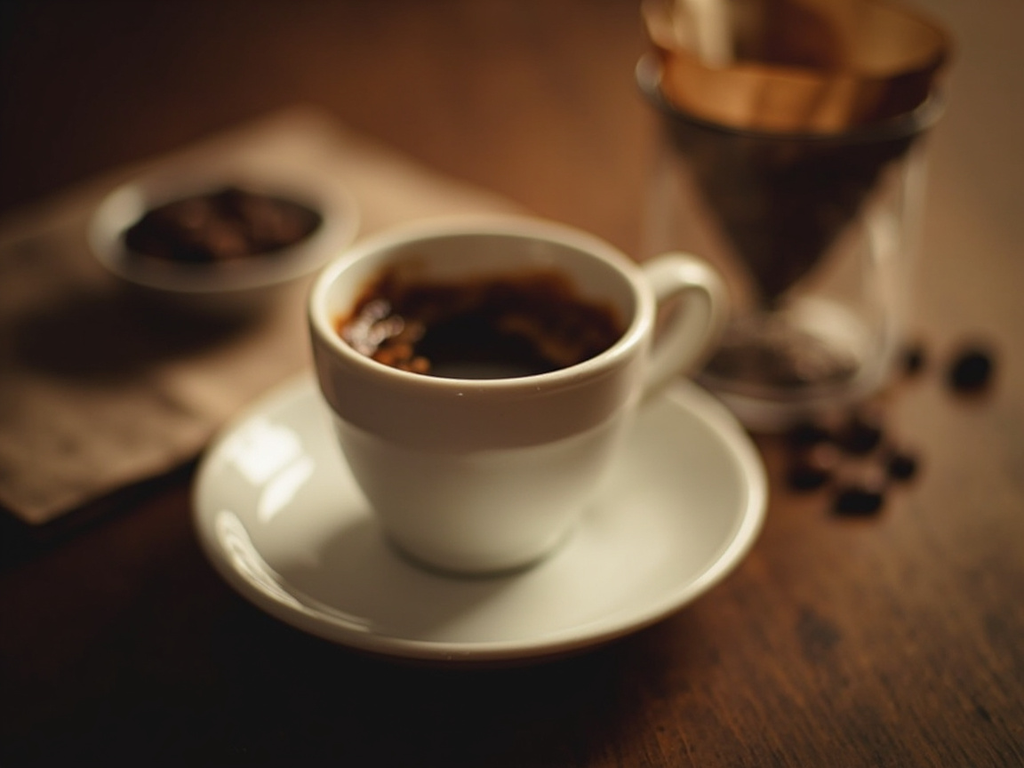
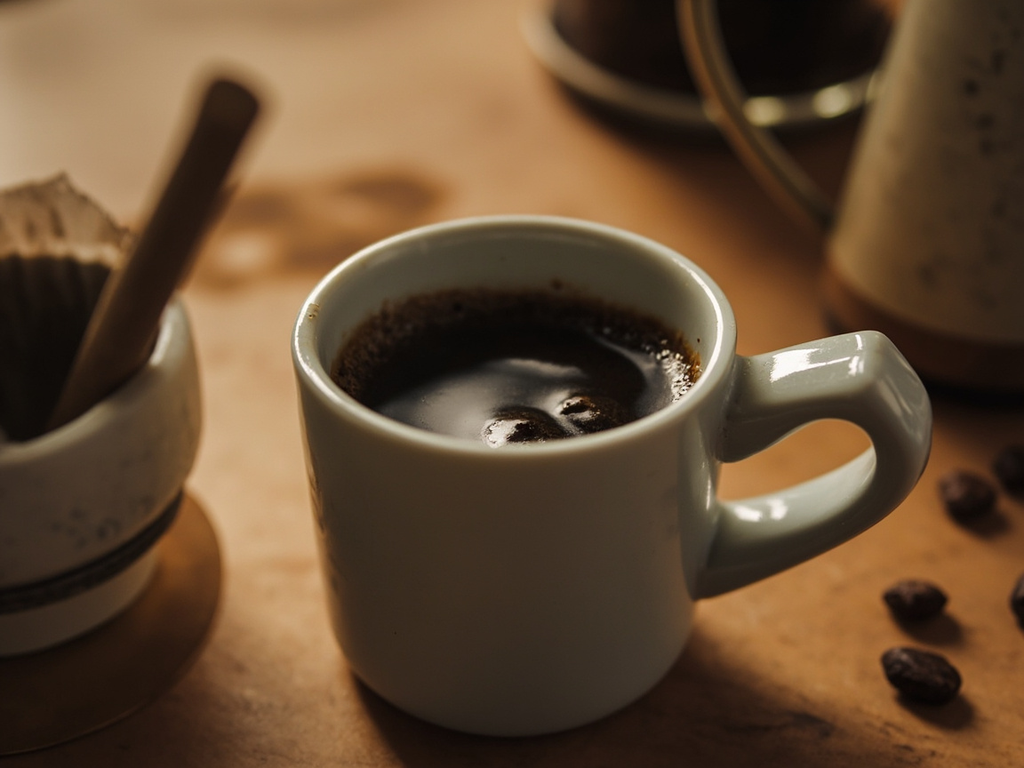
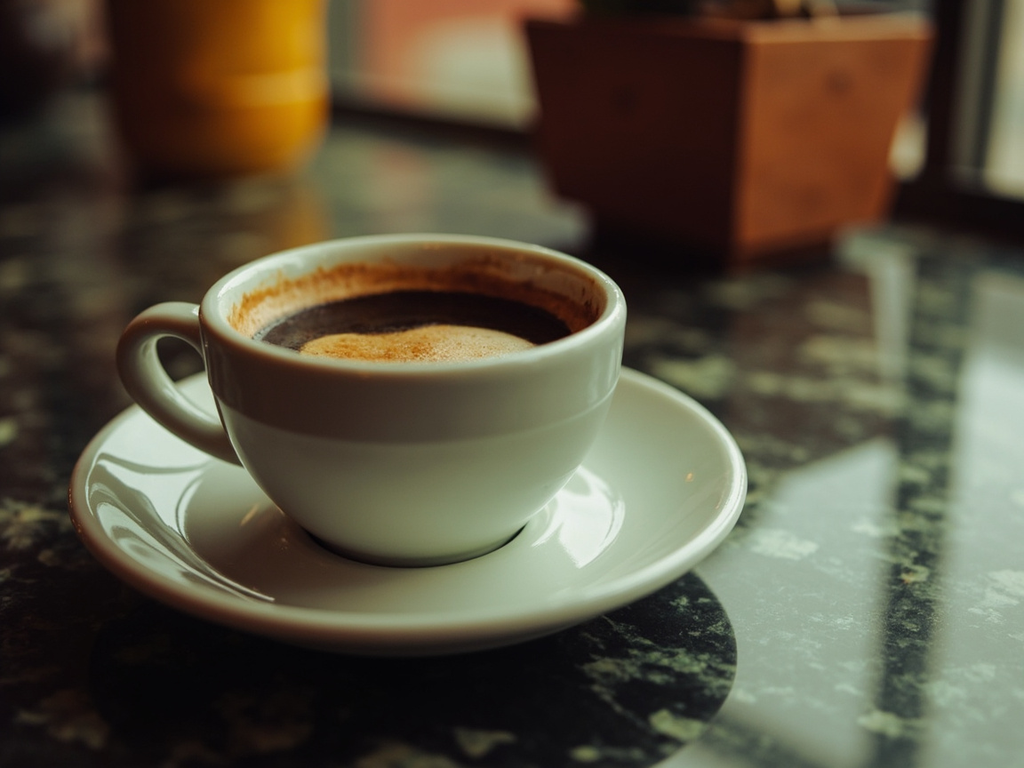
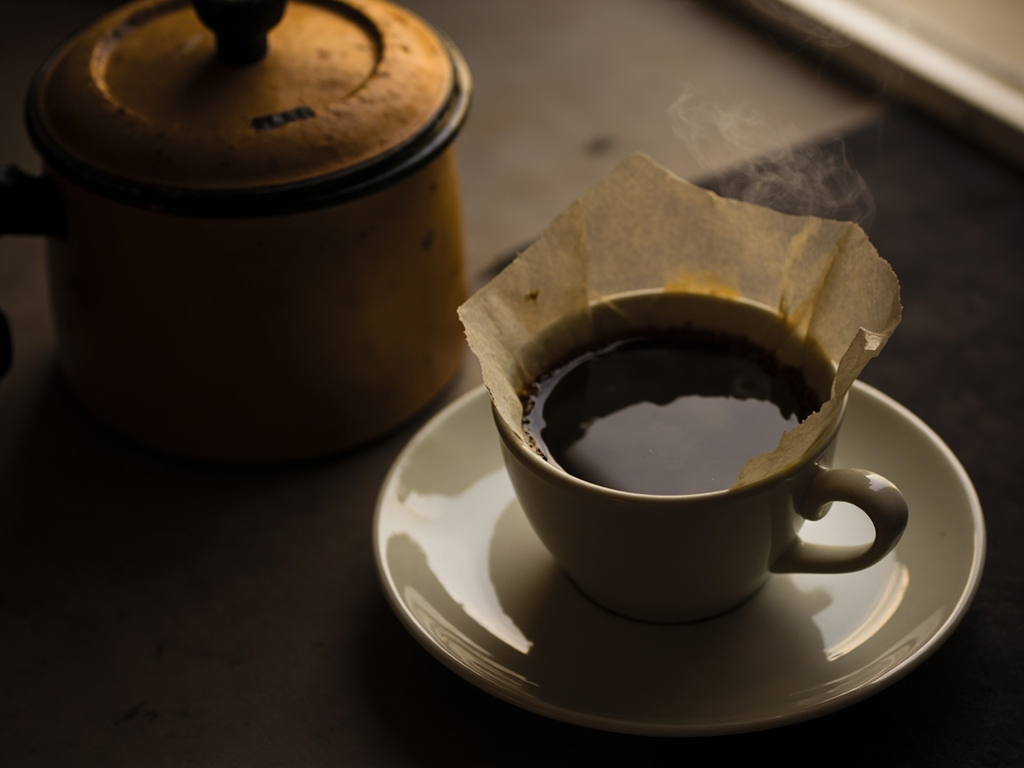
A small, strong Brazilian coffee, almost black, barely sweetened or not at all, strained through a cloth filter (coador de pano). It is drunk scalding hot, in a small cup, at any hour.
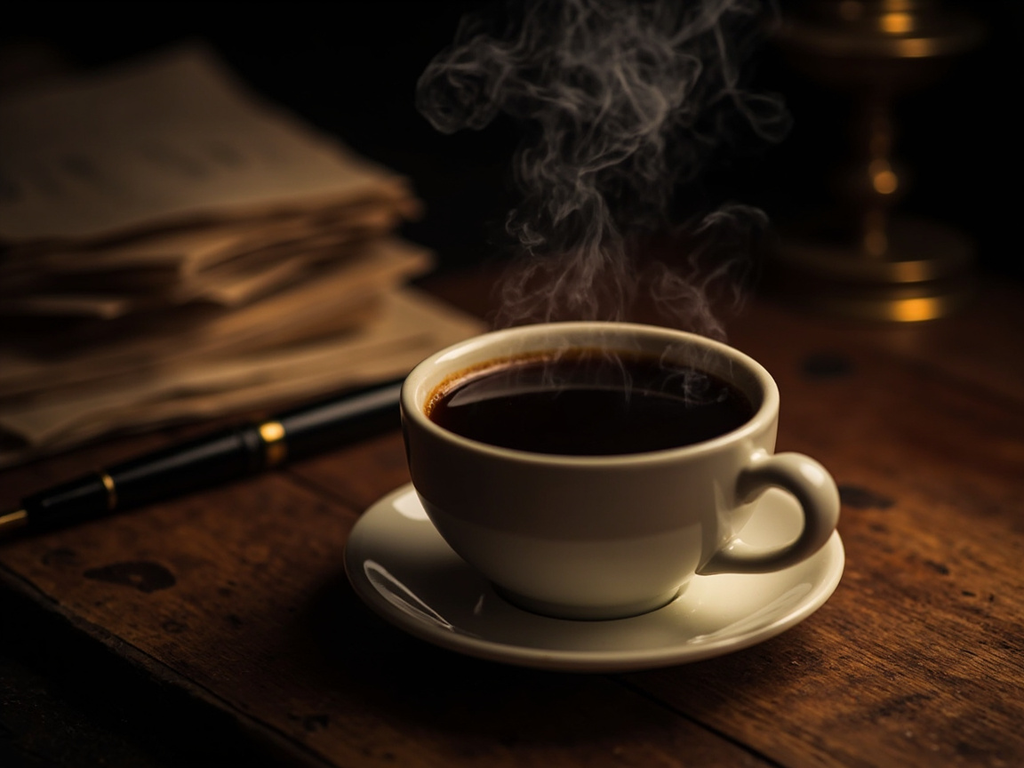
I don't ask for much in the morning: only this black cup that smokes and looks at me before I look at it. I want the coffee strong, almost bitter, like a truth we don't have time to sweeten. I strain it slowly through the cloth, drop by drop, and in that waiting there is already all the day's writing. Drink it burning hot, without understanding: some things are only understood by drinking them.
- •Brazilian roasted and finely ground coffee — two good spoonfuls per cup (base)
- •Simmering water (not boiling) — one small cup per person (extraction)
- •Cane sugar — to taste, very little (optional adjustment)
Café preto forte (strong black coffee)
A small, strong Brazilian coffee, almost black, barely sweetened or not at all, strained through a cloth filter (coador de pano). It is drunk scalding hot, in a small cup, at any hour.
Why this dish? The anchor sheet clearly states: strong black coffee was an absolute constant in her days. Clarice wrote at night, cigarette in hand, a cup of cafezinho within reach — her writer's fuel.
I don't ask for much in the morning: only this black cup that smokes and looks at me before I look at it. I want the coffee strong, almost bitter, like a truth we don't have time to sweeten. I strain it slowly through the cloth, drop by drop, and in that waiting there is already all the day's writing. Drink it burning hot, without understanding: some things are only understood by drinking them.
Ingredients (period version)
- Brazilian roasted and finely ground coffee — two good spoonfuls per cup (base)
- Simmering water (not boiling) — one small cup per person (extraction)
- Cane sugar — to taste, very little (optional adjustment)
Ingredients
- Brazilian arabica coffee, medium-fine grind — 14 g (2 tbsp) (base)
- Water at 92-95 °C — 120 ml (extraction)
- Brown sugar — 0 to 1 tsp (optional adjustment)
Method
- Heat the water without boiling (just before boiling).
- Place the ground coffee in a cloth filter (coador) or, failing that, a paper filter.
- Pour the hot water in two stages, in circular motions, to fully moisten the grounds.
- Let it drip slowly into the coffee pot or directly into the cup.
- Serve very hot, in a small cup; sweeten barely if you wish, but the true taste is in the frank bitterness.
How it was made : In Brazil, coffee is traditionally strained through a coador de pano, a cloth filter stretched over a hoop, inherited from the 19th century. As the world's largest producer, the country made cafezinho a social gesture as much as a beverage: it is offered to every visitor, at any hour.
The contemporary twist : Serve it in a small white cup placed on an open notebook and a pencil — Clarice's writing altar, coffee and words side by side.
Sources : Luís da Câmara Cascudo, História da Alimentação no Brasil · Benjamin Moser, Clarice, (Why This World, biography of Clarice Lispector)
Clarice Lispector · Charactorium