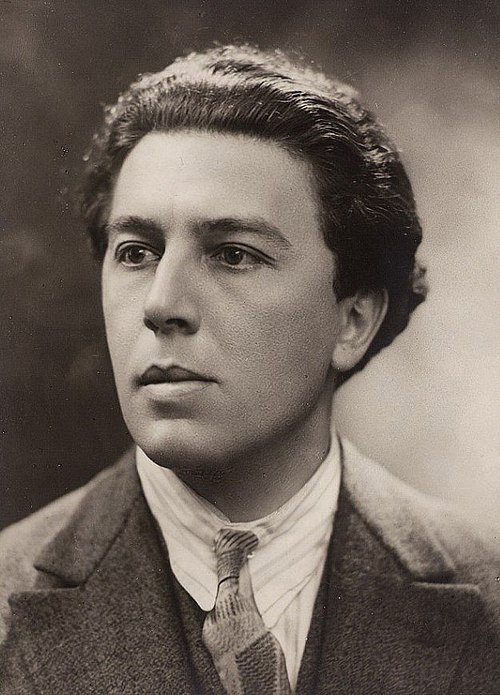
Claude Chabrol(1930 — 2010)
Claude Chabrol
France
6 min read
Claude Chabrol (1930-2010) was a French director, screenwriter and producer, a major figure of the French New Wave. A critic at Cahiers du cinéma before moving into directing, he built a prolific body of work dissecting the hypocrisies and impulses of the provincial bourgeoisie.
Frequently asked questions
Famous Quotes
« Stupidity is the relaxation of intelligence.»
Key Facts
- Launched the New Wave with his first feature film Le Beau Serge (1958), often regarded as the founding film of the movement
- Directed Les Cousins (1959), winner of the Golden Bear at the Berlin Film Festival
- Made Le Boucher (1970), a psychological thriller shot in the Dordogne, one of his most famous films
- Pursued a prolific career of more than fifty feature films through to La Fille coupée en deux (2007)
- Died in Paris on 12 September 2010
Works & Achievements
Chabrol's first feature film, often considered one of the founding works of the French New Wave.
A success that confirmed Chabrol's talent, pitting a student from the provinces against his cynical Parisian cousin.
A portrait of young Parisian shop girls, a film now reassessed as a high point of his early period.
A chilling marital drama with Stéphane Audran, typical of his dissection of the bourgeoisie.
A psychological thriller set in a village in the Périgord, often cited among his greatest achievements.
His first collaboration with Isabelle Huppert, inspired by a real criminal case from the 1930s.
The story of a “backstreet abortionist” during the Occupation, an unflinching look at Vichy France.
A drama about class relations between a bourgeois woman and her maid, a masterpiece of his mature period.
Anecdotes
During the Occupation, the young Claude Chabrol was sent to live with his grandmother in Sardent, a small village in the Creuse region. A film enthusiast, he set up a film club in a barn there, projecting movies by the flickering light of a projector: this is where his vocation was born. Twenty years later, he would return to shoot his first feature film, *Le Beau Serge*, in that very same village.
Chabrol was able to make *Le Beau Serge* in 1958 thanks to an inheritance received by his first wife. With this money, he founded his own production company, AJYM Films, and answered to no one — a rare luxury for a beginner who had never directed before. The film is often cited as one of the very first of the French New Wave.
Before stepping behind the camera, Chabrol was a critic at *Cahiers du cinéma*. In 1957, together with Éric Rohmer, he published the very first serious book devoted to Alfred Hitchcock, who was then regarded in France as a mere maker of entertainment. The two young critics thus helped to establish Hitchcock as a true auteur.
A great gourmet and a fine connoisseur of wines, Chabrol was renowned for his good humor and the carefully prepared meals on his film sets. Food and bourgeois dinners come up again and again in his films, where a scene around the table can reveal a family's hypocrisies and hidden tensions better than any long speech.
Chabrol formed with the actress Isabelle Huppert one of the most fruitful director-actress partnerships in French cinema: they made seven films together, from *Violette Nozière* (1978) to *La Cérémonie* (1995). Before her, it was his wife Stéphane Audran who served as his muse in the 1960s and 1970s.
Primary Sources
The two critics set out to analyse the English filmmaker's work film by film, championing the idea that Hitchcock is a fully fledged author whose suspense conceals a genuine morality.
Here Chabrol recounts his discovery of cinema in the Creuse, his years as a critic and his beginnings as a director, with the humour and detachment that define him.
“Stupidity is infinitely more fascinating than intelligence. Intelligence has its limits, whereas stupidity has none.”
Key Places
Chabrol's birthplace, where he was a critic at *Cahiers du cinéma*, directed most of his films, and died in 2010.
Village where Chabrol spent part of his childhood during the Occupation and ran a film club. He returned there to shoot *Le Beau Serge* in 1958.
Home of the International Film Festival, where Chabrol's works were regularly presented and awarded throughout his career.