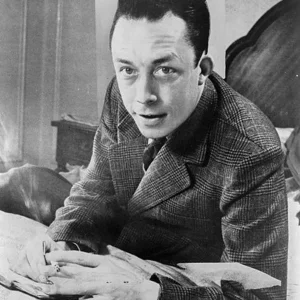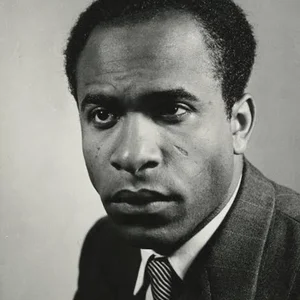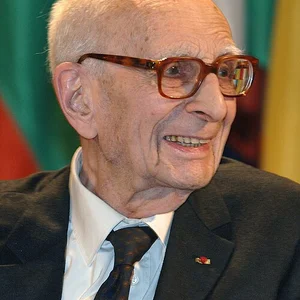

French anthropologist and ethnologist (1908-2009), founder of structural anthropology. He revolutionized the study of human societies by applying structuralist methods to myths, kinship systems, and cultural practices. His major work, Tristes Tropiques, combines ethnographic narrative with philosophical reflection.
Claude Lévi-Strauss(1908 — 2009)
Claude Lévi-Strauss
Belgique, France
6 min read
Frequently asked questions
Famous Quotes
« The scientist is not the person who gives the right answers; he is the one who asks the right questions.»
« Who said that man had stopped being primitive?»
Key Facts
- 1935-1939: Ethnographic fieldwork in Brazil among the Nambikwara and Tupi-Kawahib peoples
- 1945-1948: Cultural attaché in New York, encounters with structural linguists
- 1949: Publication of The Elementary Structures of Kinship, foundational work of structural anthropology
- 1955: Publication of Tristes Tropiques, a landmark work combining autobiography and anthropology
- 1958: Creation of the Social Anthropology Laboratory at the Collège de France
Works & Achievements
A founding work of structural anthropology, demonstrating that the prohibition of incest and the exchange of women between groups are at the basis of all social organization.
An autobiographical and philosophical account of his travels in Brazil, blending ethnography, meditation on civilization, and a critique of colonialism. Considered a literary masterpiece.
A collection of theoretical articles that lays the methodological foundations of structuralism in anthropology, applying structural linguistics to the study of societies.
A work that rehabilitates the thought of so-called primitive societies, showing that it is just as rigorous and logical as Western scientific thought.
A monumental study analyzing hundreds of Amerindian myths to identify their universal logical structures. The four volumes are titled The Raw and the Cooked, From Honey to Ashes, The Origin of Table Manners, and The Naked Man.
A text written for UNESCO that deconstructs the notion of hierarchy between civilizations and argues for cultural diversity as a richness of humanity.
A study of the masks of the peoples of the northwest coast of America, showing that their meaning can only be understood within a system of transformations between neighboring societies.
Anecdotes
During his stay in Brazil in the 1930s, Lévi-Strauss nearly starved while exploring the Mato Grosso with the Nambikwara. He had to eat roasted spiders and grasshoppers to survive, an experience he recounts with humor in Tristes Tropiques.
Lévi-Strauss recounted that he had three 'intellectual mistresses': geology, Marxism, and psychoanalysis. These three disciplines had taught him to look beneath the surface of things for a hidden order, which would become the foundation of his structural method.
During World War II, Lévi-Strauss fled France and found himself on a cargo ship with André Breton, the founder of Surrealism. The two men spent the crossing in passionate debate: Breton defended art as revelation, Lévi-Strauss science as the unveiling of structures.
At the New York Public Library, in exile during the war, Lévi-Strauss met the linguist Roman Jakobson, whose lectures on structural phonology transformed his thinking. This chance encounter proved decisive for the birth of structural anthropology.
Lévi-Strauss was elected to the Académie française in 1973. He lived to be a centenarian, passing away at the age of 100 in 2009. Until the end of his life, he continued to work and receive visitors in his office at the Collège de France.
Primary Sources
I hate travelling and explorers. Yet here I am proposing to tell the story of my expeditions. But how long it has taken me to make up my mind to do so!
World civilization cannot be anything other than the coalition, on a world scale, of cultures each preserving its own originality.
The ultimate goal of the human sciences is not to constitute man but to dissolve him.
The scientist is not the person who provides the right answers; it is the one who asks the right questions.
Key Places
Lévi-Strauss taught sociology at the university there from 1935 to 1939. It served as his base for ethnographic expeditions into the Mato Grosso.
The region of his major expeditions among the Caduveo, Bororo, and Nambikwara peoples — founding experiences that shaped his vocation as an ethnologist.
His place of exile during the war (1941–1947), where he met Roman Jakobson and attended the New School for Social Research.
He held the chair of social anthropology there from 1959 to 1982, founding the Laboratoire d'anthropologie sociale.
His country house where he liked to retreat to write and work away from the bustle of Paris.
Typical Objects

Lévi-Strauss meticulously recorded his ethnographic observations in notebooks during his expeditions in Brazil, also sketching villages and ritual objects.

He documented his fieldwork among the Nambikwara and Bororo through photography, building valuable visual archives of the peoples he studied.

His working method relied on a card index system in which he classified myths, variants, and motifs to identify underlying common structures.
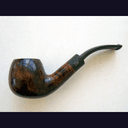
An avid pipe smoker, Lévi-Strauss was often photographed with this object, which accompanied him during his long hours of reading and reflection.
📷 CC BY-SA 3.0 · Wikimedia Commons ↗
He collected and studied masks from the peoples of the American Northwest Coast, dedicating an entire book to them: The Way of the Masks.

Passionate about music, particularly Wagner and Rameau, he structured the volumes of his Mythologiques according to musical forms: fugue, sonata, rondo.
School Curriculum
Vocabulary & Tags
Key Vocabulary
Daily Life
Morning
Lévi-Strauss rose early and began his day by reading his mail and the newspapers. He then set to writing from the morning onward, a period he considered the most productive for theoretical reflection.
Afternoon
The afternoon was devoted to seminars and lectures at the Collège de France, as well as meetings of the Laboratoire d'anthropologie sociale. He also received students and colleagues for scientific discussions.
Evening
In the evenings, Lévi-Strauss listened to music, particularly Wagner, Rameau, and Debussy — a passion that deeply nourished his thinking on structures. He also read extensively, especially literature and philosophy.
Food
Lévi-Strauss had a simple, bourgeois diet typical of the Parisian intellectual class. During his fieldwork in Brazil, he adapted to local food: manioc, game, river fish, and tropical fruits.
Clothing
In his daily Parisian life, he wore classic, understated, and elegant suits with a tie. In the field in Brazil, he adopted an explorer's attire: canvas shirt, sturdy trousers, and a wide-brimmed hat to shield against the sun.
Housing
In Paris, Lévi-Strauss lived in an apartment in the 16th arrondissement filled with books and works of primitive art. His office at the Collège de France was lined with volumes and index cards. He also owned a country house in Burgundy where he liked to retreat to write.
Historical Timeline
Period Vocabulary
Visual Style
Un style visuel mêlant l'esthétique documentaire des années 1930-50 aux motifs géométriques des peuples amérindiens, dans des tons de vert forêt, terre cuite et crème vieilli.
Sound Ambience
Les sons de la forêt amazonienne — singes hurleurs, insectes, rivière — se mêlent au calme studieux d'un bureau parisien du Collège de France, entre pages tournées et rumeur lointaine de la ville.
Liens externes & ressources
Références
Œuvres
Les Structures élémentaires de la parenté
1949
Tristes Tropiques
1955
Anthropologie structurale
1958
La Pensée sauvage
1962
Mythologiques (4 volumes)
1964-1971
Race et Histoire
1952
La Voie des masques
1975