 flip
flipWedding Mead
Wedding Mead
Why this dish? Mead, the honey wine of the Northern peoples, accompanied weddings and oaths among the Franks. One can imagine it flowing at the betrothal of Clotilde and Clovis, sealing the alliance of the Burgundian princess and the King of the Franks.
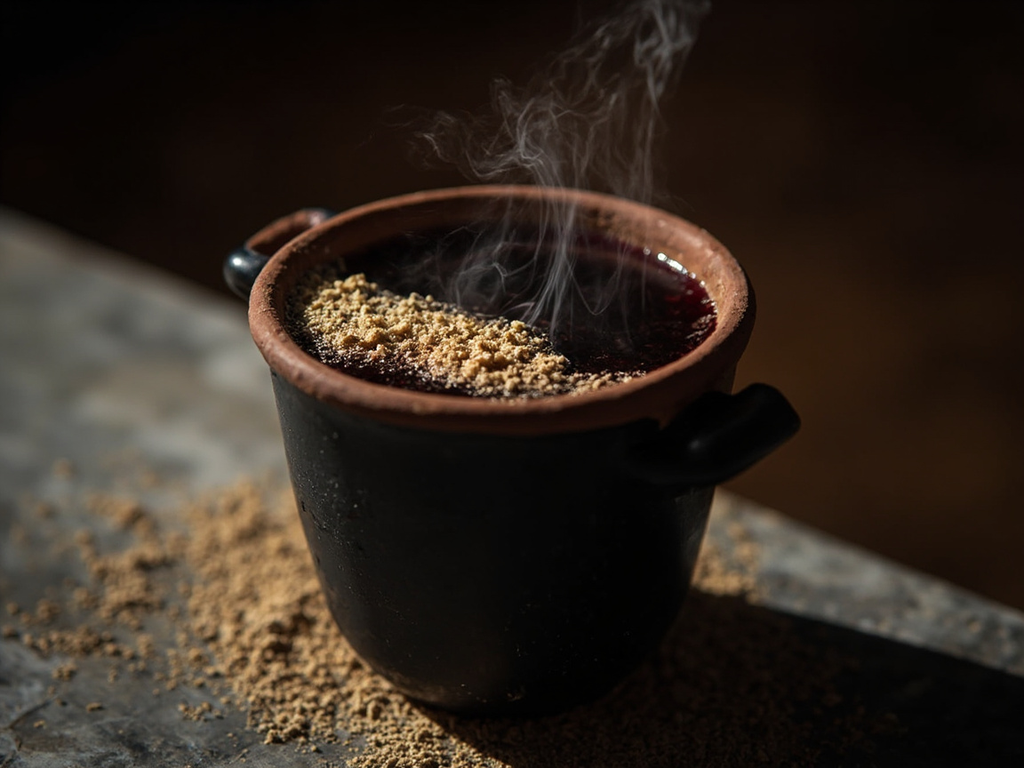
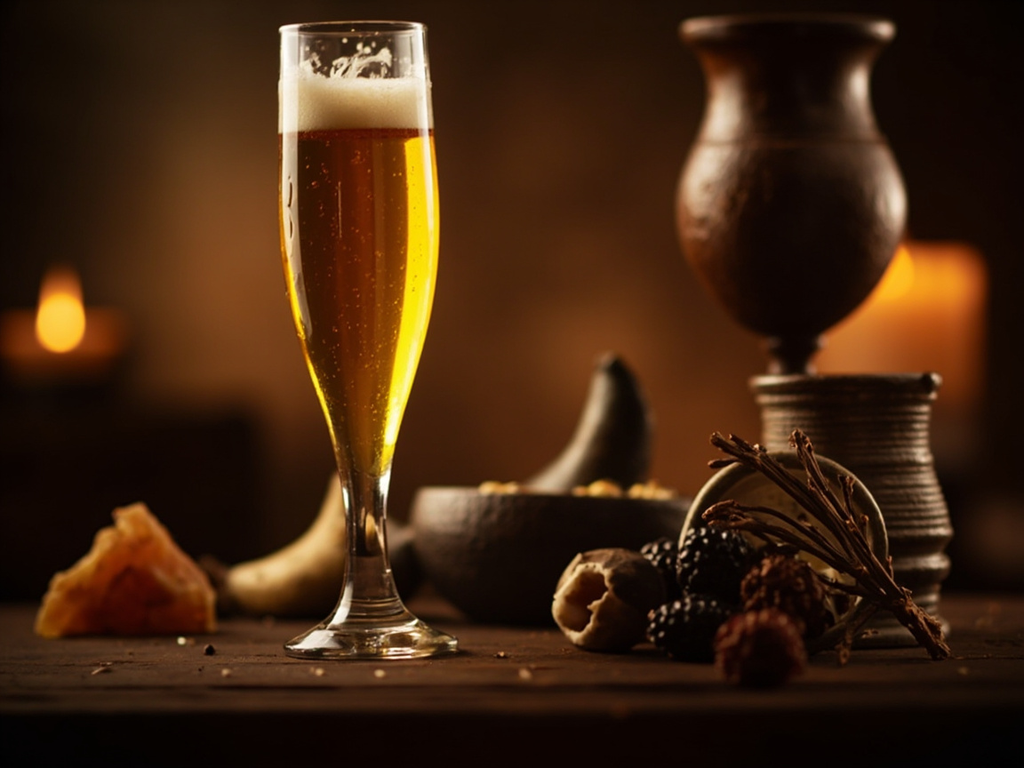
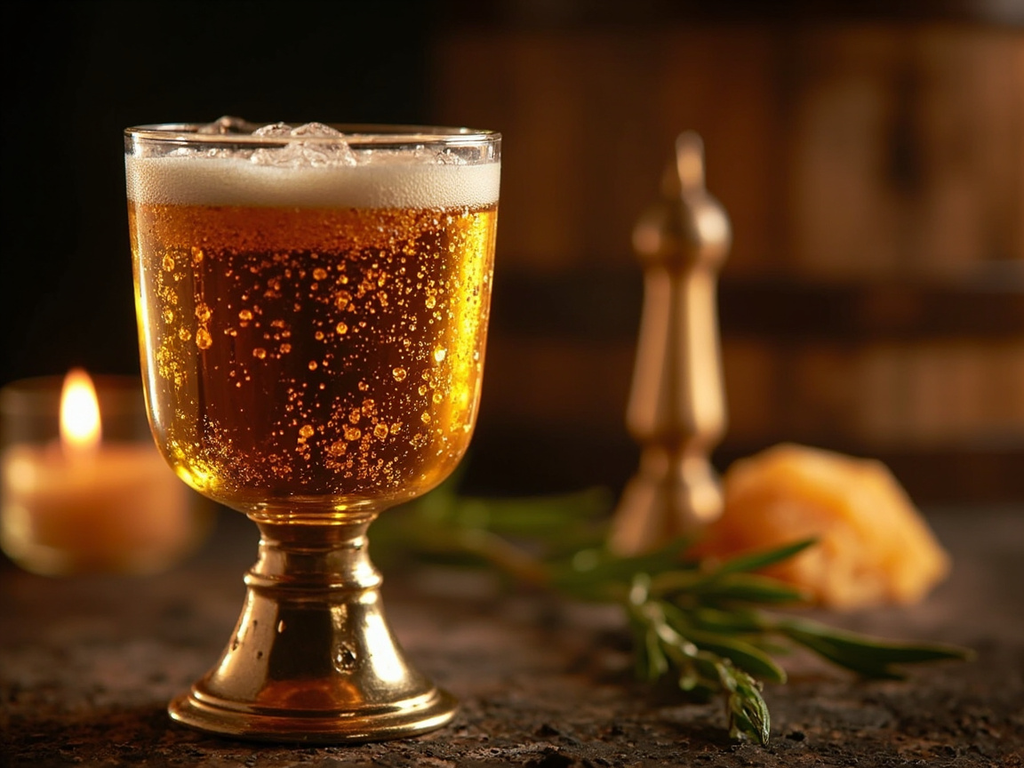
A golden drink born from the simple fermentation of honey in water, scented with herbs. Sweet and lightly sparkling, it is the beverage of great occasions, halfway between wine and nectar.
Mead, you see, is the drink of oaths and weddings, the one raised when two houses become one. We let the honey marry the spring water for many weeks, in barrels kept cool, until it caught fire and frothed. The day I became the wife of the King of the Franks, it was a cup of this golden wine that was offered to me. Drink little of it, but drink it with a glad heart.
- •Honey — a good measure (fermentable sugar)
- •Spring water — three measures (base)
- •Aromatic herbs (savory, rosemary) — a bunch (flavoring)
Wedding Mead
A golden drink born from the simple fermentation of honey in water, scented with herbs. Sweet and lightly sparkling, it is the beverage of great occasions, halfway between wine and nectar.
Why this dish? Mead, the honey wine of the Northern peoples, accompanied weddings and oaths among the Franks. One can imagine it flowing at the betrothal of Clotilde and Clovis, sealing the alliance of the Burgundian princess and the King of the Franks.
Mead, you see, is the drink of oaths and weddings, the one raised when two houses become one. We let the honey marry the spring water for many weeks, in barrels kept cool, until it caught fire and frothed. The day I became the wife of the King of the Franks, it was a cup of this golden wine that was offered to me. Drink little of it, but drink it with a glad heart.
Ingredients (period version)
- Honey — a good measure (fermentable sugar)
- Spring water — three measures (base)
- Aromatic herbs (savory, rosemary) — a bunch (flavoring)
Ingredients
- Honey — 300 g (fermentable sugar)
- Spring water — 1 liter (base)
- Yeast (baker's or mead yeast) — a pinch (fermentation)
- Sprig of rosemary or savory — 1 (flavoring)
- Lemon juice or grape juice (modern acidity substitute) — a dash (fermentation balance)
Method
- Warm the water (not boiling) and dissolve the honey until a homogeneous must is obtained.
- Let cool, add the yeast and the aromatic herb, then pour into a bottle fitted with an airlock (or a pierced balloon).
- Let ferment at room temperature for 2 to 4 weeks, until bubbling ceases.
- Filter, bottle, and store in a cool place; serve chilled and in moderation.
- Note: for an immediate non-alcoholic version, simply mix honey, water, and a dash of lemon juice, without fermentation.
How it was made : Mead is one of the oldest fermented beverages in Europe, predating the vine in northern regions. Germanic and Celtic peoples held it in high esteem for feasts and rites; among the Franks it accompanied Gallic wine at noble tables. Fermentation occurred spontaneously, thanks to the natural yeasts of honey and air.
The contemporary twist : Serve it chilled in a metal cup with a sprig of rosemary: a 'champagne of barbarian kings' to raise for a toast.
Sources : Tacitus, Germania (on Germanic drinks) · Gregory of Tours, History of the Franks
Clotilde · Charactorium