 flip
flipMidsummer walnut wine
Midsummer walnut wine
Why this dish? In the Burgundian country houses like Sido's, people made their own aperitifs from what the garden gave. Green walnuts picked at Midsummer (June 24), still tender, yielded this dark, bitter wine left to age in the cellar — exactly the kind of terroir gesture Colette cherished.
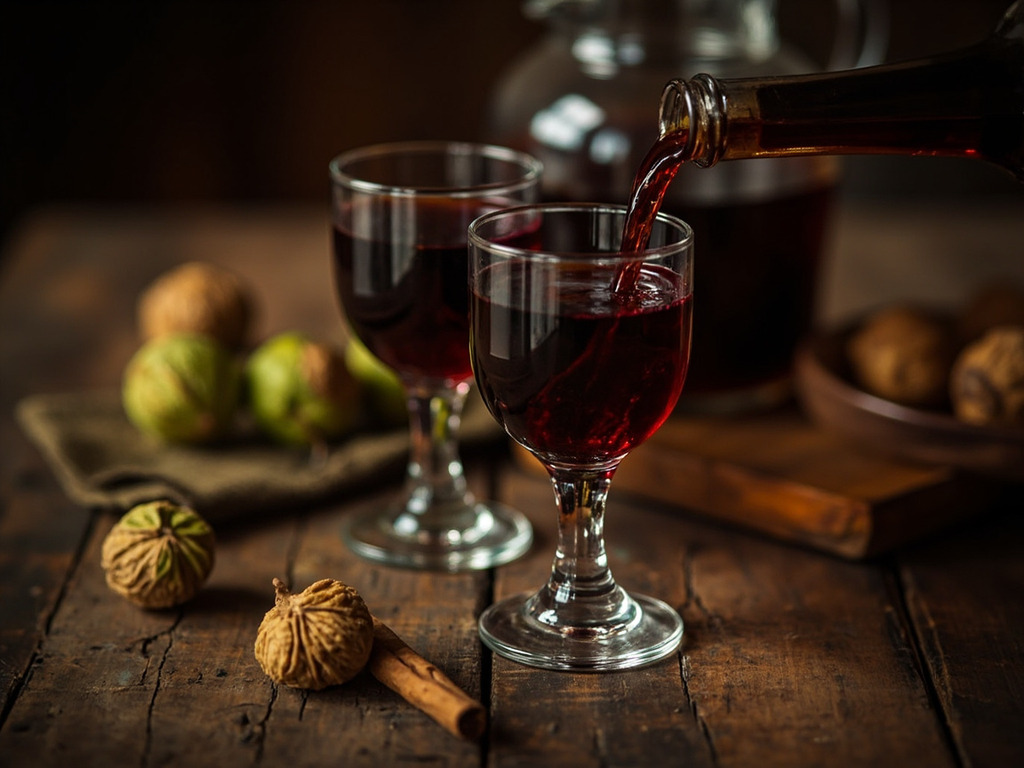
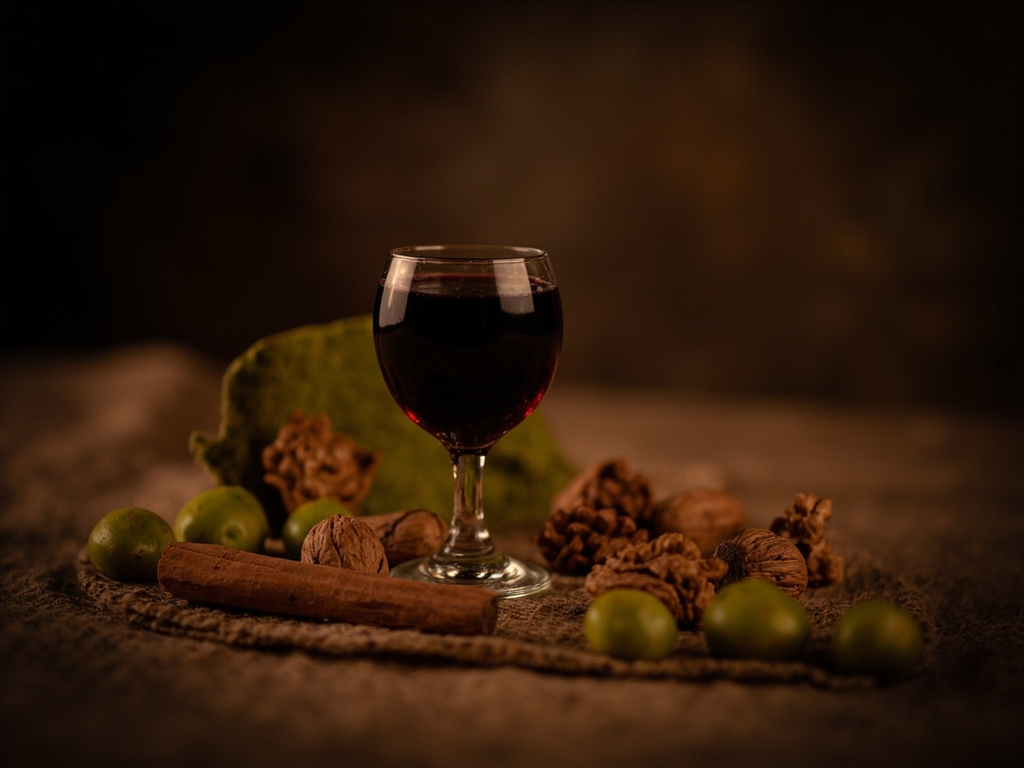
A homemade liqueur where cut green walnuts macerate in red wine, eau-de-vie, and sugar with a few spices, before being filtered and bottled. A dark, sweet, and pleasantly bitter homemade aperitif.
You must pick the green walnuts around Midsummer, when the husk is so tender that a pin still goes through it; afterwards it's too late, the wood sets in. You cut them into four — your fingers stay black for a week, too bad — and drown them in wine with sugar, a finger of eau-de-vie, a cinnamon stick. Then you forget the jar in the back of the cellar, in the cool shade, all summer and all autumn. When winter comes, you draw this ink-colored brew, bitter and warm at once, and you think of the June sun you bottled up in it.
- •Green walnuts (picked around June 24) — about twenty (bitterness and color)
- •Red wine — several liters (base)
- •Eau-de-vie — a glass (strength and preservation)
- •Sugar — to taste (sweetness)
- •Cinnamon, orange zest, clove — to taste (spices)
Midsummer walnut wine
A homemade liqueur where cut green walnuts macerate in red wine, eau-de-vie, and sugar with a few spices, before being filtered and bottled. A dark, sweet, and pleasantly bitter homemade aperitif.
Why this dish? In the Burgundian country houses like Sido's, people made their own aperitifs from what the garden gave. Green walnuts picked at Midsummer (June 24), still tender, yielded this dark, bitter wine left to age in the cellar — exactly the kind of terroir gesture Colette cherished.
You must pick the green walnuts around Midsummer, when the husk is so tender that a pin still goes through it; afterwards it's too late, the wood sets in. You cut them into four — your fingers stay black for a week, too bad — and drown them in wine with sugar, a finger of eau-de-vie, a cinnamon stick. Then you forget the jar in the back of the cellar, in the cool shade, all summer and all autumn. When winter comes, you draw this ink-colored brew, bitter and warm at once, and you think of the June sun you bottled up in it.
Ingredients (period version)
- Green walnuts (picked around June 24) — about twenty (bitterness and color)
- Red wine — several liters (base)
- Eau-de-vie — a glass (strength and preservation)
- Sugar — to taste (sweetness)
- Cinnamon, orange zest, clove — to taste (spices)
Ingredients
- Whole green walnuts — 20 pieces, quartered (bitterness and color)
- Fruity red wine — 2 liters (base)
- Eau-de-vie (40°) — 25 cl (strength and preservation)
- Sugar — 400 g (sweetness)
- Cinnamon stick — 1 (warm spice)
- Orange zest — 1 (citrus)
- Cloves — 2 (spice)
Method
- Cut the green walnuts into quarters (wear gloves: the juice stains permanently).
- In a large jar, combine the walnuts, red wine, eau-de-vie, sugar, and spices; stir to dissolve the sugar.
- Close and let macerate in a cool, dark place for 6 to 8 weeks, stirring occasionally.
- Strain through a fine cloth, pour into clean bottles.
- Let age a few more months before serving chilled, as an aperitif in small glasses.
How it was made : Walnut wine was a peasant liqueur throughout rural France, made by families on a fixed date — often Midsummer, the only time the walnut is still green and tender. Each house had its own recipe, adjusting sugar, spices, and eau-de-vie according to taste and cellar.
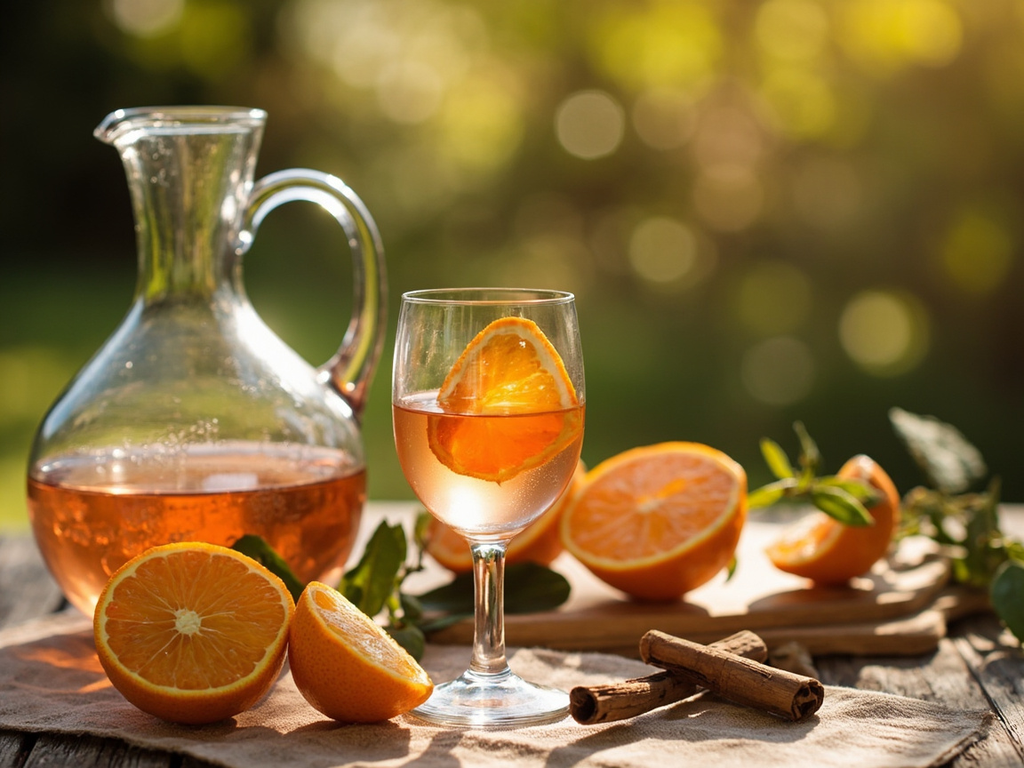
The contemporary twist : Serve over a large ice cube with a fresh orange zest, as a 'vintage' aperitif in the style of guinguettes.
Colette · Charactorium