 flip
flipBibingka (banana leaf rice cake)
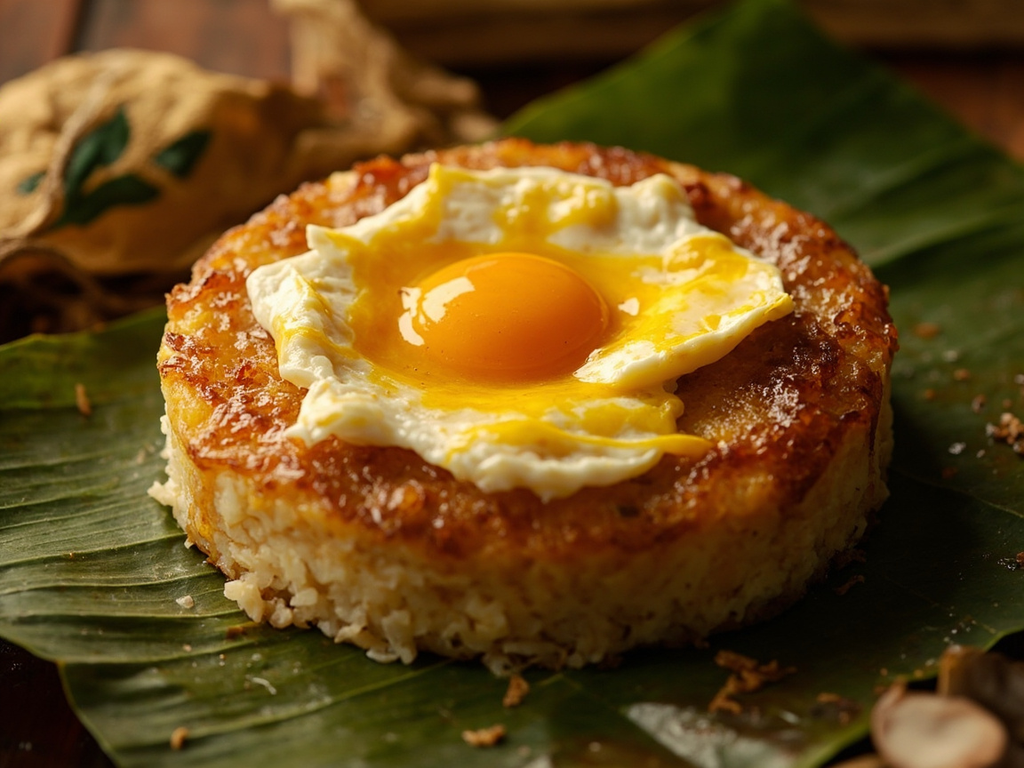
Bibingka (banana leaf rice cake)
Why this dish? Bibingka is the iconic rice cake of merienda and Philippine Christmas mornings, sold outside churches after dawn mass. A devout Catholic known for her rosary, Corazón Aquino fully belonged to this world of faith, masses, and sweets shared after church.
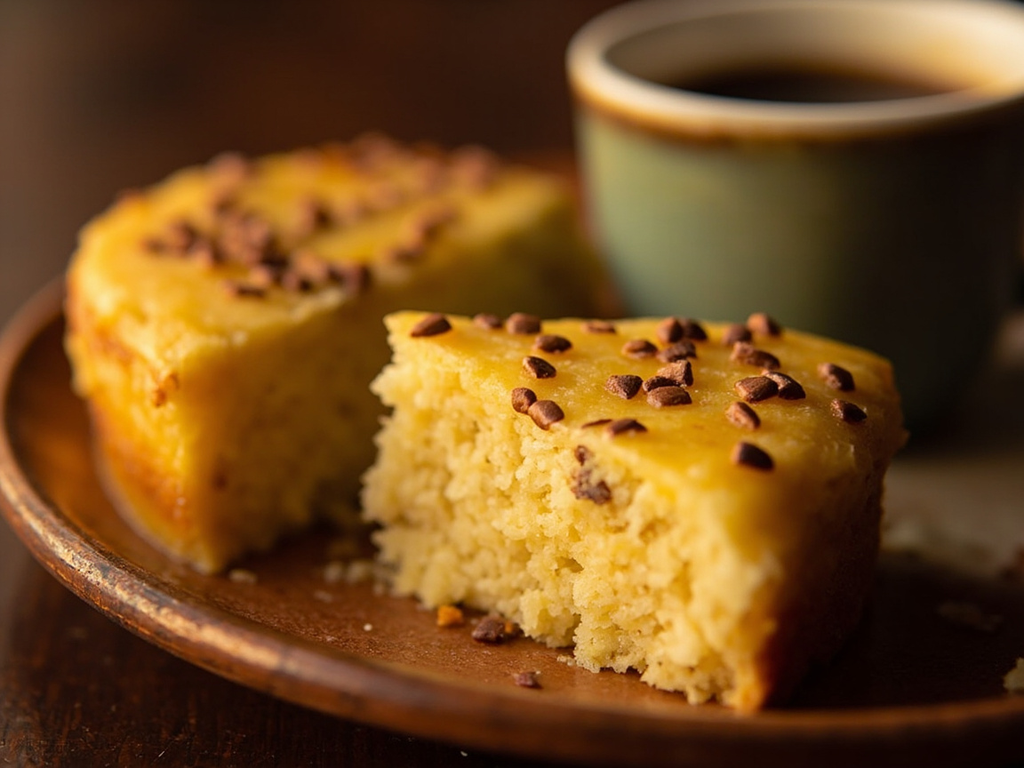
A soft rice flour cake baked in a banana leaf, topped with salty cheese and salted egg, slightly caramelized on top. The meeting of sweet and savory, sold steaming by vendors outside churches.
After dawn mass at Christmas, the air already smells of bibingka cooking over coals, wrapped in its banana leaf. You buy it hot from the vendor, blow on it, and bite into that softness where sweet meets the salt of cheese and egg. It is the sweetness of my childhood and my faith, shared among neighbors, the rosary still on the wrist.
- •Rice flour (galapong) — one bowl (base)
- •Coconut milk (gata) — one ladleful (binder, aroma)
- •Eggs — a few (binder)
- •Cane sugar — to taste (sweetness)
- •Salted egg (itlog na maalat) — sliced (salty topping)
- •Local cheese (kesong puti) — a few slices (salty topping)
- •Banana leaf — one (aromatic mold)
Bibingka (banana leaf rice cake)
A soft rice flour cake baked in a banana leaf, topped with salty cheese and salted egg, slightly caramelized on top. The meeting of sweet and savory, sold steaming by vendors outside churches.
Why this dish? Bibingka is the iconic rice cake of merienda and Philippine Christmas mornings, sold outside churches after dawn mass. A devout Catholic known for her rosary, Corazón Aquino fully belonged to this world of faith, masses, and sweets shared after church.
After dawn mass at Christmas, the air already smells of bibingka cooking over coals, wrapped in its banana leaf. You buy it hot from the vendor, blow on it, and bite into that softness where sweet meets the salt of cheese and egg. It is the sweetness of my childhood and my faith, shared among neighbors, the rosary still on the wrist.
Ingredients (period version)
- Rice flour (galapong) — one bowl (base)
- Coconut milk (gata) — one ladleful (binder, aroma)
- Eggs — a few (binder)
- Cane sugar — to taste (sweetness)
- Salted egg (itlog na maalat) — sliced (salty topping)
- Local cheese (kesong puti) — a few slices (salty topping)
- Banana leaf — one (aromatic mold)
Ingredients
- Rice flour — 200 g (base)
- Coconut milk — 200 ml (binder, aroma)
- Eggs — 3 (binder)
- Sugar — 120 g (sweetness)
- Baking powder — 2 tsp (fluffiness)
- Melted butter — 50 g (richness, finish)
- Mild cheddar or edam cheese — a few slices (salty topping)
- Hard-boiled egg (or salted egg if available) — 1, sliced (salty topping)
- Banana leaf (or parchment paper) — to line the pan (aroma, release)
Method
- Preheat oven to 180°C and line a pan with banana leaf briefly passed over a flame (or parchment paper).
- Beat eggs with sugar, add coconut milk and melted butter.
- Fold in rice flour and baking powder until smooth batter forms.
- Pour into the pan and bake for 15 minutes.
- Remove, arrange cheese and egg slices on top, then bake another 10 to 15 minutes until the top is golden.
- Brush with butter and, if desired, sprinkle with a little sugar; serve warm.
How it was made : Traditionally, bibingka was cooked in a clay pot lined with banana leaf, placed between two sources of embers (heat below and a charcoal lid above). This double cooking gave it its caramelized top. It was — and still is — sold outside churches during Advent.
The contemporary twist : Serve as mini bibingkas with a pat of butter, a pinch of toasted coconut flakes, and a drizzle of melted brown sugar, modern Manila bistro dessert style.
Corazón Aquino · Charactorium