 flip
flipPancit bihon (long-life stir-fried rice noodles)
Pancit bihon (long-life stir-fried rice noodles)
Why this dish? In the Philippines, no birthday or family celebration is complete without pancit, whose long noodles symbolize a long life. A family woman and unifying figure, Corazón Aquino surely shared this dish at major Filipino occasions.
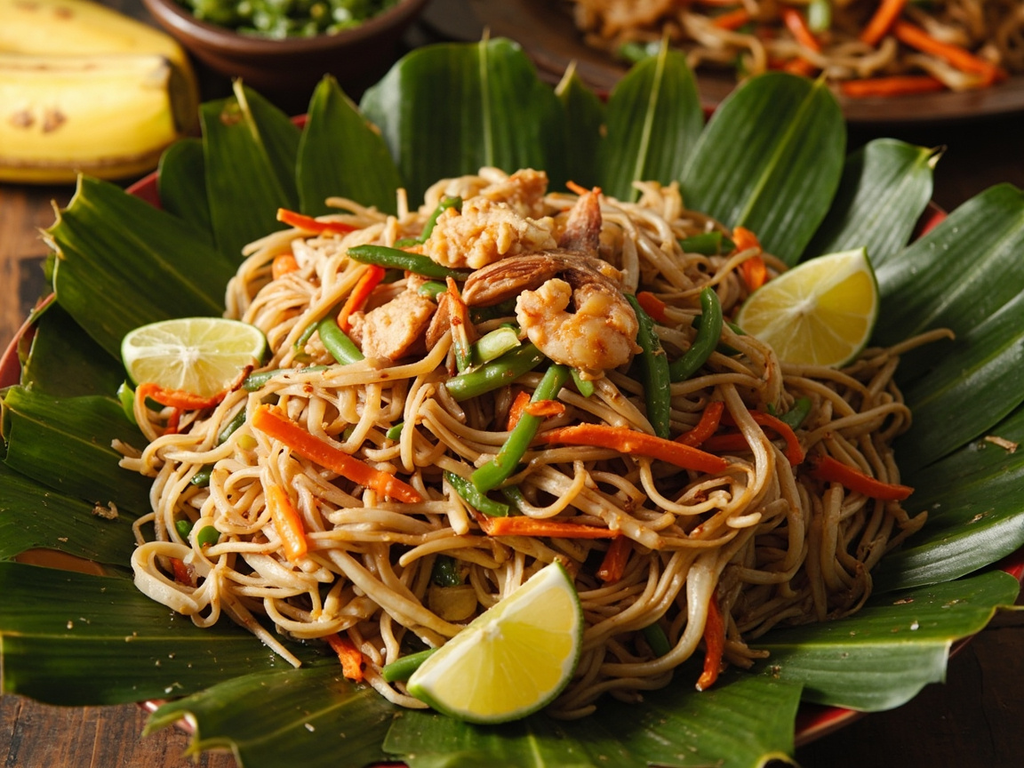
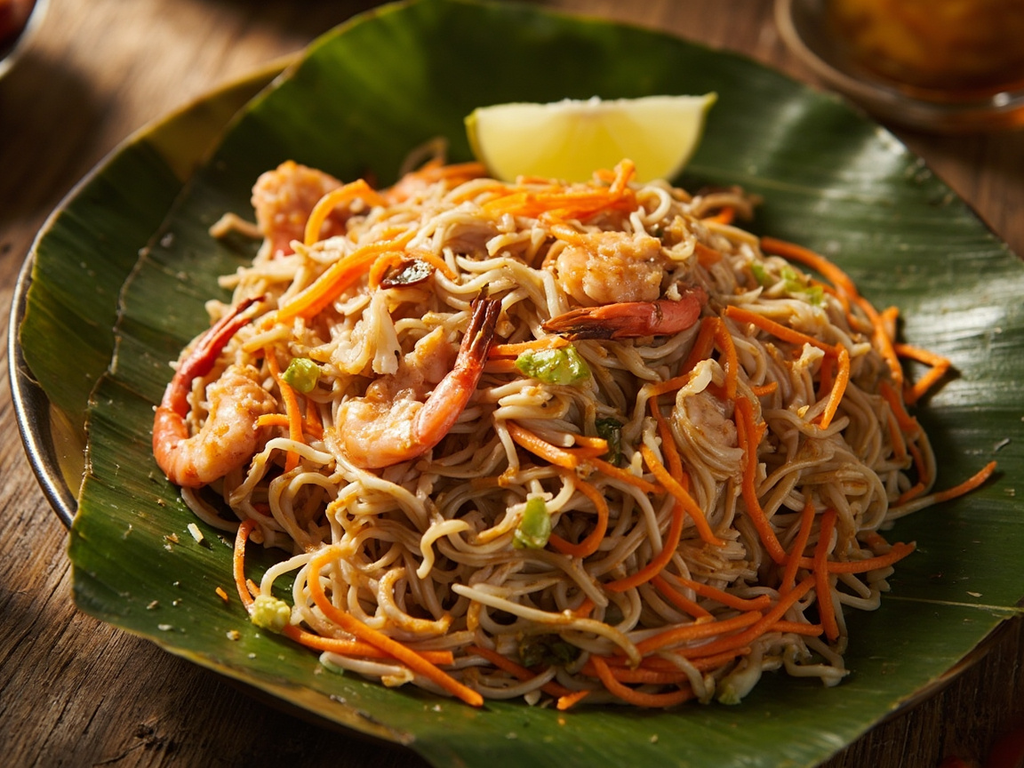
Thin rice noodles stir-fried in a wok with shredded chicken, shrimp, crunchy vegetables, and seasoned with soy sauce and kalamansi. The ultimate sharing dish, never cut — so as not to shorten the life of the person being celebrated.
For birthdays, we always prepare pancit, and we take care not to cut the noodles: they must stay long, like the years we wish for the one we love. We stir-fry them briskly with whatever the house offers — a little chicken, some shrimp, crunchy vegetables — then everyone squeezes their kalamansi over the top. It is a dish of joy, shared standing up, amid the noise of conversation and laughter.
- •Thin rice noodles (bihon) — one package (base)
- •Chicken — one breast, shredded (protein)
- •Shrimp — a handful (protein, umami)
- •Cabbage and carrot — shredded (crunchy vegetables)
- •Soy sauce (toyo) — a few ladlefuls (seasoning)
- •Garlic and onion — to taste (aromatics)
- •Kalamansi — a few fruits (final acidity)
Pancit bihon (long-life stir-fried rice noodles)
Thin rice noodles stir-fried in a wok with shredded chicken, shrimp, crunchy vegetables, and seasoned with soy sauce and kalamansi. The ultimate sharing dish, never cut — so as not to shorten the life of the person being celebrated.
Why this dish? In the Philippines, no birthday or family celebration is complete without pancit, whose long noodles symbolize a long life. A family woman and unifying figure, Corazón Aquino surely shared this dish at major Filipino occasions.
For birthdays, we always prepare pancit, and we take care not to cut the noodles: they must stay long, like the years we wish for the one we love. We stir-fry them briskly with whatever the house offers — a little chicken, some shrimp, crunchy vegetables — then everyone squeezes their kalamansi over the top. It is a dish of joy, shared standing up, amid the noise of conversation and laughter.
Ingredients (period version)
- Thin rice noodles (bihon) — one package (base)
- Chicken — one breast, shredded (protein)
- Shrimp — a handful (protein, umami)
- Cabbage and carrot — shredded (crunchy vegetables)
- Soy sauce (toyo) — a few ladlefuls (seasoning)
- Garlic and onion — to taste (aromatics)
- Kalamansi — a few fruits (final acidity)
Ingredients
- Rice vermicelli (bihon) — 250 g (base)
- Chicken breast — 200 g, cooked and shredded (protein)
- Peeled shrimp — 150 g (protein, umami)
- Shredded cabbage — 200 g (crunchy vegetable)
- Julienned carrot — 1 (crunchy vegetable)
- Soy sauce — 4 tbsp (seasoning)
- Garlic — 4 cloves (aromat)
- Onion — 1 (aromat)
- Chicken broth — 400 ml (hydrating noodles)
- Lime or kalamansi — 2 (final acidity)
Method
- Soak rice vermicelli in warm water for 10 minutes, then drain.
- Sauté garlic and onion, add chicken and shrimp, sear.
- Add vegetables and stir-fry briskly to keep them crunchy; reserve some.
- Pour in broth and soy sauce, bring to a simmer.
- Add noodles and toss until they absorb all the liquid.
- Return vegetables and meat, toss, plate, and serve with kalamansi wedges.
How it was made : Pancit is a legacy of Chinese merchants who settled in the Philippines centuries ago; “pancit” comes from Hokkien pian e sit (“quick-cooked dish”). Adopted and reinvented locally, it became the festive symbol of longevity.
The contemporary twist : Serve in individual portions rolled in the center of the plate, topped with a grilled half-kalamansi and crispy fried shallots.
Corazón Aquino · Charactorium