

The last king of Lydia (c. 561–546 BC), Croesus remained famous for his legendary wealth, drawn from the gold mines of the Pactolus River. His kingdom was conquered by Cyrus the Great, marking the end of Lydian independence.
Croesus of Lydia
Croesus, King of Lydia
6 min read
Frequently asked questions
Key Facts
- Ascends the throne of Lydia around 561 BC, with Sardis as his capital
- Subjugates the Greek cities of Ionia in Asia Minor, among which Miletus maintained relations with his kingdom
- His wealth, drawn from the gold of the Pactolus River, becomes proverbial (“as rich as Croesus”)
- Consults the oracle of Delphi before attacking Persia, according to Herodotus's account
- Is defeated by Cyrus the Great around 546 BC; Lydia is annexed to the Persian Empire
Works & Achievements
Croesus is credited with introducing the first distinct coins of pure gold and pure silver, laying the foundations of a coinage system that would spread throughout the ancient world.
The conquest and tribute imposed on the Greek cities of Asia Minor made Lydia the first “barbarian” power to rule over Greeks.
His contribution to the columns of the Temple of Artemis at Ephesus, a future monument counted among the Seven Wonders of the ancient world.
Spectacular gifts of gold and silver that earned Croesus his reputation for generosity and strengthened the ties between Lydia and the Greek world.
Under Croesus, Lydia reached its greatest extent, controlling almost all of Asia Minor west of the river Halys.
Anecdotes
Crésus was so wealthy that his name became a saying: even today, people say “as rich as Croesus” to describe an immense fortune. This wealth came mainly from the gold his servants gathered in the sands of the river Pactolus, which flowed through his capital, Sardis.
According to the Greek historian Herodotus, the Athenian sage Solon paid Croesus a visit. The king showed him his treasures and asked who was the happiest man in the world, certain that it would be himself. Solon replied that no man's happiness could be judged until his death, which deeply offended the king.
Before attacking the Persian Empire, Croesus consulted the oracle of Delphi. The prophecy declared that if he crossed the river Halys, “he would destroy a great empire.” Confident, he attacked Cyrus the Great — but the great empire destroyed was his own: the prophecy had been ambiguous.
The invention of the first true coins made of struck metal is traditionally credited to the Lydians, under Croesus or his predecessors. It was a revolution: for the first time, the value of an exchange was guaranteed by a royal stamp.
According to the legend recounted by Herodotus, Cyrus is said to have condemned the defeated Croesus to be burned on a pyre. Amid the flames, the fallen king cried out the name “Solon.” Intrigued, Cyrus asked him why, understood the lesson about the fragility of happiness, and spared his life.
Primary Sources
Croesus was a Lydian by birth, son of Alyattes, and ruler of the peoples this side of the river Halys. He was the first of the barbarians known to us who made some of the Greeks pay tribute.
The oracle replied that, if he made war on the Persians, he would destroy a great empire.
As for you, O Croesus, I see that you possess great riches and rule over many peoples; but I cannot answer your question until I learn that you have ended your life happily.
Croesus, upon the pyre that had been raised, was saved by Apollo, who carried him away to the land of the Hyperboreans.
Key Places
Capital of the kingdom of Lydia and residence of Croesus, located at the foot of Mount Tmolus. Its fall in 546 BC marked the end of Lydian independence.
River flowing through Sardis, famous for its golden sands that created the legendary wealth of Croesus.
Great sanctuary of Apollo in Greece, where Croesus sent rich offerings and consulted the oracle before his war against the Persians.
Eastern frontier of the Lydian kingdom and the boundary with the Persian Empire. Croesus crossed it to attack Cyrus, triggering his downfall.
Greek city of Ionia subdued by Croesus. He helped fund the rebuilding of its Temple of Artemis, one of the Seven Wonders of the World.
Region of Cappadocia where the first indecisive battle between the armies of Croesus and Cyrus took place, around 547 BC.
Typical Objects

The first true minted coin, made of electrum (a natural alloy of gold and silver) and stamped with a lion's head, the royal emblem. Lydia is regarded as the birthplace of metal coinage.

Under Croesus, Lydia is said to have been the first to mint separate coins of pure gold and pure silver, creating a bimetallic system. They bore a lion and a bull facing each other.

Croesus sent fabulous gifts to the sanctuary of Delphi: gold ingots, a great golden lion and precious mixing bowls, to win the favor of the oracle of Apollo.

The emblem of the Lydian king's power, a symbol of his sovereignty over Sardis and the subject peoples as far as the Halys River.

Large banquet vessels of precious metal offered by Croesus to Greek sanctuaries, witnesses to the refinement and opulence of the Lydian court.

The river that flowed through Sardis carried flecks of gold that were collected using fleeces. It was the legendary source of Croesus's fortune.
School Curriculum
Vocabulary & Tags
Key Vocabulary
Tags
Daily Life
Morning
The king rose in his palace at Sardis and received advisers, ambassadors and merchants from all over Asia Minor. The morning was devoted to the affairs of the kingdom: justice, tribute from subject cities, and management of the gold mines.
Afternoon
The afternoon might be spent hunting in the hills of Mount Tmolus, a pastime favoured by the Lydian nobility, or inspecting the treasury and mints. Croesus also enjoyed conversing with the Greek sages who passed through his court.
Evening
In the evening the court gathered for sumptuous banquets where wine was served in mixing bowls of gold and silver. Musicians and storytellers entertained these feasts, which asserted the king's prestige.
Food
The royal table offered the meat of game and livestock, wheat bread, fruit, honey and wine in abundance. Lydia, a fertile land, was reputed to be refined in the art of cooking and, according to the Greeks, is said to have invented certain games and dishes.
Clothing
Croesus wore rich fabrics dyed with purple, tunics embroidered with gold and jewellery, in the fashion of the Eastern courts. The Lydians were renowned for their taste for luxurious dress.
Housing
The king resided in the fortified palace on the acropolis of Sardis, perched on a rocky spur overlooking the city and the plain of the Hermus. This palace housed the royal treasury, the heart of Lydian power.
Historical Timeline
Period Vocabulary
Liens externes & ressources
Références
Œuvres
Système monétaire bimétallique
vers 560-546 av. J.-C.
Soumission des cités grecques d'Ionie
vers 560-550 av. J.-C.
Financement de l'Artémision d'Éphèse
vers 555 av. J.-C.
Offrandes au sanctuaire de Delphes
vers 548-547 av. J.-C.
Apogée de la puissance lydienne
vers 561-547 av. J.-C.
Rechercher
See also
Related Characters
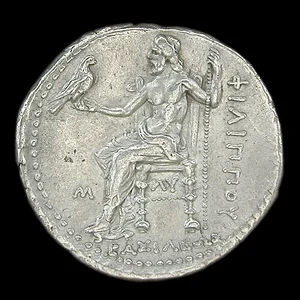
Alexander II of Macedon
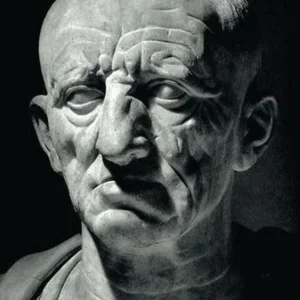
Cato the Elder
233 av. J.-C. — 148 av. J.-C.
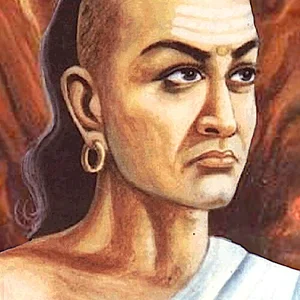
Chanakya
374 av. J.-C. — 282 av. J.-C.
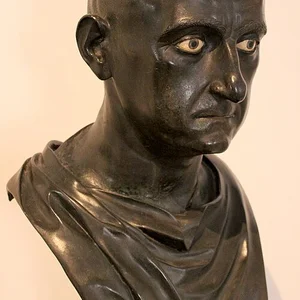
Scipio Africanus
234 av. J.-C. — 182 av. J.-C.
Agostino Chigi
1466 — 1520
Alexander Hamilton
1757 — 1804