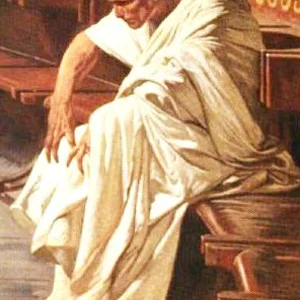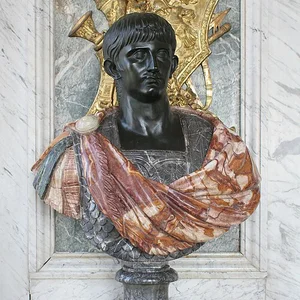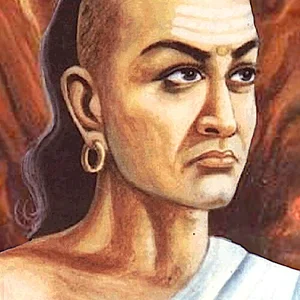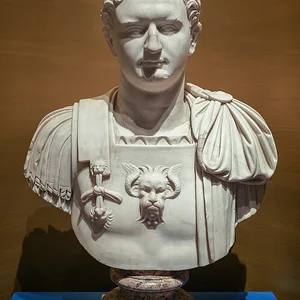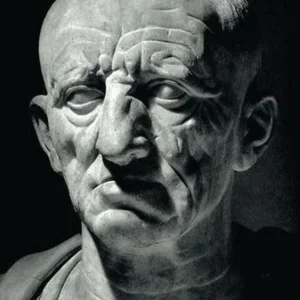

Roman statesman and writer (234–149 BC), consul in 195 BC and censor in 184 BC. An uncompromising defender of traditional Roman values, he opposed Greek influence and pursued strict economic policies. He is also considered the first great Latin prose writer, known for his treatise on agriculture.
Cato the Elder(233 av. J.-C. — 148 av. J.-C.)
Cato the Elder
Rome antique
8 min read
Frequently asked questions
Famous Quotes
« Carthago delenda est. (Carthage must be destroyed.)»
Key Facts
- Born in 234 BC in Tusculum, into a family of Italian farmers
- Elected consul in 195 BC, he opposed the repeal of the Lex Oppia, a law restricting women's luxury
- As censor in 184 BC, he enforced a strict policy of moral and economic austerity
- Author of De Agri Cultura (c. 160 BC), the oldest surviving prose text in Latin
- Relentlessly called for the destruction of Carthage until his death in 149 BC
Works & Achievements
The first Latin prose treatise preserved in its entirety, it blends practical advice on managing a farming estate with recipes and religious prescriptions. A masterpiece of Latin technical literature, it also reveals Cato's worldview: land, labor, and tradition.
The first major historical work in Latin, in seven books, tracing the origins of the Italic peoples and the wars of Rome. Cato deliberately avoided naming individual generals in order to glorify the Roman people as a whole rather than any single person.
An educational handbook Cato wrote for his son Marcus, covering medicine, agriculture, rhetoric, and morality. A valuable testimony to the archaic Roman educational ideal passed down from father to son.
Cato was the first Roman to have his own speeches preserved and published: more than 150 titles are known, of which around fifty survive in fragments. Cicero regarded him as the founder of Latin oratory.
A collection of moral precepts in rhythmic prose on ancestral Roman virtues. In it, Cato extolled frugality, courage in battle, and contempt for luxury as the foundations of Roman greatness.
Anecdotes
Cato the Elder ended every speech in the Senate with the same obsessive formula: 'Ceterum censeo Carthaginem esse delendam' ('Furthermore, I believe that Carthage must be destroyed'). He repeated this phrase regardless of the matter being debated, for years on end, until Rome finally decided to launch the Third Punic War.
During his censorship in 184 BC, Cato expelled several senators from the Senate for corruption or excessive spending, and imposed a harsh tax on luxury goods: jewelry, expensive clothing, and ornamental carriages were taxed at ten times their value. He wanted to remind Romans of the virtue of ancestral frugality.
Cato learned Greek at over 80 years of age, convinced that one must know the cultural enemy in order to fight it more effectively. Paradoxically, the man who had spent his entire life denouncing Greek influence on Roman morals ended up mastering its language and literature perfectly.
A large landowner, Cato managed his slaves with cold calculation: he fed them just enough to keep them productive, but sold them off as soon as they became too old to work, refusing to 'feed useless mouths.' He recommended this practice in his agricultural treatise as a simple matter of economy.
As consul in 195 BC, Cato vigorously opposed the repeal of the Lex Oppia, which restricted the display of luxury by Roman women. When women publicly demonstrated to demand the law's abolition, he denounced to the Senate what he called a 'feminine revolt' — but was ultimately outvoted.
Primary Sources
When our ancestors were asked who was the best man, they would answer: a good farmer, a good cultivator. He who received this praise was held in the highest honor.
In this work, Cato traced the legendary origins of the Italic cities and the wars of Rome, deliberately refusing to name military commanders in order to highlight the Roman people as a whole.
He pleaded before the Roman people on behalf of the Lusitanians massacred by the praetor Galba, securing public condemnation of this act of treachery.
In this work, Cato set out the ancestral rules of Roman conduct, emphasizing frugality, working the land, and contempt for luxury as the foundations of virtue.
Key Places
A town in Latium where Cato was born around 234 BC, into a family of small landowners. Nestled in the Alban Hills, this recently Romanized city instilled in him a deep attachment to peasant and military values.
The political heart of Rome where Cato delivered countless speeches, sat in the Senate, and held every public office. It was here that he hammered home his famous refrain about Carthage and waged his battle against Greek influence.
Rome's relentless rival, whose destruction Cato never stopped demanding. He is said to have brought fresh figs from Carthage to the Senate floor to illustrate how dangerously close the enemy city was.
Cato led a military campaign here in 195 BC during his consulship, pacifying much of Hispania Citerior. He demonstrated both his skill as a military commander and his reputation as a strict administrator.
In 191 BC, Cato played a decisive role in Rome's victory against Antiochus III by outflanking the enemy positions at this famous pass. A remarkable military feat that cemented his reputation as a commander.
Typical Objects

Cato deliberately wore a toga of coarse, undyed wool, rejecting costly imported fabrics. This austere garment was for him a conspicuous symbol of traditional Roman virtue in the face of Greek and Eastern luxury.

The universal writing tool of the Romans, Cato used these tablets to draft his speeches and record his farming observations. He was the first Roman to publish his own courtroom speeches, fully aware of the lasting power of the written word.

Proud to work his own lands in Latium himself, Cato regarded farming as the noblest of all activities. His treatise on agriculture reflects a detailed, hands-on knowledge of Roman agricultural tools.

Cato fought in the Second Punic War from the age of 17 and took part in several military campaigns. The gladius represents the martial dimension of a Roman statesman of his era.

In his agricultural treatise, Cato gives precise advice on viticulture and wine preservation. He advocates moderate consumption and condemns drunkenness as contrary to ancestral Roman values.

As censor, Cato was responsible for assessing the wealth of Roman citizens in order to set taxes and determine their social rank. The balance symbolises his role as a strict guardian of civic and moral order.
School Curriculum
Vocabulary & Tags
Key Vocabulary
Tags
Daily Life
Morning
Cato rose before dawn, a habit formed in his peasant childhood. He began his day by inspecting his lands or overseeing his agricultural slaves, then made his way to the Forum to plead cases or take part in Senate deliberations.
Afternoon
The afternoon was devoted to public affairs: receiving clients, preparing speeches, and meeting with political allies. As censor, he also conducted inspection tours to assess the condition of public buildings and the moral conduct of citizens.
Evening
Cato dined frugally with his family, forgoing the lavish banquets whose excesses he so readily condemned. By the light of a simple oil lamp, he would dictate or write his texts himself — working on his Origines or revising his speeches well into the night.
Food
Cato preached and practiced a plain diet: spelt porridge (puls), garden vegetables, olives, goat's cheese, and wine mixed with water in modest quantities. He vigorously denounced Eastern spices and imported exotic foods as symbols of moral decay.
Clothing
He deliberately wore a toga of rough, undyed wool with no embroidery or fine fabric, rejecting costly textiles outright. This sartorial austerity was as much a political statement as a moral conviction: a public display of the rustic values of old Rome.
Housing
Cato owned a working farmhouse in Latium — functional and free of unnecessary ornament. He refused expensive mosaics and frescoes, preferring plain plastered walls; his estate was designed as an efficient agricultural operation, not a symbol of prestige.
Historical Timeline
Period Vocabulary
Visual Style
Style austère de la République romaine tardive : portraits sculptés réalistes aux traits marqués, tons ocres et terreux, architecture sobre sans ornements grecs, paysages agricoles du Latium.
Sound Ambience
L'univers sonore de Caton mêle le tumulte des débats du Sénat romain, le labeur agricole dans les champs du Latium et le bruit des légions en marche.
Liens externes & ressources
Références
Œuvres
De Agri Cultura (De l'agriculture)
vers 160 av. J.-C.
Origines
vers 170-149 av. J.-C.
Praecepta ad filium (Préceptes à son fils)
vers 190 av. J.-C.
Discours (Orationes)
entre 200 et 149 av. J.-C.
Carmen de moribus
vers 180 av. J.-C.