 flip
flipRoasted Mutton Shoulder for the Brotherhood Banquet
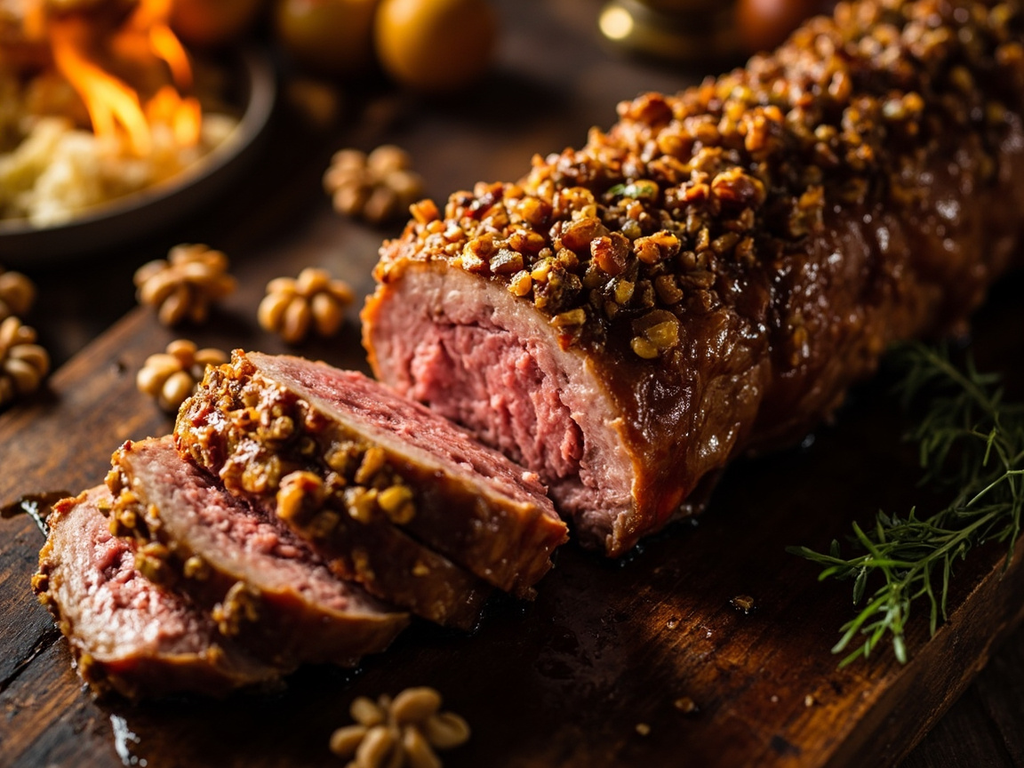
Roasted Mutton Shoulder for the Brotherhood Banquet
Why this dish? The Ugaritic tablets mention the marzeaḥ, a brotherhood banquet where meat from animals sacrificed to gods like Dagon was consumed, Dagon being venerated in his temple next to that of Baal.
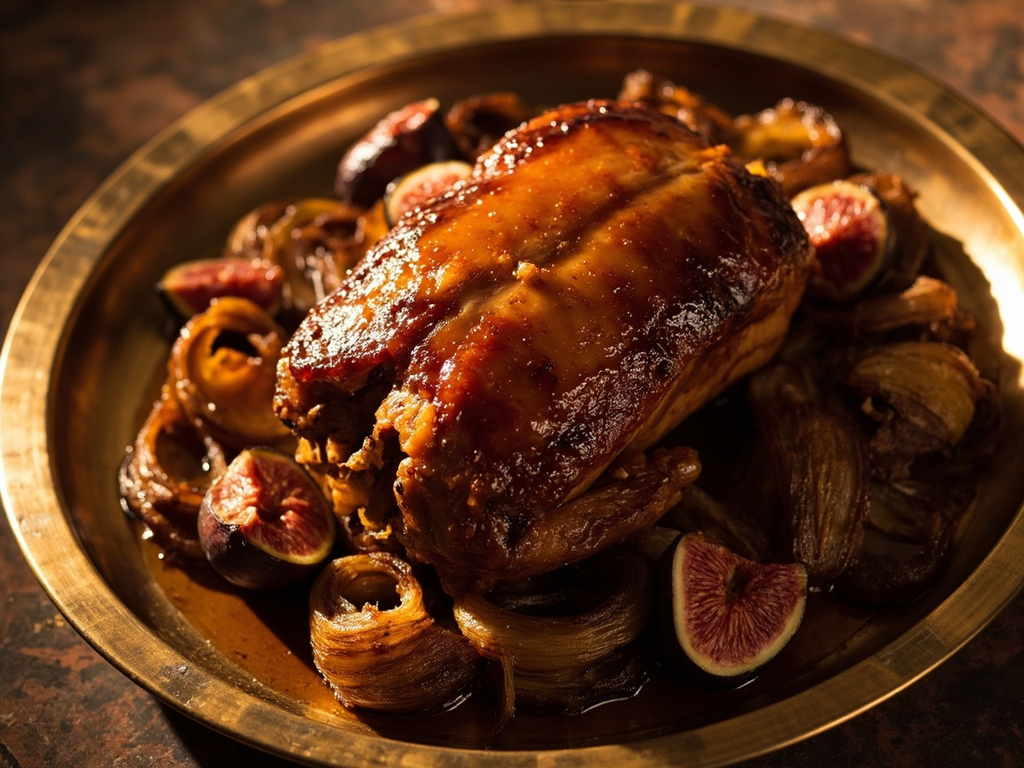
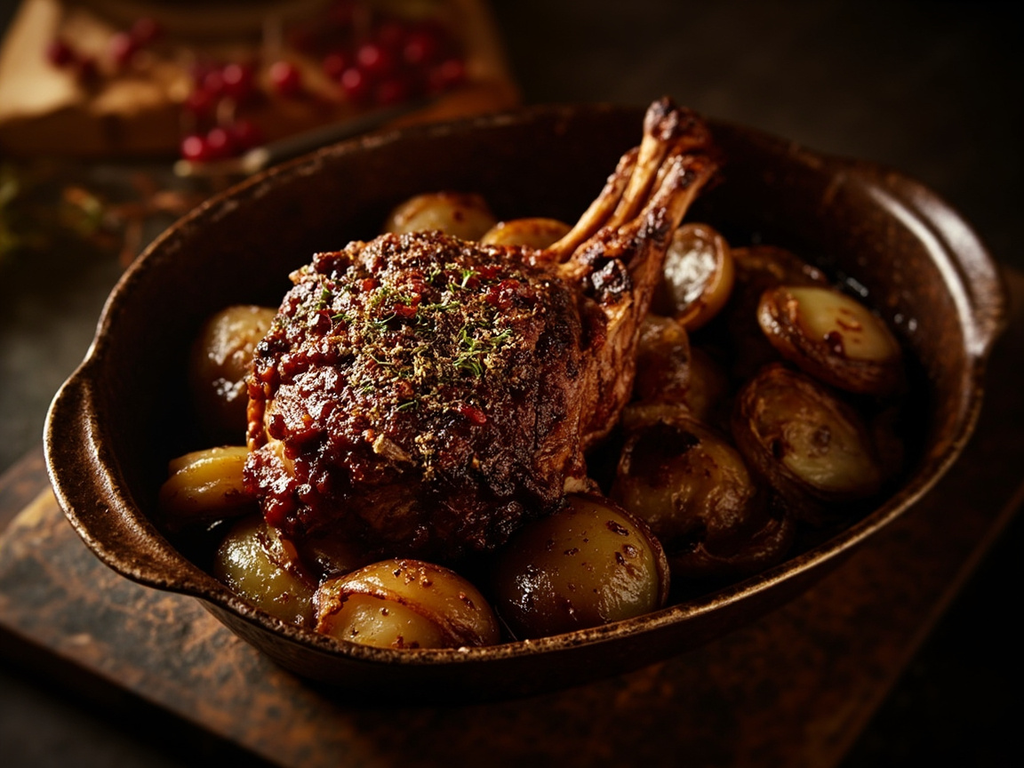
Mutton shoulder rubbed with salt, cumin, and coriander, long-roasted and basted with olive oil and pomegranate juice, served for the great festive assemblies of the temple.
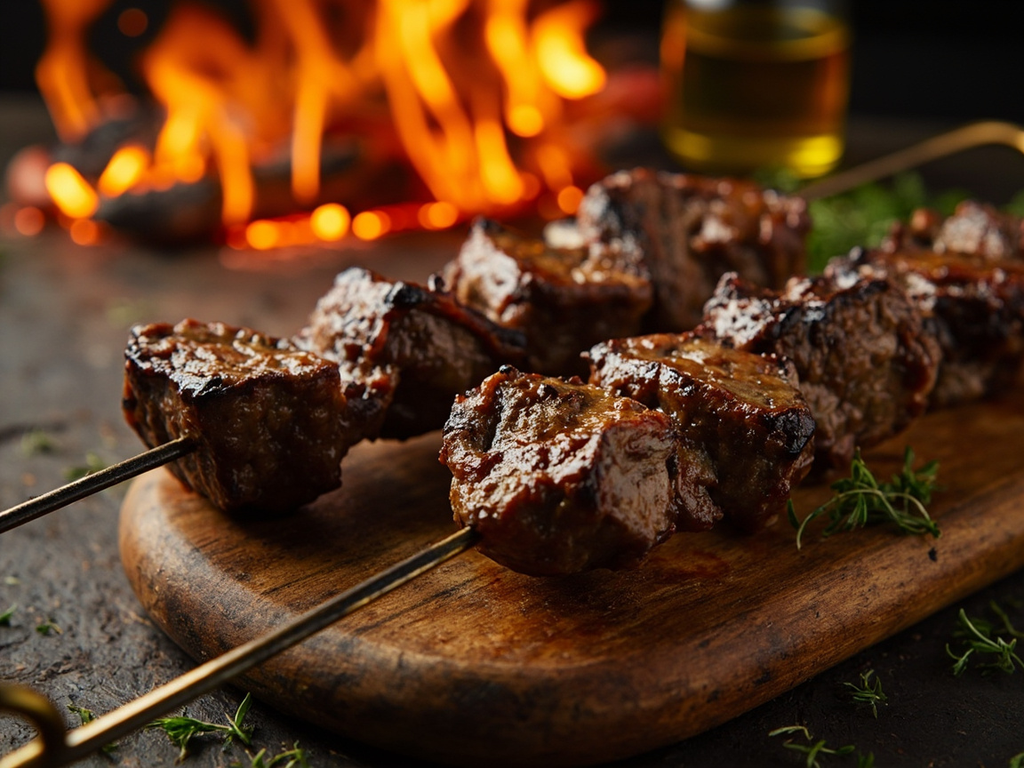
Approach, guest of my brotherhood. On the day of the great banquet, we spare no expense: we choose the fat ram, open it according to the rite, and my portion smokes on the altar while yours roasts on the embers. Rub the flesh with salt, cumin, and coriander seed, baste it with oil and the sour juice of the pomegranate. Let the wine flow, let the song rise — for the meat shared at my table seals the covenant of men and the god.
- •Mutton shoulder — one whole shoulder (centrepiece of the banquet)
- •Salt — to hand (seasoning, preservation)
- •Cumin — a good pinch (base spice)
- •Coriander seeds — a pinch (warm aroma)
- •Olive oil — generously (basting, browning)
- •Sour pomegranate juice — a bowl (acidity, glaze)
Roasted Mutton Shoulder for the Brotherhood Banquet
Mutton shoulder rubbed with salt, cumin, and coriander, long-roasted and basted with olive oil and pomegranate juice, served for the great festive assemblies of the temple.
Why this dish? The Ugaritic tablets mention the marzeaḥ, a brotherhood banquet where meat from animals sacrificed to gods like Dagon was consumed, Dagon being venerated in his temple next to that of Baal.
Approach, guest of my brotherhood. On the day of the great banquet, we spare no expense: we choose the fat ram, open it according to the rite, and my portion smokes on the altar while yours roasts on the embers. Rub the flesh with salt, cumin, and coriander seed, baste it with oil and the sour juice of the pomegranate. Let the wine flow, let the song rise — for the meat shared at my table seals the covenant of men and the god.
Ingredients (period version)
- Mutton shoulder — one whole shoulder (centrepiece of the banquet)
- Salt — to hand (seasoning, preservation)
- Cumin — a good pinch (base spice)
- Coriander seeds — a pinch (warm aroma)
- Olive oil — generously (basting, browning)
- Sour pomegranate juice — a bowl (acidity, glaze)
Ingredients
- Lamb or mutton shoulder — 1.5 kg (centrepiece)
- Coarse salt — 2 tsp (seasoning)
- Ground cumin — 2 tsp (base spice)
- Crushed coriander seeds — 1 tsp (warm aroma)
- Olive oil — 4 tbsp (basting)
- Pomegranate molasses — 3 tbsp (acidity, glaze)
- Onions cut into wedges — 2 (bed for roasting)
Method
- Mix salt, cumin, coriander, and 2 tbsp oil; rub all over the shoulder. Let rest 1 hour at room temperature.
- Arrange onions in a baking dish, place the meat on top, drizzle with remaining oil.
- Roast in a moderate oven (160°C) covered for 2.5 hours, basting occasionally with cooking juices.
- Dilute pomegranate molasses with a little water, brush over the meat, then roast uncovered at 200°C for 20-30 minutes to caramelize.
- Let rest 15 minutes; the meat falls apart by hand, as it was shared at the banquet.
How it was made : Sheep and goat were the meats of sacrifice and feast; they were eaten only rarely, at ritual banquets. Cooking was done on embers or in an earth oven. The pomegranate, an emblematic fruit of the Levant, served as a souring agent long before the lemon arrived in the Mediterranean.
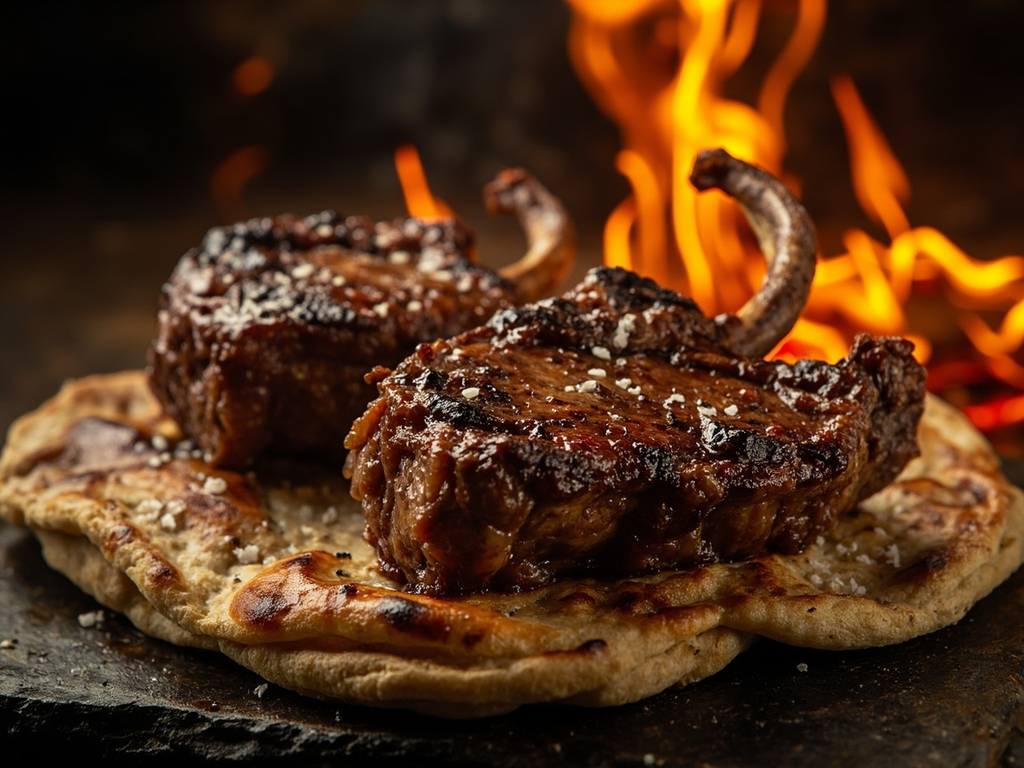
The contemporary twist : Shredded and tucked into flatbread with red onions and mint, the shoulder becomes a "brotherhood banquet" to share in Levantine street-food style.
Dagon · Charactorium