 flip
flipMead of Brocéliande
Mead of Brocéliande
Why this dish? Mead, the "drink of the gods" from the Celtic world, flows at all feasts of the Arthurian cycles. For a fairy of Brocéliande, guardian of the forest's secrets, this fermented honey wine is the drink of honor at banquets beneath the waters and oaths exchanged by the lake.
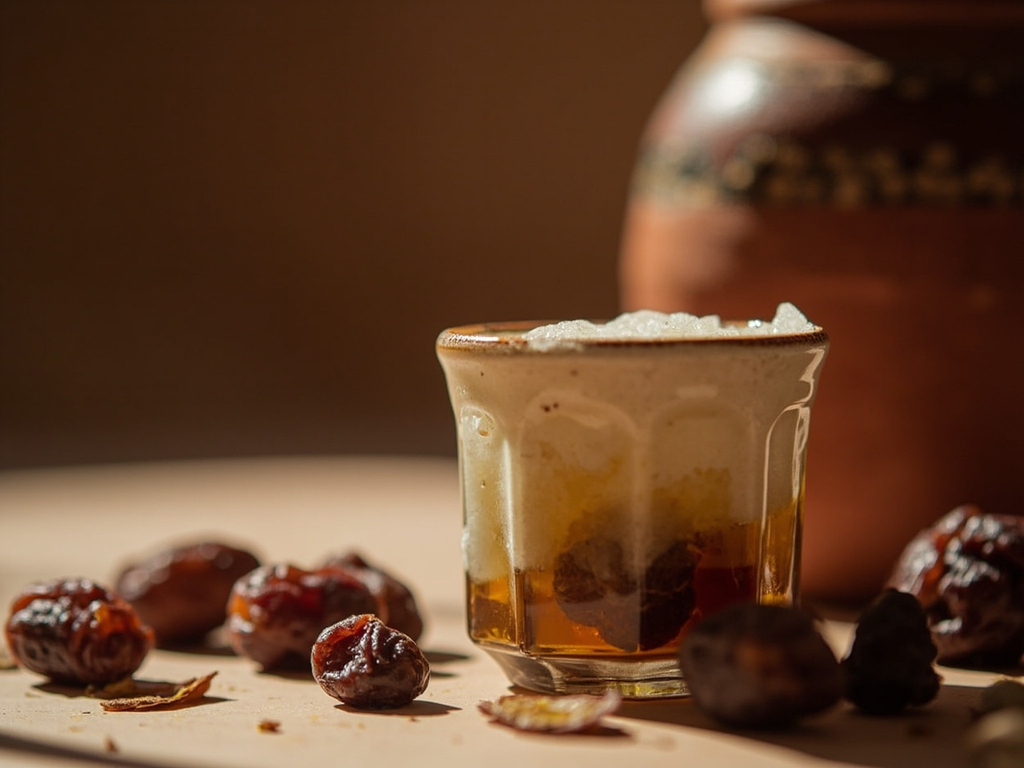
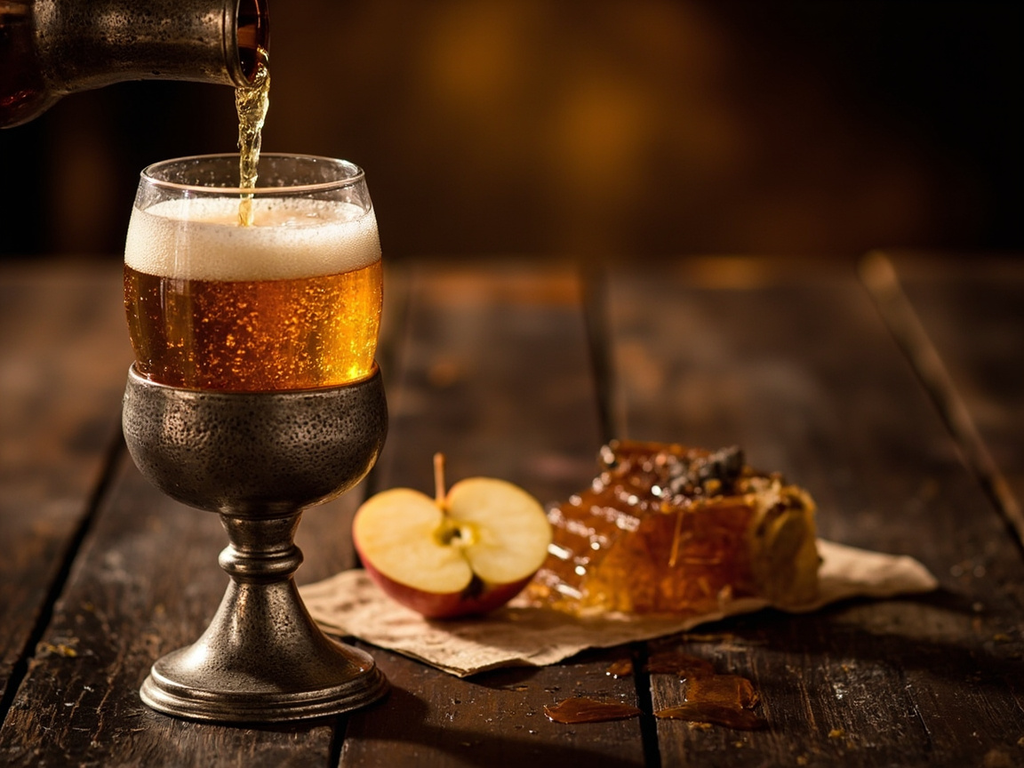
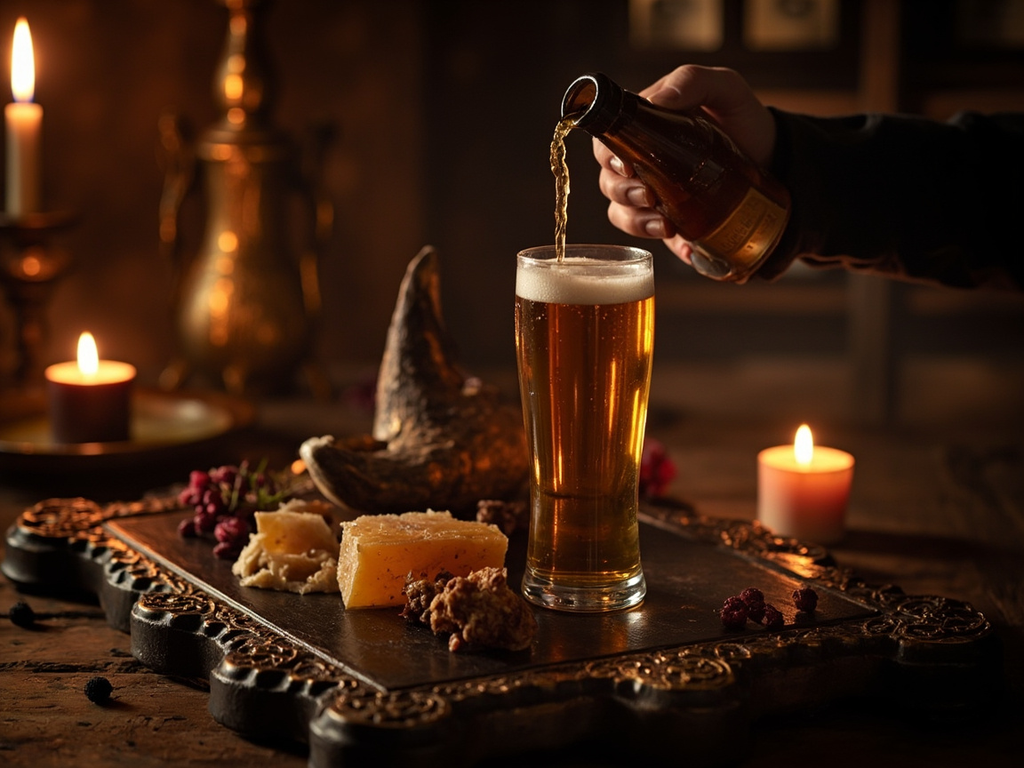
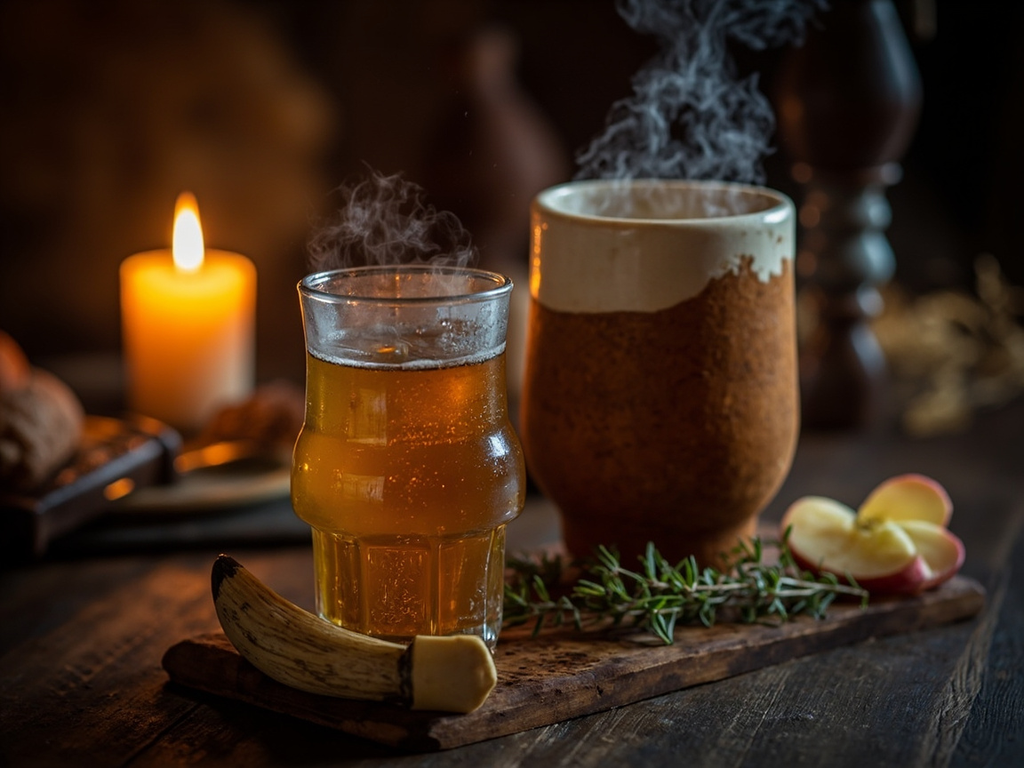
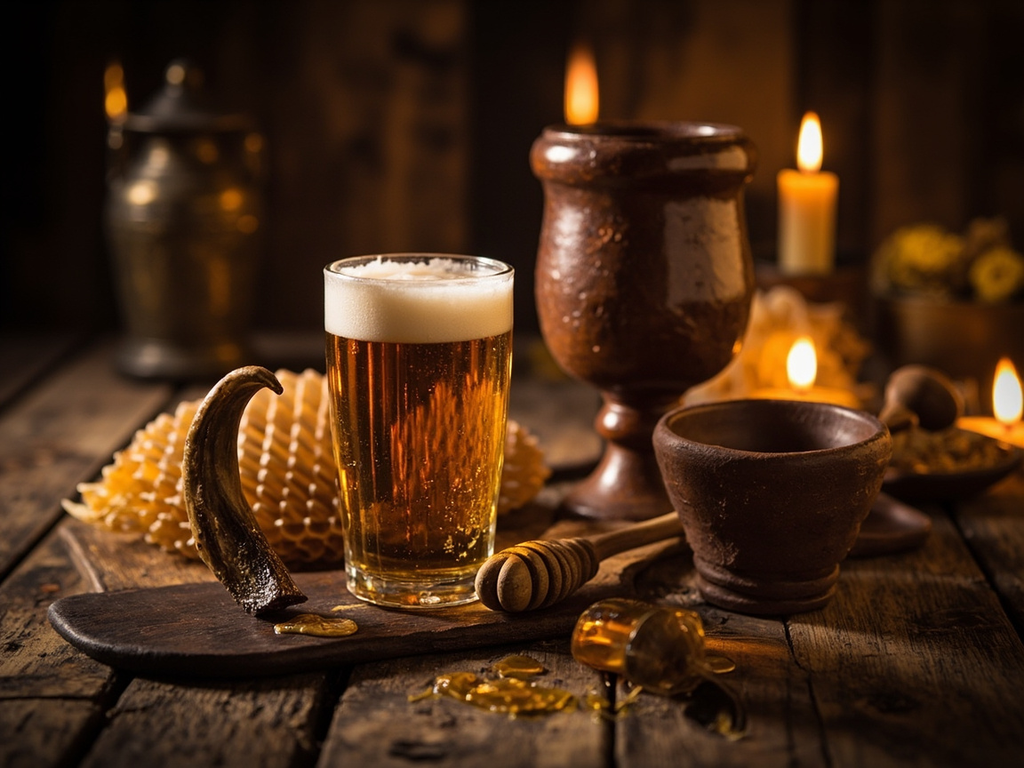
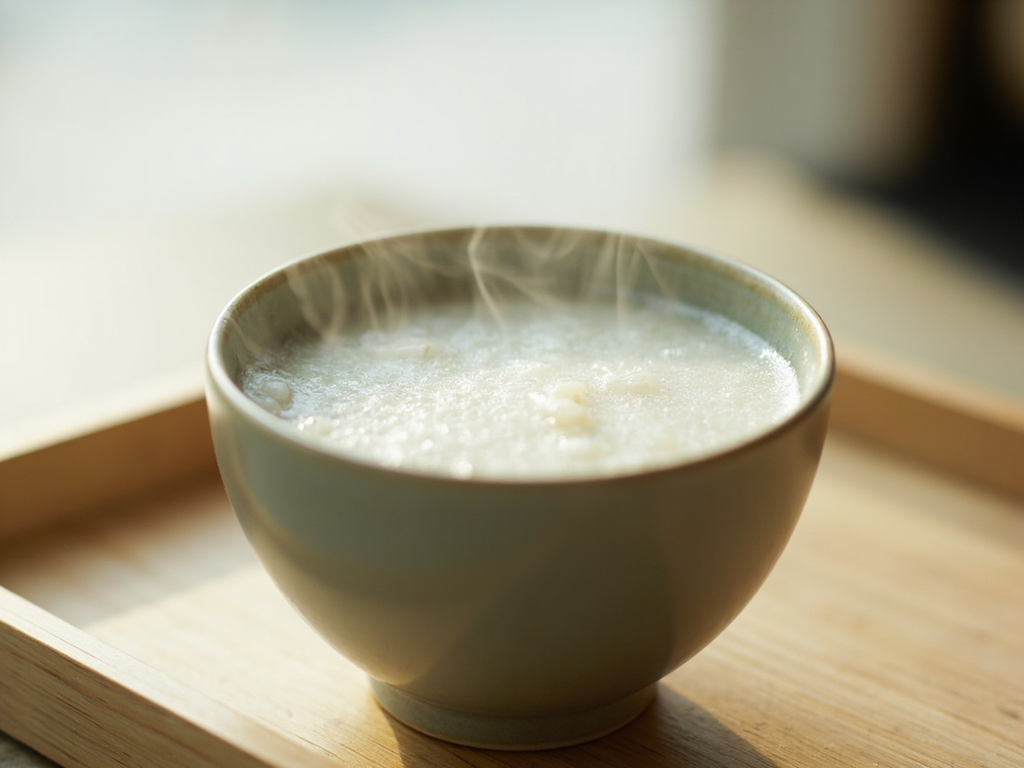
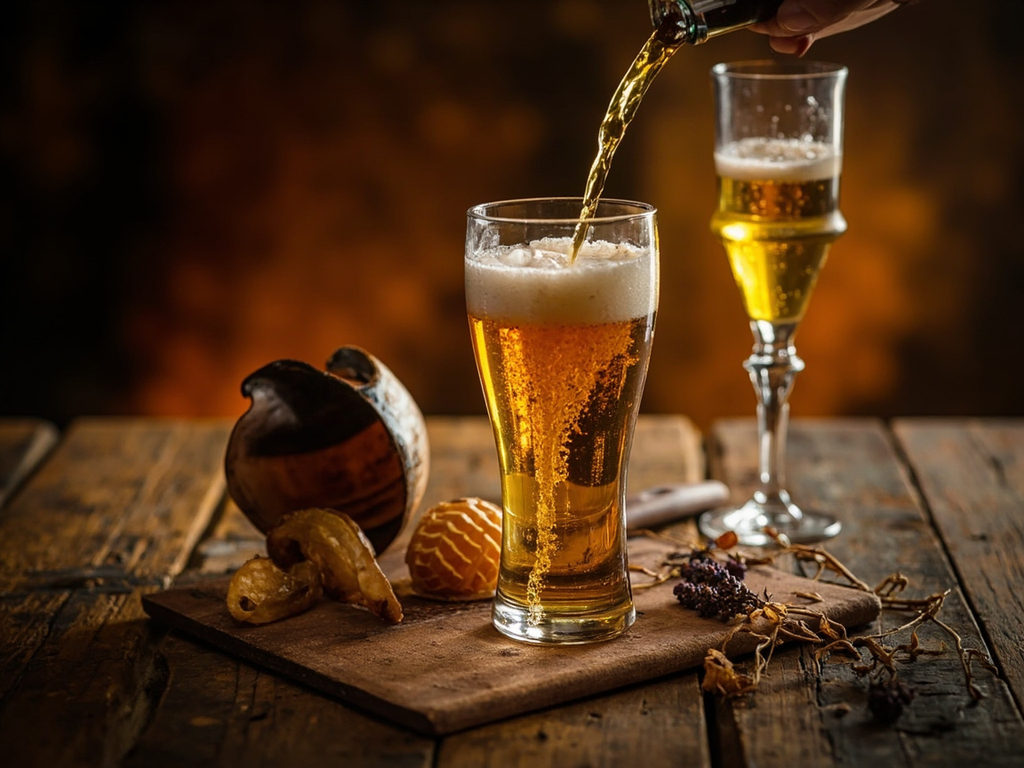
A golden honey wine, sweet and slightly sparkling from fermentation, perfumed with wild flowers: the ritual beverage of Celtic and Arthurian feasts. (Festive version: the recipe below yields a light mead; for adults only.)
Raise this cup, and drink slowly. Here is mead, the golden blood of my bees that living water and time have transformed into the fairies' drink. My sisters let it sleep for whole moons in small casks, until it sings with bubbles. It is this that is poured at oaths and weddings; it is this that Arthur tasted at my table. But keep measure, mortal: three cups of this honey and you will no longer find the way out of the forest.
- •Wild honey — one part (fermentable sugar)
- •Living spring water — three parts (base of the brew)
- •Natural yeasts (from honey, from the air) — what time brings (fermentation)
- •Hawthorn flowers, heather sprigs — a handful (perfume)
Mead of Brocéliande
A golden honey wine, sweet and slightly sparkling from fermentation, perfumed with wild flowers: the ritual beverage of Celtic and Arthurian feasts. (Festive version: the recipe below yields a light mead; for adults only.)
Why this dish? Mead, the "drink of the gods" from the Celtic world, flows at all feasts of the Arthurian cycles. For a fairy of Brocéliande, guardian of the forest's secrets, this fermented honey wine is the drink of honor at banquets beneath the waters and oaths exchanged by the lake.
Raise this cup, and drink slowly. Here is mead, the golden blood of my bees that living water and time have transformed into the fairies' drink. My sisters let it sleep for whole moons in small casks, until it sings with bubbles. It is this that is poured at oaths and weddings; it is this that Arthur tasted at my table. But keep measure, mortal: three cups of this honey and you will no longer find the way out of the forest.
Ingredients (period version)
- Wild honey — one part (fermentable sugar)
- Living spring water — three parts (base of the brew)
- Natural yeasts (from honey, from the air) — what time brings (fermentation)
- Hawthorn flowers, heather sprigs — a handful (perfume)
Ingredients
- Honey (heather, chestnut, or wildflower) — 300 g (fermentable sugar)
- Spring water (non-chlorinated) — 1 liter (base)
- Mead or champagne yeast — 1 pinch (controlled fermentation)
- Dried flowers (hawthorn, elderflower) — 1 tbsp (floral aroma)
Method
- Gently warm (never boil) the spring water, dissolve the honey in it until you get a homogeneous liquid: the "must".
- Let cool to room temperature, add the dried flowers then the yeast.
- Pour into a demijohn fitted with an airlock, away from light; let ferment for 3 to 6 weeks (bubbles stop when ready).
- Filter, bottle, and let mature for a few more weeks in a cool place before tasting. For adults only.
How it was made : Mead is one of the oldest fermented beverages in Europe, predating grape wine in Celtic and Nordic lands. Without cultivated yeasts, fermentation started spontaneously thanks to microorganisms in raw honey and air. It was flavored with herbs and spices according to region; its symbolic weight (immortality, poetry, oath) made it THE drink of feasts and gods.
The contemporary twist : Serve very cold in frosty cups, an elderflower in a clear ice cube at the bottom of the glass, like a flower trapped in lake water.
Lady of the Lake · Charactorium