 flip
flipAmazake — Sweet Rice Nectar
Amazake — Sweet Rice Nectar
Why this dish? Benzaiten rules over water and over the rice that grows in water. Amazake, a white, warm, naturally sweet drink, is born from the meeting of rice and kōji — the same fermentation magic that gives the sake offered on her altars by Lake Biwa. It is still offered at shrines today, and its milky white recalls her serpent messenger.
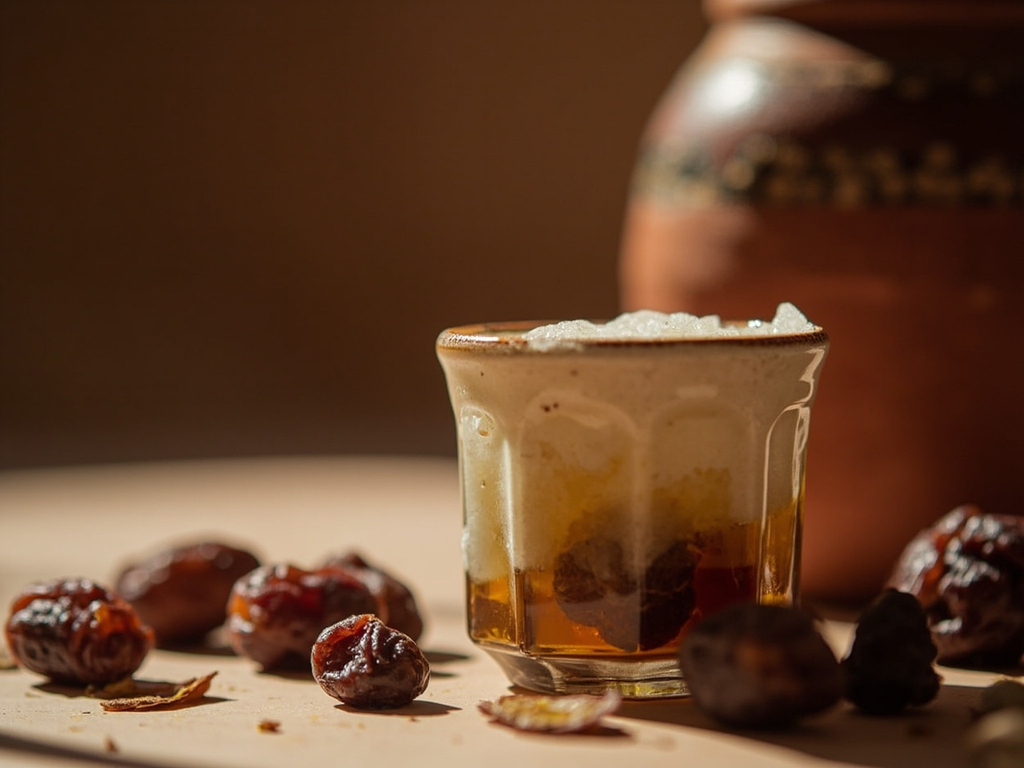
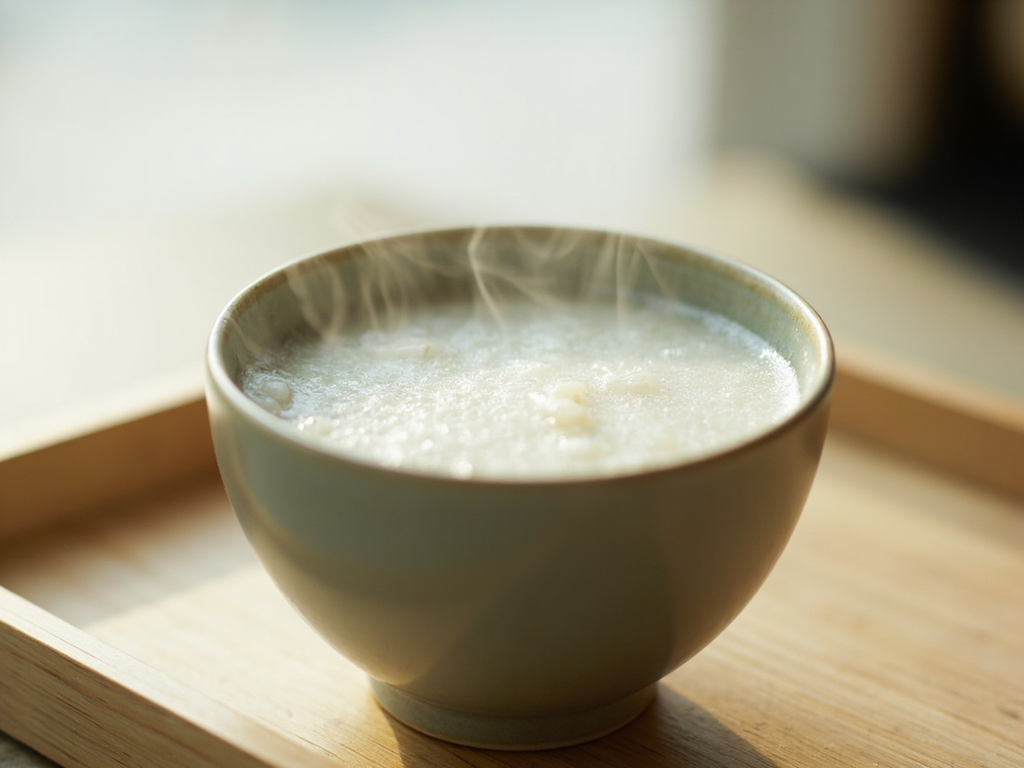
A thick, sweet, non-alcoholic drink made from cooked rice and kōji left to ferment in warmth. Sweetened without a grain of sugar: the ferments transform starch into sweetness. Served warm, comforting like a bowl of sunshine.
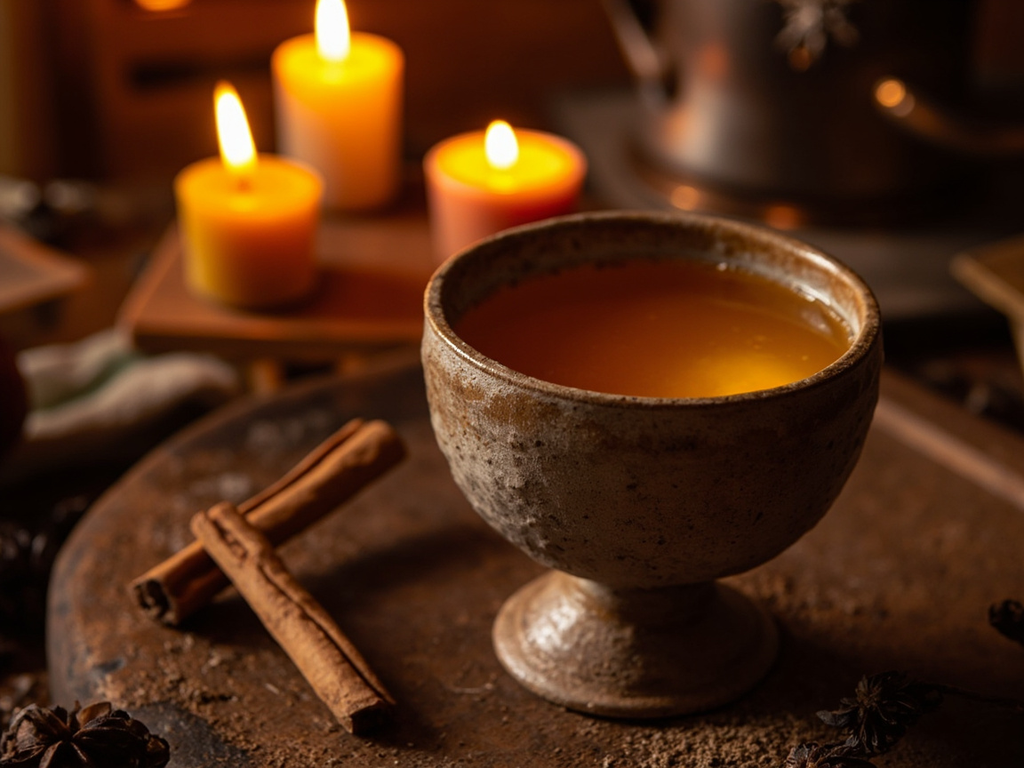
Approach, and fear nothing of the waters where I dwell. This white brew, my priests draw from rice and ferment, without wine or honey: the grain itself softens, like a heart soothed by music. Pour it warm into a pale bowl, and think of my serpent whose pallor it shares. Drink slowly — sweetness, you see, never hurries.
- •Cooked rice (uruchimai) — one bowl (base, provides starch)
- •Rice kōji (米麹) — equal part to rice (ferment that sweetens)
- •Spring water — to cover (thins the porridge)
Amazake — Sweet Rice Nectar
A thick, sweet, non-alcoholic drink made from cooked rice and kōji left to ferment in warmth. Sweetened without a grain of sugar: the ferments transform starch into sweetness. Served warm, comforting like a bowl of sunshine.
Why this dish? Benzaiten rules over water and over the rice that grows in water. Amazake, a white, warm, naturally sweet drink, is born from the meeting of rice and kōji — the same fermentation magic that gives the sake offered on her altars by Lake Biwa. It is still offered at shrines today, and its milky white recalls her serpent messenger.
Approach, and fear nothing of the waters where I dwell. This white brew, my priests draw from rice and ferment, without wine or honey: the grain itself softens, like a heart soothed by music. Pour it warm into a pale bowl, and think of my serpent whose pallor it shares. Drink slowly — sweetness, you see, never hurries.
Ingredients (period version)
- Cooked rice (uruchimai) — one bowl (base, provides starch)
- Rice kōji (米麹) — equal part to rice (ferment that sweetens)
- Spring water — to cover (thins the porridge)
Ingredients
- Cooked white rice — 250 g (cooked) (base)
- Rice kōji (packaged) — 200 g (fermentation, sweetness)
- Water — 400 ml (consistency)
- Pinch of salt — 1 pinch (enhances sweetness)
Method
- Mix the still-warm cooked rice with water to form a porridge at about 60 °C (warm to the finger, never hot).
- Crumble the kōji and incorporate it; above 65 °C the ferments die, so monitor the temperature.
- Maintain at 55–60 °C for 8 to 10 h (yogurt maker, rice cooker on 'keep warm' with lid ajar, or thermos).
- Taste: when distinctly sweet, blend to smooth, add a pinch of salt.
- Gently reheat with a little water and serve warm in a pale bowl.
How it was made : As early as the Heian period, kōji was used to make shrine sake; the non-alcoholic, sweet version is the same base stopped earlier. It was also called 'one-night sake' (hitoyozake). Cane sugar being rare and imported, this fermented sweetness was precious.
The contemporary twist : Add a grating of fresh ginger and you get shōga-amazake served in winter festivals — warms you from the inside.
Sources : Engishiki (延喜式, 927) — protocols for offerings and court sake · Living tradition of shrine amazake (Shintō shrines)
Benzaiten · Charactorium