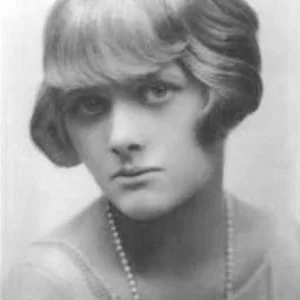

Daphne du Maurier (1907-1989) was a British novelist and short-story writer. A mistress of psychological suspense and gothic atmosphere, she is famous for stories such as “Rebecca” and “The Birds,” several of which were brought to the screen by Alfred Hitchcock.
Daphne du Maurier(1907 — 1989)
Daphne Du Maurier
Royaume-Uni
5 min read
Frequently asked questions
Key Facts
- Born on 13 May 1907 in London, granddaughter of the illustrator George du Maurier and daughter of the actor Gerald du Maurier.
- In 1938 she published her most famous novel, “Rebecca,” an enormous international success.
- Her short story “The Birds” (1952) and “Rebecca” (1940) were adapted for the screen by Alfred Hitchcock.
- She lived for a long time in Cornwall, a region that strongly inspired the settings of her novels (“Jamaica Inn,” 1936).
- Made a Dame Commander of the British Empire (DBE) in 1969; she died on 19 April 1989 at Par, in Cornwall.
Works & Achievements
Her first novel, a family saga set in Cornwall, which launched her career.
A gothic adventure novel about smugglers, adapted for the screen by Hitchcock in 1939.
A masterpiece of psychological suspense, never out of print since its publication and adapted by Hitchcock (Academy Award for Best Picture, 1940).
A novel of murky, ambiguous atmosphere, often compared to “Rebecca.”
A chilling short story made world-famous by Hitchcock's film in 1963.
An eerie, supernatural short story, adapted for the screen by Nicolas Roeg in 1973.
An autobiographical account recalling her childhood and the birth of her vocation as a writer.
Anecdotes
When Daphne du Maurier published "Rebecca" in 1938, success was immediate: the novel has never gone out of print since. Its very first line
Last night I dreamt I went to Manderley again
has become one of the most famous opening lines in English literature.
The imaginary manor of Manderley, at the heart of "Rebecca
was inspired by a real house: Menabilly, in Cornwall. Daphne fell in love with it, eventually leased it for more than twenty years, and wrote several of her books there, even though she never actually owned it.
Alfred Hitchcock adapted three of Daphne du Maurier's works:
Jamaica Inn
(1939)
Rebecca
(1940
which won the Academy Award for Best Picture)
and the famous short story
The Birds
(1963). The author
however
was not at all fond of some of the liberties the filmmaker took.
In 1947, Daphne du Maurier was accused of plagiarism in the United States: it was claimed that "Rebecca" copied a Brazilian novel. She won the case by proving that she had never read the work in question.
Granddaughter of the writer and caricaturist George du Maurier and daughter of the famous actor Gerald du Maurier, Daphne grew up in an artistic London milieu. She was made a Dame Commander of the British Empire (DBE) in 1969 for her literary work.
Primary Sources
Last night I dreamt I went to Manderley again.
On December the third the wind changed overnight and it was winter. Until then the autumn had been mellow and mild.
Daphne du Maurier recounts her childhood memories and the birth of her vocation as a writer within a family of artists.
A gothic novel set on the desolate moors of Cornwall, centred on an inn of smugglers and wreckers.
Key Places
Daphne du Maurier's native city, where she grew up in a family of artists in the early 20th century.
Secluded manor house she leased for over twenty years, which inspired Manderley in “Rebecca.” She wrote several of her works there.
Harbour and coastal area of Cornwall that she loved deeply and which serves as the setting for many of her novels.
Town in Cornwall where Daphne du Maurier died in 1989, at the age of 81.
Wild moorland in Cornwall where the inn that inspired “Jamaica Inn” stands.
Liens externes & ressources
Références
Œuvres
The Loving Spirit
1931
Ma cousine Rachel (My Cousin Rachel)
1951
Myself when Young
1977