 flip
flipSour plum and honey drink (梅漿)
Sour plum and honey drink (梅漿)
Why this dish? The plum (梅), source of sourness in ancient Chinese cooking before the common use of vinegar, provided a refreshing and toning drink. In the heat of Luoyang summers, or to comfort a court submitted to the regent's frugal discipline, this sweet-and-sour water was a simple and permissible pleasure.
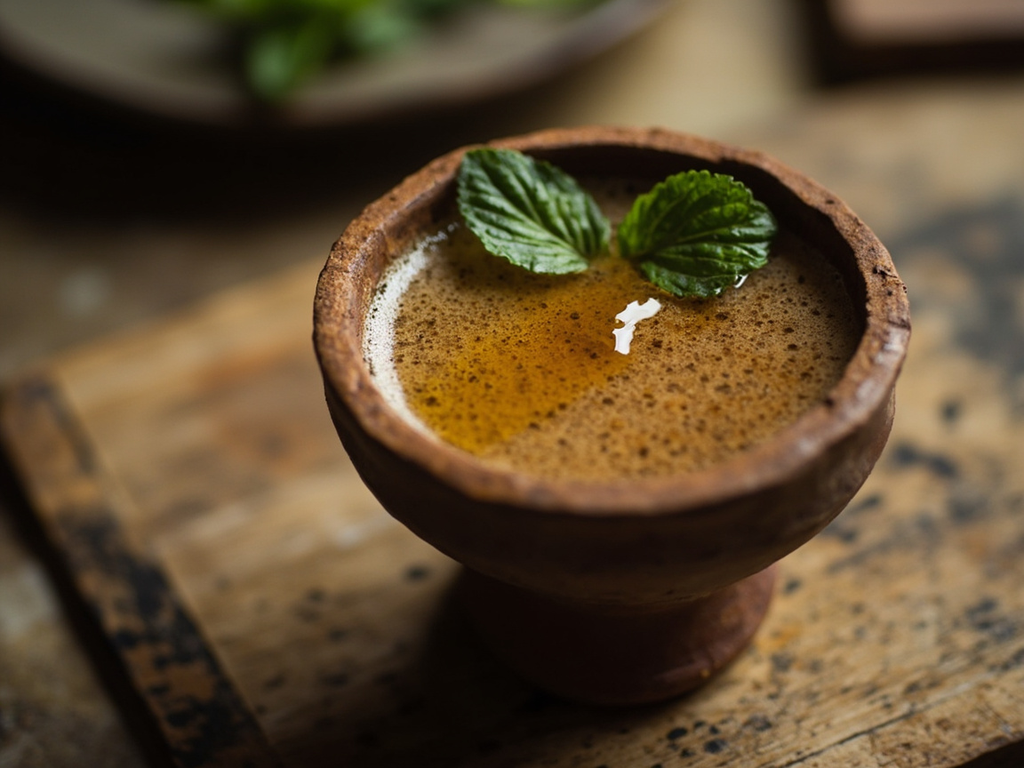
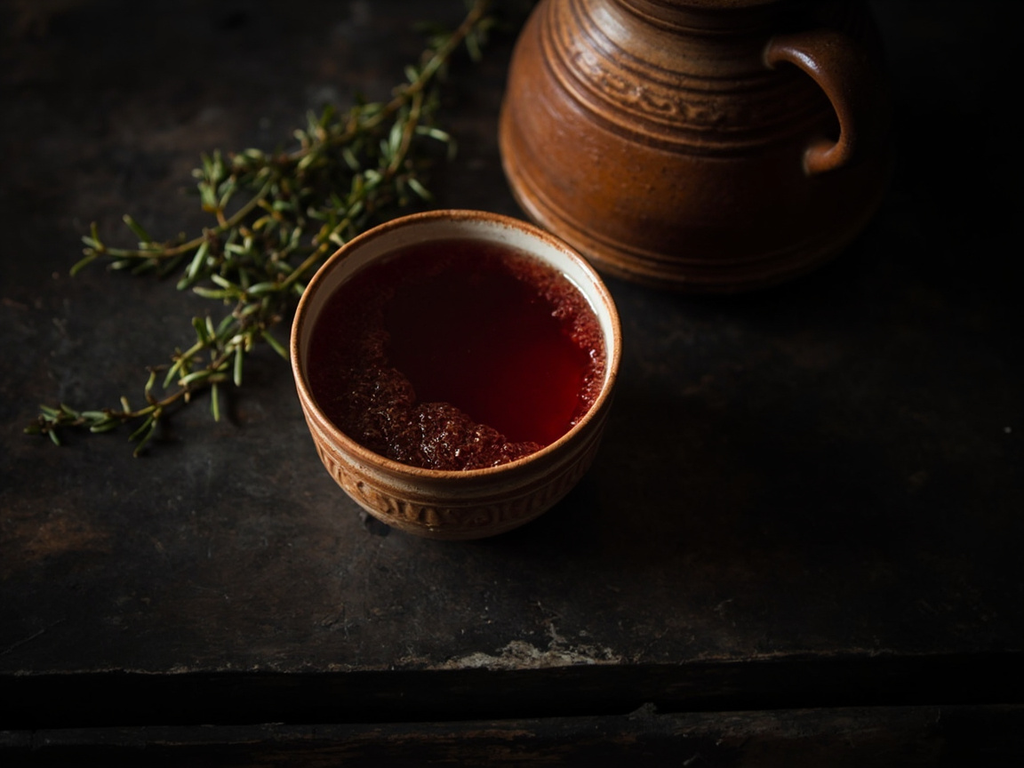
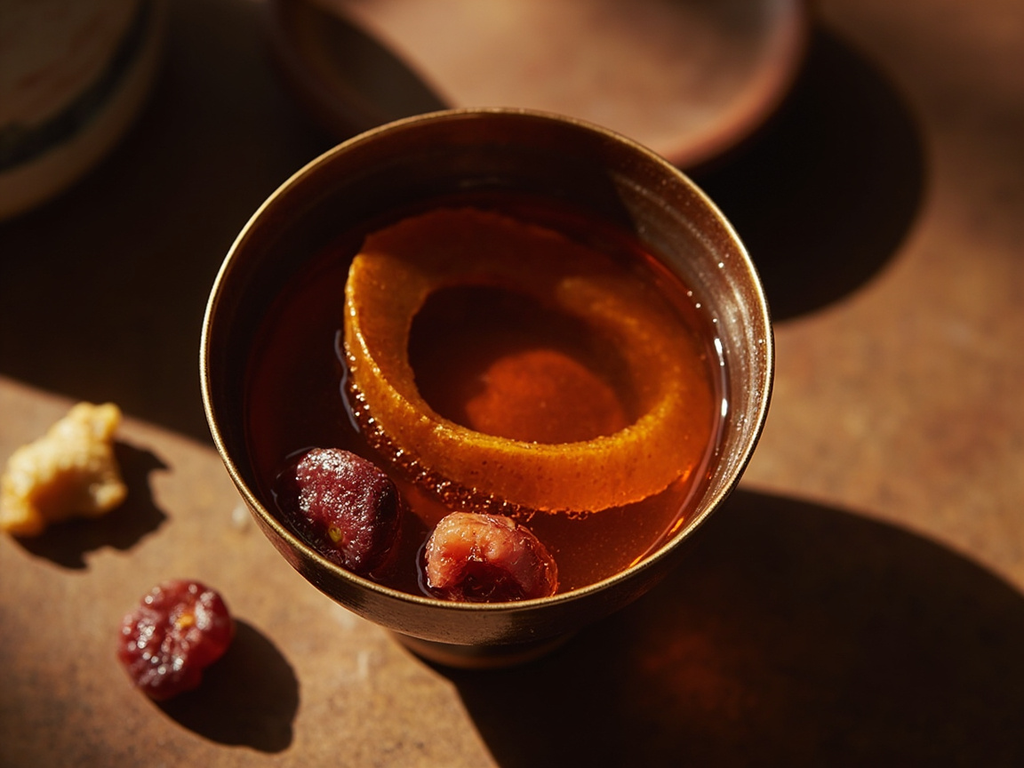
A cool infusion of dried smoked plums, sweetened with honey and scented with ginger: tart, refreshing, slightly toning. The ancestor of Chinese suānméitāng, in a pared-down period version.
I was sometimes reproached for my severity at table; but austerity does not forbid sweetness when it is wise. On very hot days, I had the sour plums infused with a little honey and ginger, and it was served to the palace ladies and the scribes bent over their tablets. A tart sip refreshes the body and sharpens the mind — here is a pleasure that no one could judge excessive.
- •Dried sour plums (梅) — a handful (sourness and aroma)
- •Honey (蜜) — to taste (sweetness)
- •Ginger (薑) — a few slices (tonic aromatic)
- •Spring water — as needed (beverage base)
Sour plum and honey drink (梅漿)
A cool infusion of dried smoked plums, sweetened with honey and scented with ginger: tart, refreshing, slightly toning. The ancestor of Chinese suānméitāng, in a pared-down period version.
Why this dish? The plum (梅), source of sourness in ancient Chinese cooking before the common use of vinegar, provided a refreshing and toning drink. In the heat of Luoyang summers, or to comfort a court submitted to the regent's frugal discipline, this sweet-and-sour water was a simple and permissible pleasure.
I was sometimes reproached for my severity at table; but austerity does not forbid sweetness when it is wise. On very hot days, I had the sour plums infused with a little honey and ginger, and it was served to the palace ladies and the scribes bent over their tablets. A tart sip refreshes the body and sharpens the mind — here is a pleasure that no one could judge excessive.
Ingredients (period version)
- Dried sour plums (梅) — a handful (sourness and aroma)
- Honey (蜜) — to taste (sweetness)
- Ginger (薑) — a few slices (tonic aromatic)
- Spring water — as needed (beverage base)
Ingredients
- Dried smoked plums (wūméi, from herbalist/Asian grocery) — 6 to 8 (sourness and aroma)
- Honey — 3 to 4 tbsp (sweetness)
- Fresh ginger — 4 slices (aromatic)
- Water — 1.5 L (base)
Method
- Rinse the dried plums, put them in water with the ginger.
- Bring to a gentle boil, then simmer for 25–30 minutes: the water turns amber and takes on a smoky-sour aroma.
- Remove from heat, strain.
- Stir in the honey off the heat until dissolved (honey retains its flavor better this way).
- Let cool, then serve chilled, optionally with ice today.
- Taste and adjust the balance between the plums' sourness and the honey's sweetness.
How it was made : The plum (梅, méi) was, along with vinegar, the great source of sourness in ancient Chinese cooking: ancient texts cite "salt and plum" (鹽梅) as a metaphor for seasoning itself and, by extension, for the good minister who balances the state. Cool drinks based on plum and honey are the distant ancestors of suānméitāng. Refined cane sugar not yet widespread, honey provided sweetness.
The contemporary twist : Serve chilled in a clear carafe with a thin slice of ginger floating; call it "the regent's water" as a nod to Deng Sui's gentle discipline.
Sources : 尚書 (Shàngshū), metaphor of "salt and plum" (鹽梅) for seasoning · H. T. Huang, Science and Civilisation in China, vol. 6 part 5, Cambridge University Press, 2000 · Françoise Sabban, travaux sur l'histoire de l'alimentation chinoise, EHESS
Deng Sui · Charactorium