 flip
flipLibation Wine with Honey and Resin
Libation Wine with Honey and Resin
Why this dish? Before every altar meal, wine was poured on the sacred stone, the liquid portion of the god. Levantine wine, often sweetened with honey and perfumed with resin for preservation, was the drink by which one 'touched' the deity — the 'Lord of the Flies' received his cup like the other Baals.
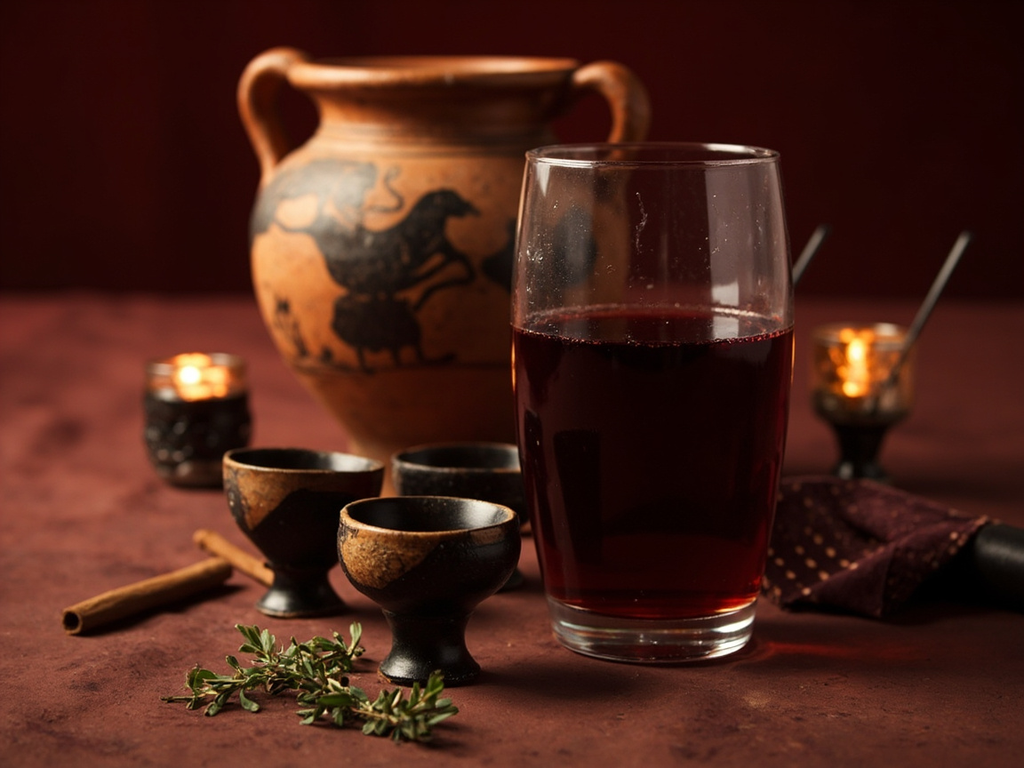
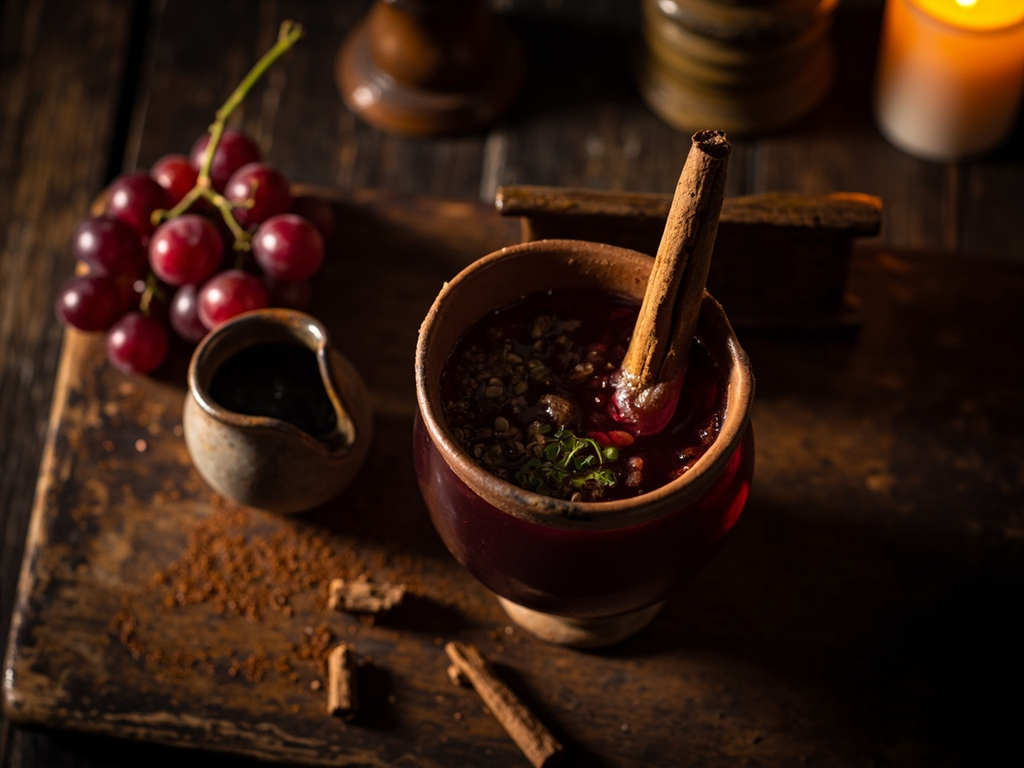
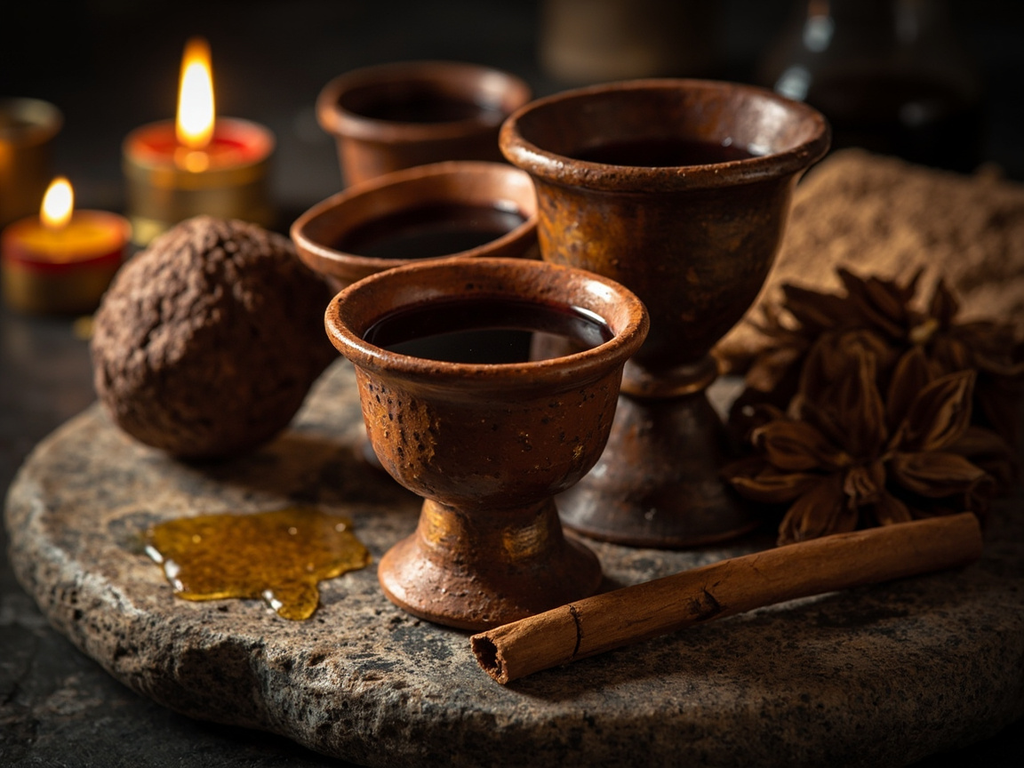
Red wine gently heated with honey, a touch of pine resin, and mild spices. A ritual drink, slightly resinous and sweet, recalling the perfumed wines of the ancient Near East. (Non-alcoholic version possible with grape juice.)
The first cup is not for you: it is poured on my stone, and the earth drinks it before me. In Ekron, the wine from the hills was destined for me, thickened with honey and sealed with resin so it would last through the summer without turning. Smell it: it carries the scent of pine and wax, like the jars my priests unsealed in the temple's dimness. Drink the second cup to my health, mortal — and never forget who drank the first.
- •Red wine from the hills — one jar (base)
- •Honey — to taste (sweetness and preservation)
- •Pine resin (terebinth/mastic) — a chip (flavor and preservation)
- •Coriander and a little caravan cinnamon — a pinch (mild spices)
Libation Wine with Honey and Resin
Red wine gently heated with honey, a touch of pine resin, and mild spices. A ritual drink, slightly resinous and sweet, recalling the perfumed wines of the ancient Near East. (Non-alcoholic version possible with grape juice.)
Why this dish? Before every altar meal, wine was poured on the sacred stone, the liquid portion of the god. Levantine wine, often sweetened with honey and perfumed with resin for preservation, was the drink by which one 'touched' the deity — the 'Lord of the Flies' received his cup like the other Baals.
The first cup is not for you: it is poured on my stone, and the earth drinks it before me. In Ekron, the wine from the hills was destined for me, thickened with honey and sealed with resin so it would last through the summer without turning. Smell it: it carries the scent of pine and wax, like the jars my priests unsealed in the temple's dimness. Drink the second cup to my health, mortal — and never forget who drank the first.
Ingredients (period version)
- Red wine from the hills — one jar (base)
- Honey — to taste (sweetness and preservation)
- Pine resin (terebinth/mastic) — a chip (flavor and preservation)
- Coriander and a little caravan cinnamon — a pinch (mild spices)
Ingredients
- Full-bodied red wine (or grape juice for non-alcoholic) — 75 cl (base)
- Honey — 3 tbsp (sweetness)
- Chios mastic (resin) — 1 small grain, crushed (resinous flavor)
- Cinnamon stick — 1 (mild spice)
- Coriander seeds — 1 tsp (flavor)
Method
- Crush the mastic grain with a spoonful of honey to disperse it.
- Gently heat the wine (without boiling) with honey, cinnamon, and coriander for 10 minutes.
- Add the dissolved mastic, stir, and let infuse for 5 minutes off the heat.
- Strain and serve warm in small clay or metal cups.
- For a symbolic libation, pour a splash onto the ground or into a vessel before drinking.
How it was made : Ancient wine kept poorly; it was mixed with honey, resins (pine, terebinth, mastic), and herbs both for flavor and preservation — the distant ancestor of Greek retsina. It was often drunk diluted with water. The libation, a gesture of pouring a share to the god, opened sacred meals throughout the Levant.
The contemporary twist : Serve chilled in summer with the grape juice version, over a large ice cube, with a chip of mastic resin placed on top as a 'seal.'
Sources : Patrick McGovern, Ancient Wine: The Search for the Origins of Viniculture · Studies on resinated and honeyed wines of the ancient Near East
Beelzebub · Charactorium