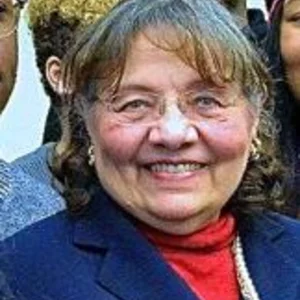

African-American civil rights activist, Diane Nash organized the Nashville sit-ins in 1960 and co-founded the Student Nonviolent Coordinating Committee (SNCC). A major figure of nonviolence, she contributed to the abolition of segregation in the American South.
Diane Nash(1938 — ?)
Diane Nash
États-Unis
9 min read
Frequently asked questions
Famous Quotes
« We will not stop. If they jail us, we will go to jail. If they beat us, we will endure. We will not stop.»
« We will not stop our movement.»
Key Facts
- 1960: organizes the Nashville sit-ins against segregation in restaurants
- 1960: co-founds the Student Nonviolent Coordinating Committee (SNCC)
- 1961: takes part in the Freedom Rides to challenge segregation in transportation
- 1964: contributes to organizing marches in Alabama and Mississippi
- Awarded the Presidential Medal of Freedom in 2022
Works & Achievements
Nash co-organized and led the sit-in campaign that desegregated Nashville's lunch counters in under three months. It was the first major victory for the sit-in tactic and became a model for the entire national movement.
Nash was one of the founding members of SNCC at Shaw University — the student organization that would go on to lead some of the most radical and effective actions of the civil rights movement for a decade.
After violence in Alabama had forced the first wave of Freedom Riders to stop, Nash organized a second wave of activists who completed the journey to New Orleans, compelling the Kennedy administration to intervene.
Nash and James Bevel drafted the detailed strategic plan that would become the Selma voting rights campaign. This visionary document identified Dallas County (Selma) as the ideal confrontation ground for securing federal legislation.
Nash contributed to the strategic design of the Birmingham Campaign, including the Children's Crusade, which involved hundreds of schoolchildren in the marches and had a decisive global media impact.
Nash developed and led workshops on nonviolent resistance in Nashville and beyond, teaching techniques of psychological discipline in the face of repression. These trainings became the model for the entire movement.
Anecdotes
In April 1960, following the Nashville sit-ins, Diane Nash publicly confronted Mayor Ben West in front of hundreds of demonstrators and asked him a simple question: 'Do you personally believe that segregation in restaurants is immoral?' The mayor, caught off guard, answered 'Yes.' The next day, Nashville's lunch counters were desegregated. Nash had won a decisive victory through the power of dialogue alone.
In May 1961, after Freedom Riders had been brutally beaten in Alabama and buses set on fire, the movement considered halting the Rides for safety reasons. Diane Nash, then 23 years old, flatly refused: 'If we stop now, we are letting violence set the example over nonviolence.' She organized a second wave of Freedom Riders, accepting that some might die for the cause.
In 1961, pregnant with her first child, Diane Nash was arrested in Mississippi for teaching civil disobedience to Black youth. Sentenced to two years in prison, she refused to appeal or pay the fine. She declared to the court that she refused to let her child be born in a country where being Black was treated as a crime.
During sit-in training sessions in Nashville, Nash supervised simulations of remarkable intensity: students played the role of segregationists, hurling insults, knocking over food, and hitting their fellow trainees. Nash trained future activists to never retaliate, never leave their seats, and maintain absolute dignity. This rigorous psychological preparation set the Nashville movement apart from all others.
Diane Nash had grown up in a prosperous Catholic neighborhood in Chicago and had never encountered institutionalized segregation. When she arrived at Fisk University in Nashville in 1959 to compete in a beauty pageant, she was shocked to discover separate restrooms and water fountains marked 'White Only' and 'Colored.' That initial shock transformed a young college student into one of the most formidable civil rights organizers of her time.
Primary Sources
We are willing to accept jail rather than pay fines, because paying would mean acknowledging the legitimacy of unjust laws. Nonviolence is not a tactic, it is a way of life.
We affirm the philosophy or ideal of nonviolence as the foundation of our purpose and our method, but we recognize the necessity for each individual to decide his own adherence to this principle.
I have decided to serve my sentence rather than pay a fine or appeal my conviction. I hope my decision will help show that those of us working in the civil rights movement are not misguided, but that we act according to our convictions.
We cannot tolerate the existence of systems that exploit and degrade human beings. Segregation is a moral sin and we have a duty to resist it by every nonviolent means at our disposal.
Nashville taught us that we could change things. You could sit at a lunch counter and refuse to leave, and if enough people did the same thing, something had to change. It was a revelation.
Key Places
The city where Diane Nash studied at Fisk University and organized the 1960 sit-ins. Nashville became a laboratory for nonviolent movement tactics and a model of organizing that inspired the entire country.
Diane Nash's hometown, where she was born on May 15, 1938. She grew up in a middle-class Catholic neighborhood largely sheltered from the institutionalized segregation of the South, which made her encounter with it in Nashville all the more jarring.
One of the main sites of the sit-ins organized by Nash in 1960. This lunch counter in a department store on Nashville's main commercial street was the scene of weeks of peaceful resistance in the face of insults, violence, and coffee poured over protesters.
A symbolic city in the civil rights movement since the 1955 bus boycott. Nash worked there and took part in actions coordinated by the SNCC across Alabama, most notably during the 1961 Freedom Rides.
Nash was arrested here in 1961 and sentenced to two years in prison for teaching civil disobedience. She chose jail over paying a fine, turning her imprisonment into a political act.
The central city of the 1965 voting rights marches. Nash worked behind the scenes on the strategy of the Selma campaign alongside James Bevel, which ultimately led to the Voting Rights Act. The Edmund Pettus Bridge has since become a globally recognized memorial site.
Typical Objects

The iconic object of the 1960 sit-ins: taking a seat at these stools in segregated restaurants and refusing to leave was the quintessential act of civil resistance. Diane Nash coordinated dozens of students who occupied these seats in rotation to keep up the pressure for weeks.
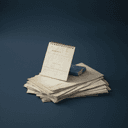
Nash was renowned for her exceptional logistical skills. She used detailed notebooks to coordinate activist rotations, action locations, legal contacts, and rules of nonviolent conduct, turning resistance into a near-military operation.

The Student Nonviolent Coordinating Committee displayed its insignia to identify members during actions. Diane Nash, co-founder of the SNCC, wore these recognition symbols, which became emblems of an entire generation's commitment.
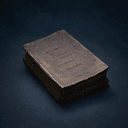
The nonviolent training in which Nash was immersed drew on Christian teachings and Gandhi's texts. These readings provided the philosophical foundation for peaceful resistance and guided activists' behavior in the face of violence and insults.

Demonstrators carried signs bearing clear slogans such as “End Segregation Now” or “We Shall Not Be Moved.” Nash supervised the making and carrying of these signs, ensuring the message was legible, dignified, and non-provocative.

Interstate buses were the setting for the 1961 Freedom Rides. Diane Nash organized the continuation of these journeys after the bombings, aware that these buses represented federal legal territory where segregation had theoretically been banned since 1960.
School Curriculum
Vocabulary & Tags
Key Vocabulary
Tags
Daily Life
Morning
A typical day for Diane Nash in 1960–1961 began early at the Nashville Christian Leadership Council offices or at Fisk University. She would gather teams of activists to map out the day's plan of action: which restaurants to target, how many groups to send, which students were available. She insisted that everyone review the nonviolent conduct rules before heading out.
Afternoon
Afternoons were often taken up by the direct actions themselves: sit-ins at downtown restaurants, picketing in front of segregated stores, or negotiations with business owners and city officials. Nash stood out for her ability to stay calm in the face of provocation and to keep control of tense situations.
Evening
Evenings were devoted to debriefing and planning meetings, often held in Black churches that served as rear bases for the movement. The day's actions were reviewed, injured activists were cared for, legal defense was prepared for those who had been arrested, and new recruits were trained. Nash also worked to keep morale up in the face of fear and violence.
Food
Like most student activists, Nash ate simply and frugally, often in the kitchens of Black families in the neighborhood who housed the organizers. Southern African American food — cornbread, beans, collard greens — sustained bodies after long days of action. The irony was lost on no one: they were fighting for the right to sit in restaurants where they never actually ate.
Clothing
Nash paid careful attention to her appearance as a deliberate strategic choice: sit-in demonstrators dressed neatly and elegantly to defy racist stereotypes and make any violence directed at them all the more shocking in the eyes of the public. She wore understated dresses or suits, polished shoes, and a tidy hairstyle — the perfect image of a respectable student whom no logic could justify insulting or arresting.
Housing
Nash lived in the dormitories at Fisk University in Nashville, sharing daily life with other Black students who had come from the North or Midwest and were encountering the institutionalized segregation of the South for the first time. This campus home was also a space for debate, political education, and intense solidarity among young activists.
Historical Timeline
Period Vocabulary
Liens externes & ressources
Références
Œuvres
Organisation des sit-ins de Nashville
1960
Co-fondation du Student Nonviolent Coordinating Committee (SNCC)
avril 1960
Continuation des Freedom Rides
mai 1961
Plan de campagne pour le droit de vote en Alabama
1963-1965
Contributions à la campagne de Birmingham
1963
Formation de militants à la non-violence
1960-1965