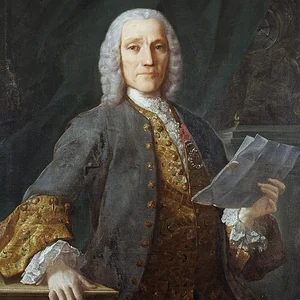

Domenico Scarlatti was an Italian composer and harpsichordist of the Baroque period. The son of the composer Alessandro Scarlatti, he is famous for his 555 harpsichord sonatas, which revolutionized the instrument's technique. He spent much of his life in the service of the courts of Portugal and Spain.
Domenico Scarlatti(1685 — 1757)
Domenico Scarlatti
royaume de Naples, royaume d'Espagne
6 min read
Frequently asked questions
Key Facts
- Born on 26 October 1685 in Naples, the same year as Bach and Handel
- Son of the composer Alessandro Scarlatti, a major figure of Neapolitan opera
- In the service of Queen Maria Barbara of Portugal and then the Spanish court from the 1720s onward
- Author of 555 harpsichord sonatas (essercizi) exploring a new kind of virtuosity
- Died on 23 July 1757 in Madrid
Works & Achievements
A collection of thirty sonatas published in London, a showcase for his virtuosity and the only major edition to appear during his lifetime.
The heart of his output, these brief single-movement pieces reinvented keyboard writing and secured his posthumous fame.
A sacred work composed for St Peter's in Rome, displaying his mastery of the vocal counterpoint inherited from the Roman tradition.
An opera from his Italian period, illustrating his beginnings on the path laid out by his father Alessandro before he devoted himself to the harpsichord.
A late sacred piece for voice and strings, one of his final compositions, of great inwardness.
Anecdotes
In 1685, three giants of the Baroque were born in the same year: Johann Sebastian Bach, George Frideric Handel, and Domenico Scarlatti. Scarlatti and Handel would even cross paths in Rome, but Bach and Scarlatti would never meet.
Around 1709 in Rome, Cardinal Ottoboni is said to have arranged a friendly musical duel between Scarlatti and Handel. On the harpsichord, the two virtuosos were judged equals; but on the organ, Handel won. Scarlatti, a gracious loser, kept a deep admiration for his rival all his life and would, it is said, cross himself whenever he spoke of his talent.
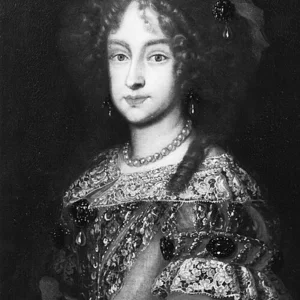
For nearly thirty years, Scarlatti was the harpsichord teacher of a princess, Maria Barbara of Portugal. When she became Queen of Spain, he followed her to Madrid: it was for her, and for her pleasure alone, that he composed most of his 555 sonatas.
In Spain, Scarlatti lent an ear to popular music: guitars, castanets, Andalusian songs. He wove these colors into his sonatas, imitating the strumming of strings and dance rhythms on the harpsichord, which gives his music a Spanish flavor unique for its time.
Scarlatti invented a spectacular technique: crossing the hands at full speed across the keyboard so that the fingers overlap. This very difficult acrobatic feat fascinated his audiences and remains a challenge for pianists today.
Primary Sources
Do not expect, reader, that this be some profound learning, but rather an ingenious jesting of art meant to make you a master of the harpsichord. Live happily.
Scarlatti often said that nature had given him ten fingers, and as his instrument had employment for them all, he saw no reason why he should not use them all.
Mestre de capela of the royal chapel of Lisbon and music master to the Infanta Maria Barbara.
Key Places
Birthplace of Domenico Scarlatti and a great hub of Baroque opera, where his father Alessandro was a dominant figure.
Here Scarlatti served prestigious patrons and was chapel master at St. Peter's Basilica. It was reportedly here that the musical duel with Handel took place.
Capital of Portugal, where Scarlatti became chapel master at the court and tutor to the Infanta Maria Barbara from 1719 onward.
The Spanish court, where Scarlatti followed Maria Barbara after she became queen, composed the majority of his sonatas, and where he died in 1757.
The court stayed for several years in Andalusia; there Scarlatti immersed himself in Spanish folk music, which deeply marked his style.
Typical Objects

Keyboard instrument whose strings are plucked by quills. It was Scarlatti's instrument of choice, for which he composed his 555 sonatas.

Hand-copied, richly bound collections preserving the sonatas for Queen Maria Barbara. They allowed the work to be passed down, since most of it was never printed during the composer's lifetime.

A collection of thirty sonatas engraved in London in 1738, the only major publication to appear during Scarlatti's lifetime. The title means “exercises for harpsichord”.

Insignia of the Portuguese order of chivalry received from John V in 1738. It was a mark of prestige rewarding the musician's service at court.

A popular instrument of the Iberian Peninsula whose sonorities Scarlatti imitated on the harpsichord. Its strummed chords and rhythms inspire many sonatas from his Madrid period.
School Curriculum
Vocabulary & Tags
Key Vocabulary
Daily Life
Morning
At the court of Madrid, Scarlatti's morning revolved around Queen Maria Barbara. He prepared and revised his sonatas, tuned his harpsichord, and gave the daily lesson to his royal pupil, a passionate music lover.
Afternoon
The afternoon was divided between composing new sonatas and rehearsing the palace's chamber music. Scarlatti mingled with other court musicians, including the famous castrato Farinelli, the impresario of the royal entertainments.
Evening
In the evening, the court enjoyed private concerts and entertainments. Scarlatti accompanied on the harpsichord, and cards were sometimes played — a fondness that the composer, it is said, indulged to the point of falling into debt.
Food
As was typical at the Spanish court, rich dishes were served that blended Italian and Iberian traditions: meats, fish, fruits of the peninsula, all accompanied by Spanish wines and washed down with chocolate, a drink then very much in vogue among the aristocracy.
Clothing
Scarlatti wore the dress of an eighteenth-century court gentleman: an embroidered *justaucorps*, a waistcoat, breeches, silk stockings, and a powdered wig. In his portrait of **1738**, he displays the cross of the Order of Christ, a sign of his distinction.
Housing
In royal service, he lodged near the palace, amid the sumptuous setting of the residences of the Spanish crown, between **Madrid**, **Aranjuez**, and the country retreats where the court moved with the changing seasons.