 flip
flipSunday Blanquette de Veau
Sunday Blanquette de Veau
Why this dish? When abundance gradually returned after 1951 and guests were received at Éluard's table, blanquette — slowly simmered, with a white velvety sauce — was the bourgeois festive dish par excellence, served on Sundays to friends of the circle.
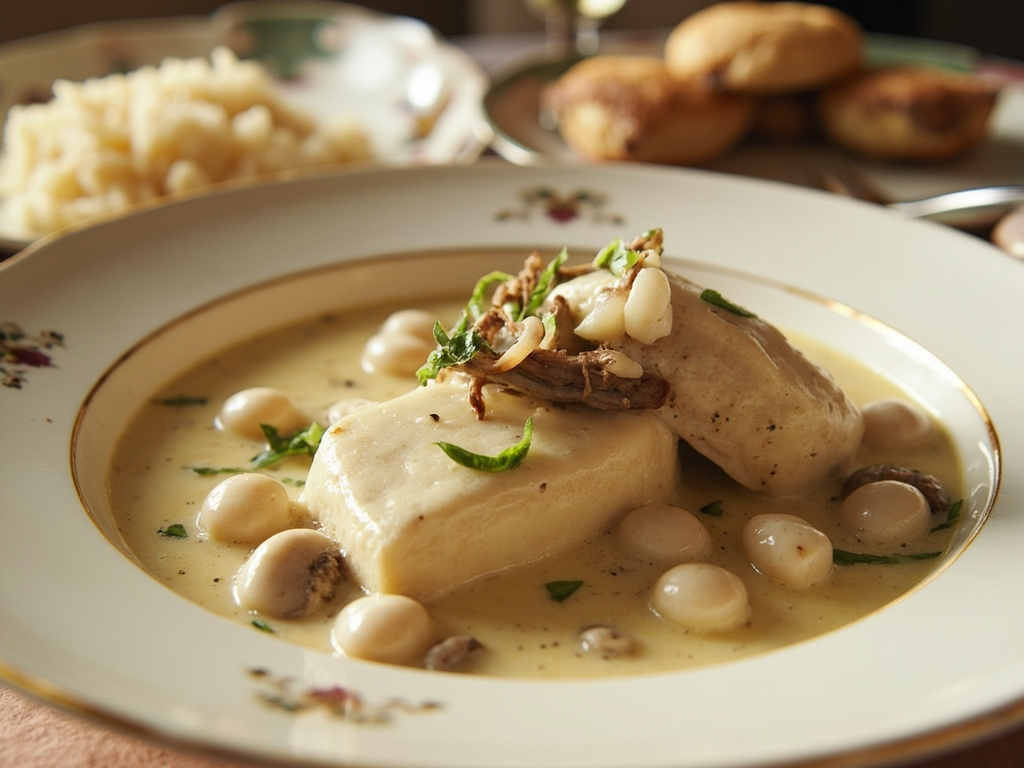
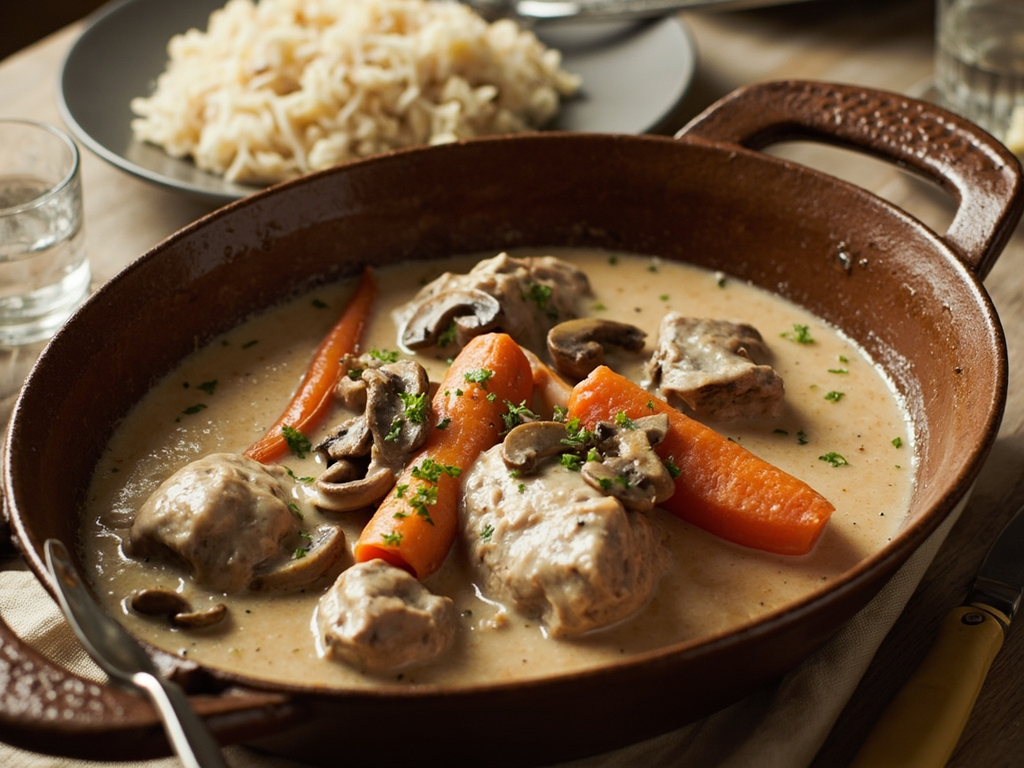
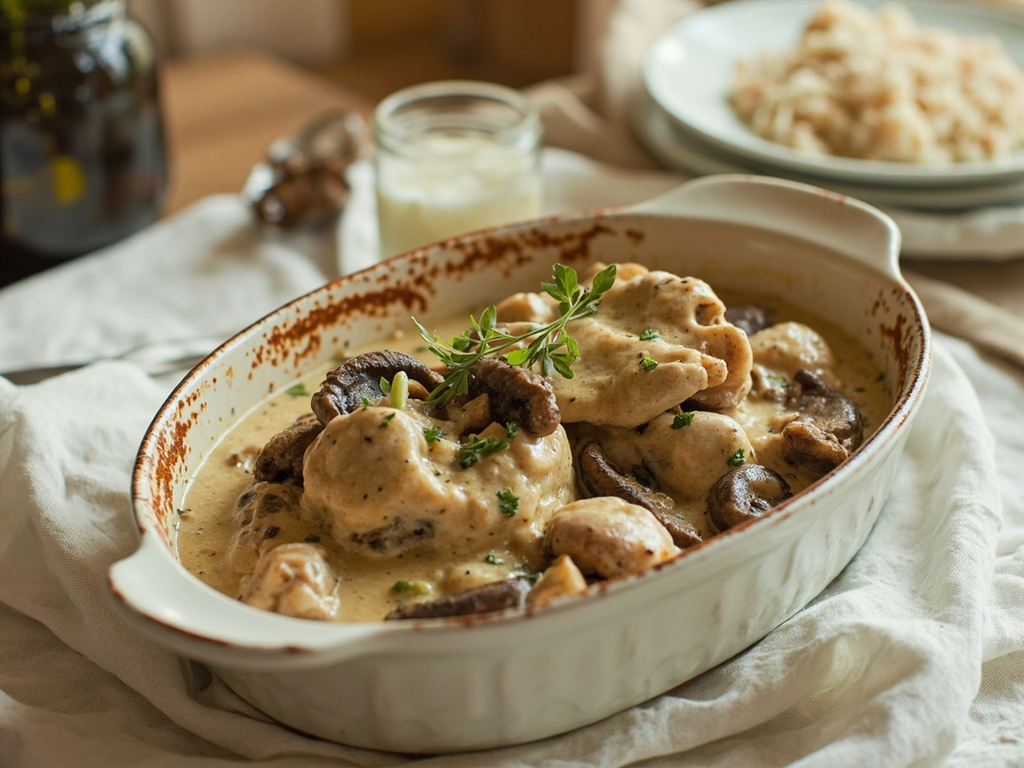
Veal gently cooked in a fragrant broth, then coated in a white sauce bound with egg yolk and brightened with a squeeze of lemon. The great comforting classic of mid-century French cuisine.
On Sundays, when friends came up and Paul read his verses in the cigarette smoke, I wanted a table worthy of the company. Blanquette requires patience: you cook the veal very gently, without letting it brown, in a broth where carrot and leek sing. The secret is the liaison — I beat an egg yolk with a little cream and a squeeze of lemon, and I pour it off the heat, never over it, otherwise it curdles. We served it with rice, and believe me, there was nothing left on the dish.
- •Veal shoulder — a nice piece (meat)
- •Carrot — a few (aromatic)
- •Leek and clove-studded onion — 1 each (aromatic)
- •Bouquet garni — 1 (flavor)
- •Butter and flour — for the roux (binder)
- •Egg yolk and cream — 1 yolk, a little cream (final binder)
- •Lemon — a squeeze (acidity)
Sunday Blanquette de Veau
Veal gently cooked in a fragrant broth, then coated in a white sauce bound with egg yolk and brightened with a squeeze of lemon. The great comforting classic of mid-century French cuisine.
Why this dish? When abundance gradually returned after 1951 and guests were received at Éluard's table, blanquette — slowly simmered, with a white velvety sauce — was the bourgeois festive dish par excellence, served on Sundays to friends of the circle.
On Sundays, when friends came up and Paul read his verses in the cigarette smoke, I wanted a table worthy of the company. Blanquette requires patience: you cook the veal very gently, without letting it brown, in a broth where carrot and leek sing. The secret is the liaison — I beat an egg yolk with a little cream and a squeeze of lemon, and I pour it off the heat, never over it, otherwise it curdles. We served it with rice, and believe me, there was nothing left on the dish.
Ingredients (period version)
- Veal shoulder — a nice piece (meat)
- Carrot — a few (aromatic)
- Leek and clove-studded onion — 1 each (aromatic)
- Bouquet garni — 1 (flavor)
- Butter and flour — for the roux (binder)
- Egg yolk and cream — 1 yolk, a little cream (final binder)
- Lemon — a squeeze (acidity)
Ingredients
- Veal shoulder, cubed — 800 g (meat)
- Carrots — 3 (aromatic)
- Leek — 1 (aromatic)
- Onion studded with 2 cloves — 1 (aromatic)
- Bouquet garni — 1 (flavor)
- Butter — 40 g (roux)
- Flour — 40 g (roux)
- Egg yolk — 1 (binder)
- Crème fraîche — 100 ml (binder)
- Lemon juice — 1/2 lemon (acidity)
- Button mushrooms — 200 g (garnish)
Method
- Cover the veal with cold water, bring to a simmer and skim.
- Add carrots, leek, clove-studded onion, and bouquet garni; simmer gently for 1 hour 15 minutes.
- Drain the meat and reserve the strained broth; sauté the mushrooms in butter.
- Make a white roux with butter and flour, then whisk in the warm broth for a velvety sauce.
- Off the heat, bind with the egg yolk beaten with cream and lemon juice.
- Combine veal, mushrooms, and sauce; reheat without boiling and serve with rice.
How it was made : Blanquette remained throughout the 20th century the 'guest dish' of French families. Its no-browning cooking and delicate egg yolk liaison make it a marker of bourgeois domestic savoir-faire of the era.
The contemporary twist : A pinch of grated lemon zest at plating and a few raw sliced mushrooms for crunch and freshness.
Dominique Lemor · Charactorium