 flip
flipHoney-and-Mead Glazed Roast Pork of the Wledd
Honey-and-Mead Glazed Roast Pork of the Wledd
Why this dish? Pork is the feast meat par excellence in the Mabinogi (pigs are objects of divine desire, like those of Pryderi), and the lineage of Dôn presides over the great tables of the Welsh nobility gathered in the llys.
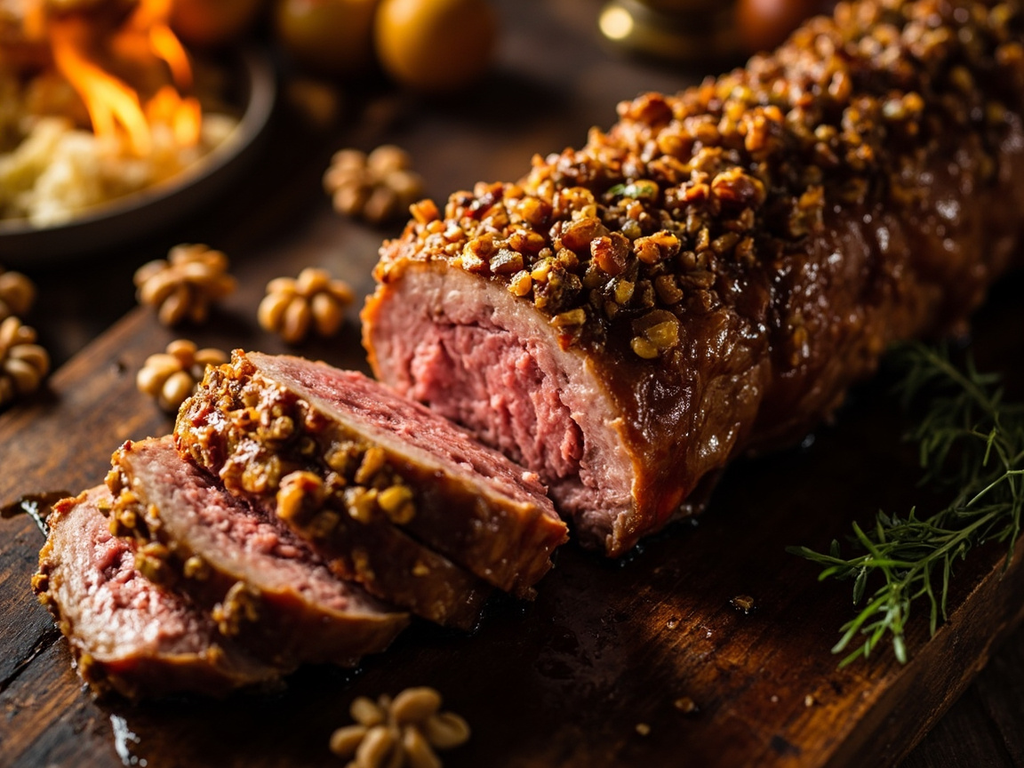
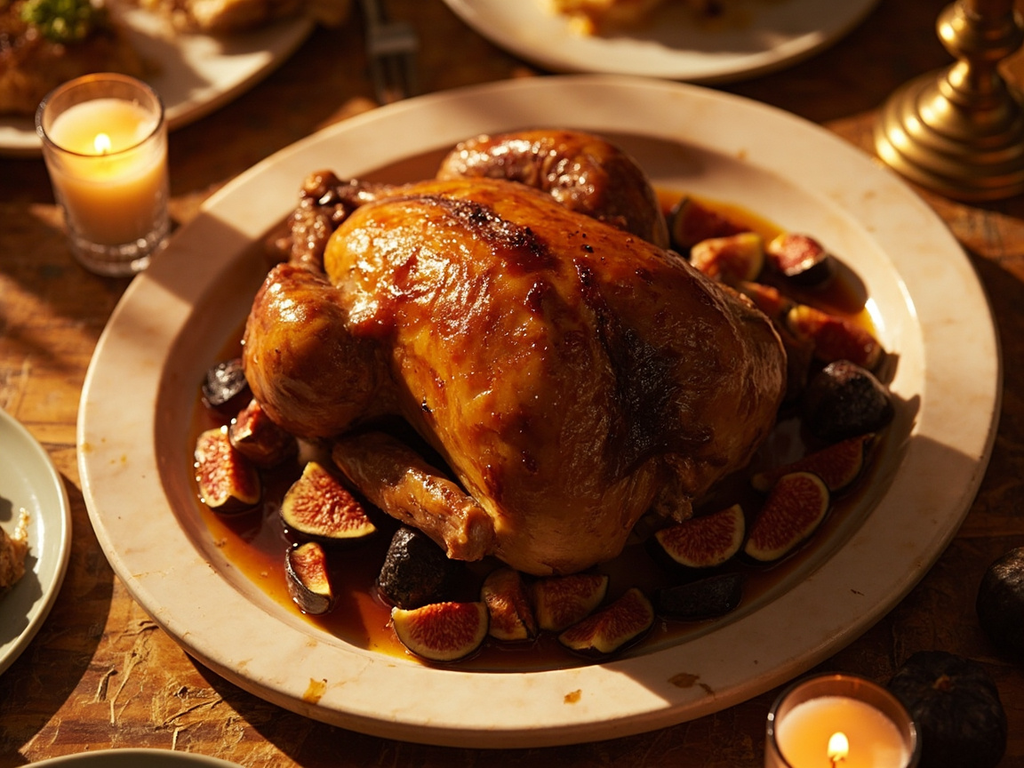
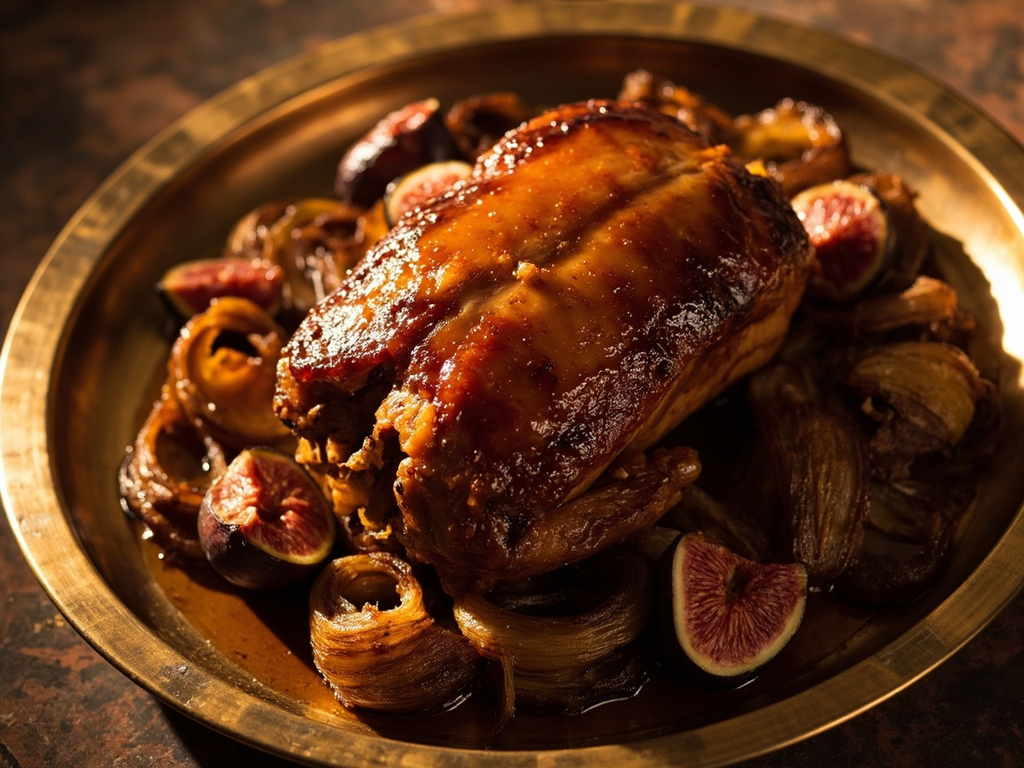
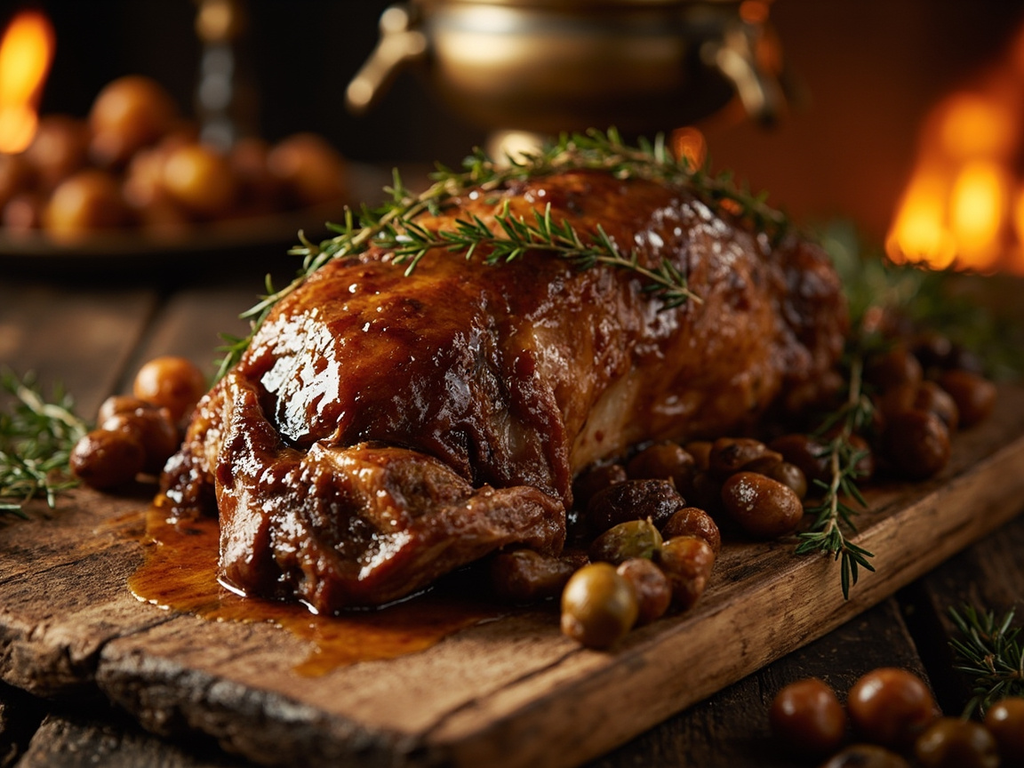
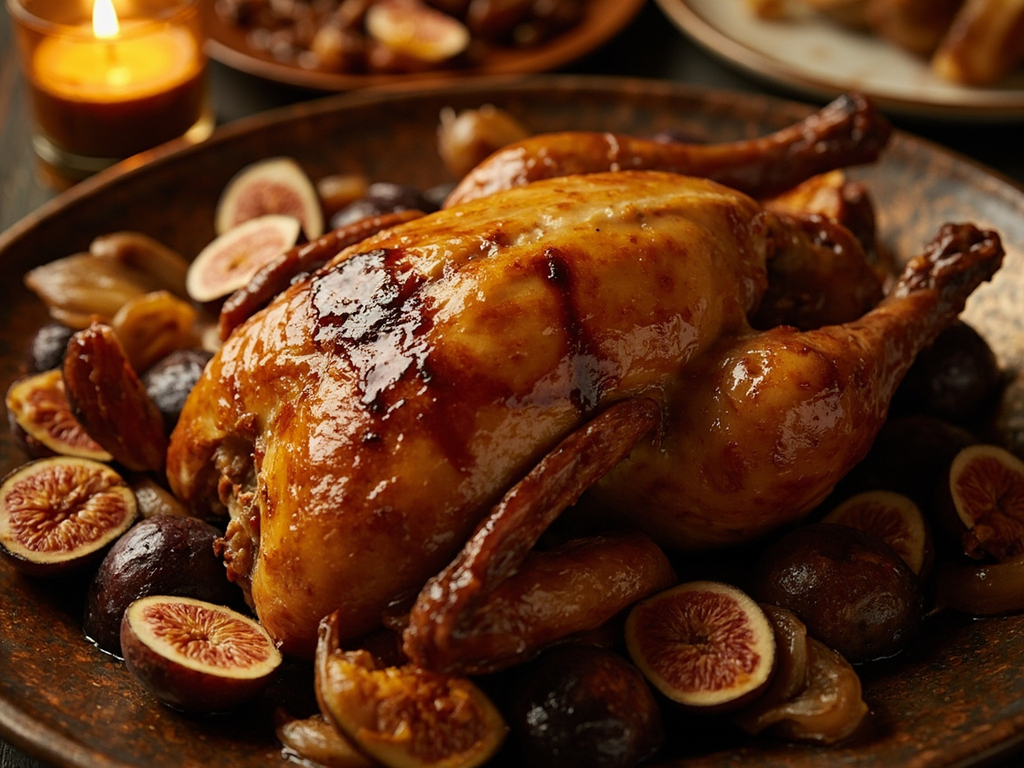
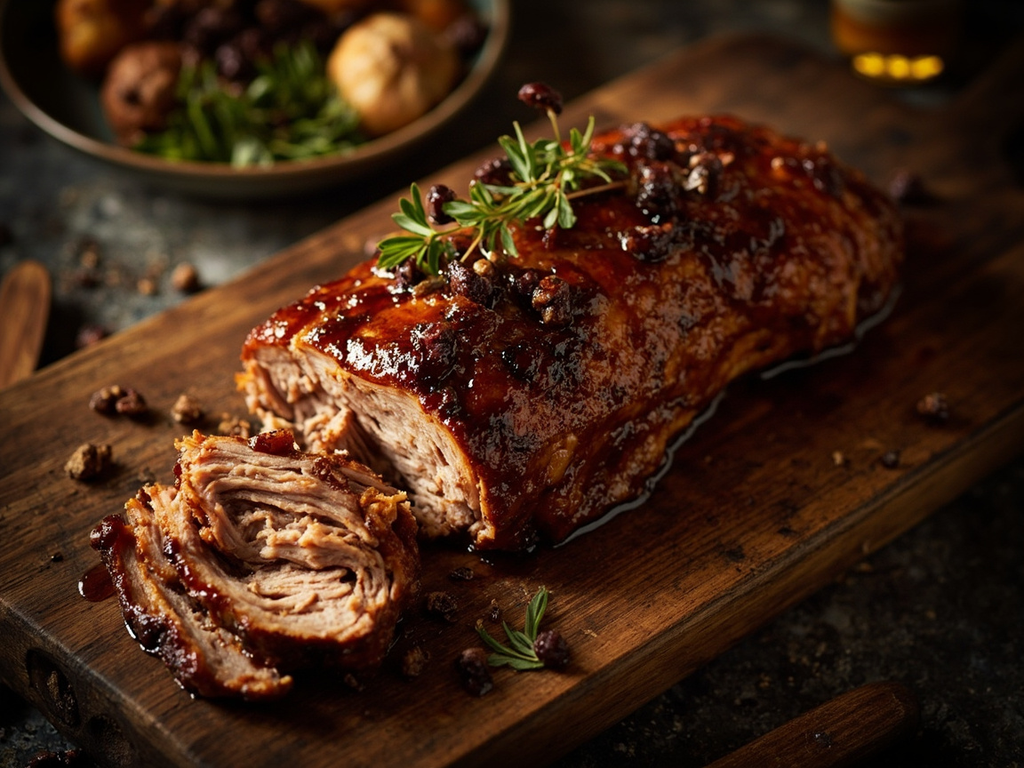
A slow-roasted pork shoulder, glazed with honey and basted with mead, perfumed with wild garlic and juniper berries — the roaring centerpiece of a Celtic court feast.
When the fires burned high in the hall and the harps of the lineage resounded, it was pork that was laid on the embers, for no beast honors a table better. We rubbed it with honey until it shone, we drenched it with mead until the smoke perfumed all Gwynedd. Know this, child: at my table, the best portion always goes to the storyteller and the humblest — thus a household stands.
- •Pork shoulder — one piece for the table (feast meat)
- •Wild honey — to glaze (glaze)
- •Mead (medd) — one bowl (basting)
- •Wild garlic — one bunch (herb)
- •Juniper berries — a pinch (flavoring)
- •Sea salt — to taste (seasoning)
Honey-and-Mead Glazed Roast Pork of the Wledd
A slow-roasted pork shoulder, glazed with honey and basted with mead, perfumed with wild garlic and juniper berries — the roaring centerpiece of a Celtic court feast.
Why this dish? Pork is the feast meat par excellence in the Mabinogi (pigs are objects of divine desire, like those of Pryderi), and the lineage of Dôn presides over the great tables of the Welsh nobility gathered in the llys.
When the fires burned high in the hall and the harps of the lineage resounded, it was pork that was laid on the embers, for no beast honors a table better. We rubbed it with honey until it shone, we drenched it with mead until the smoke perfumed all Gwynedd. Know this, child: at my table, the best portion always goes to the storyteller and the humblest — thus a household stands.
Ingredients (period version)
- Pork shoulder — one piece for the table (feast meat)
- Wild honey — to glaze (glaze)
- Mead (medd) — one bowl (basting)
- Wild garlic — one bunch (herb)
- Juniper berries — a pinch (flavoring)
- Sea salt — to taste (seasoning)
Ingredients
- Pork shoulder with skin — 1.5 kg (feast meat)
- Honey — 4 tbsp (glaze)
- Mead — 250 ml (or cider if unavailable) (basting and deglazing)
- Fresh wild garlic (or 3 garlic cloves + parsley) — 1 bunch (herb)
- Crushed juniper berries — 1 tsp (flavoring)
- Salt and cracked black pepper — to taste (seasoning)
Method
- Rub the shoulder with salt, crushed juniper and chopped wild garlic; let rest one hour.
- Sear the meat on all sides in a casserole, then pour in the mead.
- Cover and roast at low heat (150 °C) for 3 hours, basting regularly with the juices.
- Mix the honey with two spoonfuls of cooking juices, brush over the meat and return uncovered to 200 °C for 20 minutes to glaze.
- Let rest, then shred the meat and drizzle with the reduced juices; serve in the center of the table to share.
How it was made : Archaeozoology shows the importance of pork in Celtic Iron Age feasts, often roasted whole on a spit or embers. Honey and mead were the only sweeteners and the noble drink. Juniper and wild garlic are indigenous European aromatics attested long before Eastern spices.
The contemporary twist : Present as a "llys feast" on a large oak board, the glazed juices poured before the guests, with Celtic harp music in the background.
Sources : Bruno Maurey & INRAP team, studies on fauna from Celtic sites · The Mabinogion, trans. Sioned Davies (branch of Math, son of Mathonwy)
Don · Charactorium