 flip
flipErbsensuppe — Berlin-style split pea soup
Erbsensuppe — Berlin-style split pea soup
Why this dish? Hoffmann, an underpaid civil servant and later a bohemian artist, ate irregularly depending on his income. Split pea soup with bacon was the hearty, cheap food of common Berliners in his time—exactly the kind of simple dish that filled a stomach between two glasses of punch.
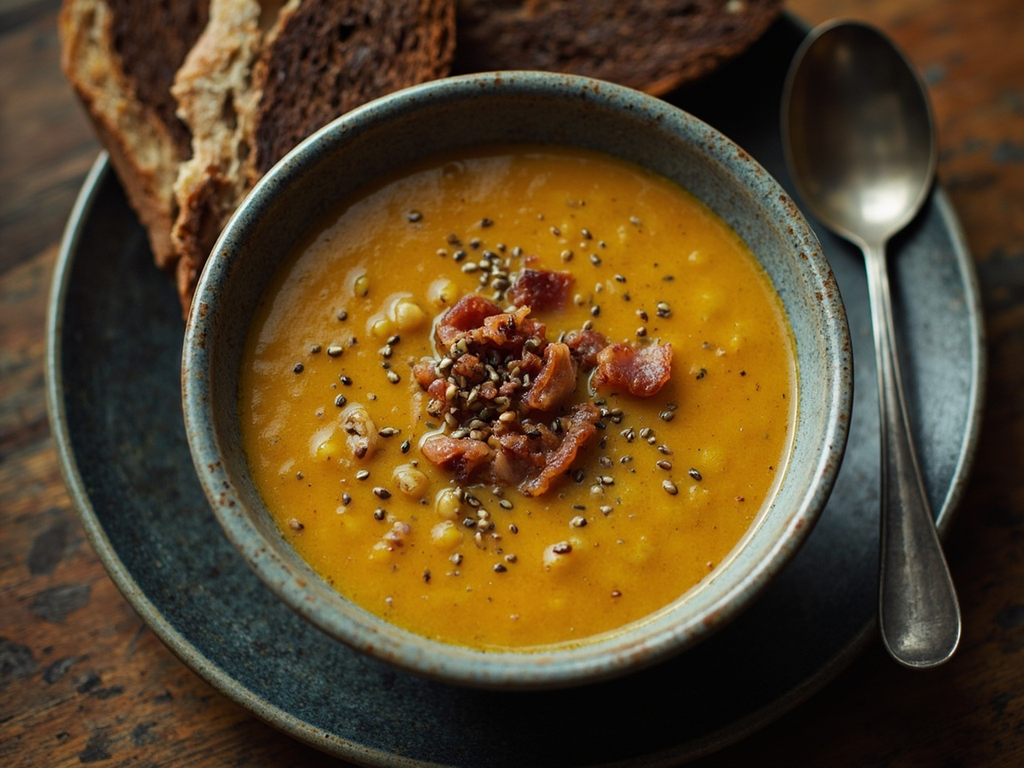
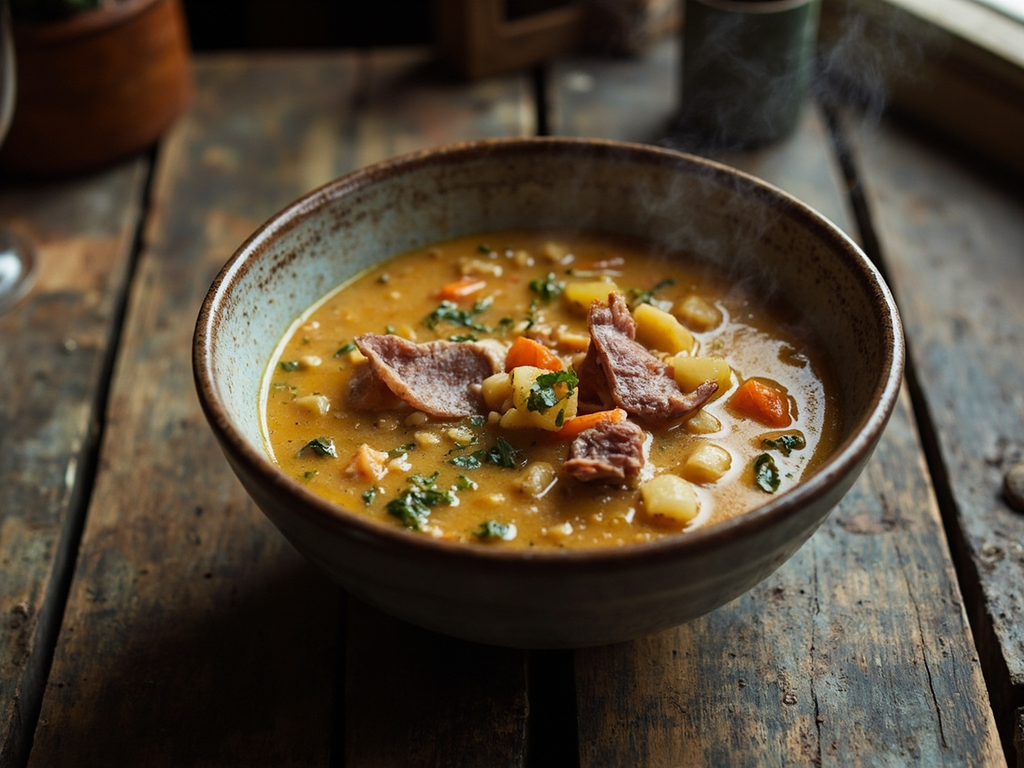
A thick, comforting soup of yellow split peas, long-simmered with bacon and aromatics until velvety. Salty and deeply savory, it was the everyday meal of modest Berliners.
When the purse is flat and the landlord knocks at the door like a bailiff from Hell, believe me, nothing beats a good pot of peas! I would let it sing for hours on the stove while I blackened my pages, and the smell of bacon would rise up and distract me from my specters. A spoonful of that steaming purée, a crust of bread, and I am revived, ready to defy poverty as one defies a bad critic. It is no prince's dish, my friend—it is the daily bread of the artist who would rather spend his last thaler on Rhine wine than on pheasants.
- •Pois cassés jaunes secs — a good measure (hearty base)
- •Lard ou couenne de porc — a piece (fat and umami)
- •Oignon — 1 or 2 (aromatic)
- •Marjolaine — a pinch (traditional herb)
- •Sel et poivre — to taste (seasoning)
- •Pain rassis — a few croutons (accompaniment)
Erbsensuppe — Berlin-style split pea soup
A thick, comforting soup of yellow split peas, long-simmered with bacon and aromatics until velvety. Salty and deeply savory, it was the everyday meal of modest Berliners.
Why this dish? Hoffmann, an underpaid civil servant and later a bohemian artist, ate irregularly depending on his income. Split pea soup with bacon was the hearty, cheap food of common Berliners in his time—exactly the kind of simple dish that filled a stomach between two glasses of punch.
When the purse is flat and the landlord knocks at the door like a bailiff from Hell, believe me, nothing beats a good pot of peas! I would let it sing for hours on the stove while I blackened my pages, and the smell of bacon would rise up and distract me from my specters. A spoonful of that steaming purée, a crust of bread, and I am revived, ready to defy poverty as one defies a bad critic. It is no prince's dish, my friend—it is the daily bread of the artist who would rather spend his last thaler on Rhine wine than on pheasants.
Ingredients (period version)
- Pois cassés jaunes secs — a good measure (hearty base)
- Lard ou couenne de porc — a piece (fat and umami)
- Oignon — 1 or 2 (aromatic)
- Marjolaine — a pinch (traditional herb)
- Sel et poivre — to taste (seasoning)
- Pain rassis — a few croutons (accompaniment)
Ingredients
- Yellow split peas — 300 g (soaked 2 h) (base)
- Smoked bacon or pork knuckle — 150 g (umami and fat)
- Onion — 1 large (aromatic)
- Carrot — 1 (sweetness)
- Dried marjoram — 1 tsp (herb)
- Water or broth — 1.2 L (cooking liquid)
- Country bread — for croutons (accompaniment)
Method
- Sauté the chopped onion in a little fat, add the diced bacon and carrot.
- Add the drained split peas, cover with water or broth, bring to a boil then reduce heat.
- Simmer for 1 hour to 1½ hours, stirring occasionally, until the peas break down.
- Partially mash with a spoon for a rustic velouté; add marjoram, salt, and pepper.
- Serve hot with golden bread croutons.
How it was made : Split peas, easy to store dry, were a staple of Prussian diet. They were slowly simmered with smoked bacon, which flavored and enriched the soup; marjoram was the classic herb for this dish in northern Germany.
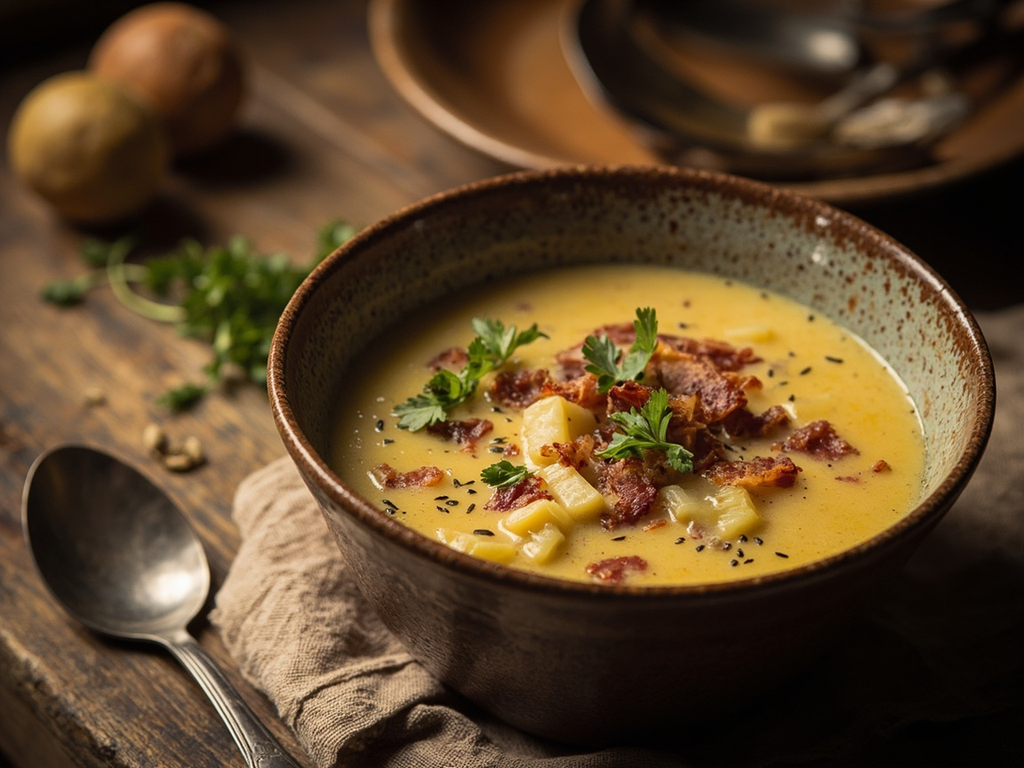
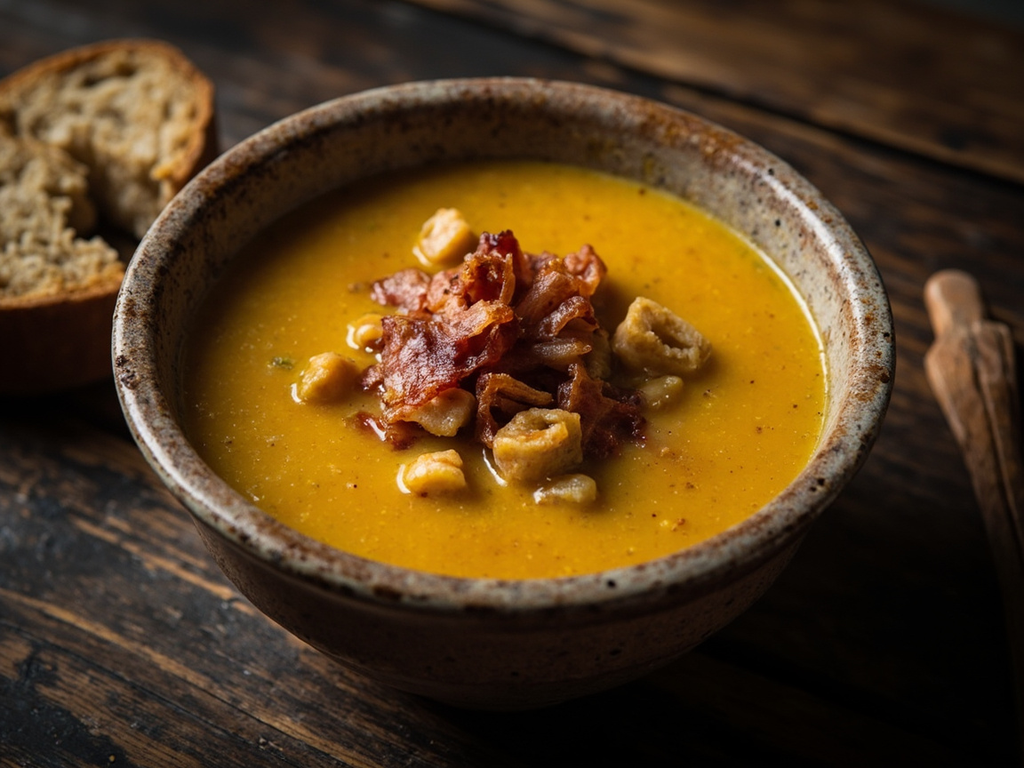
The contemporary twist : Top the velouté with crispy bacon bits and a drizzle of marjoram oil, serve in a rough stoneware bowl—the 'poet's soup' owned even in its name.
Sources : Henriette Davidis, Praktisches Kochbuch (1845) — 19th-century German home cooking
E.T.A. Hoffmann · Charactorium