 flip
flipFlaming Punch of Lutter & Wegner
Flaming Punch of Lutter & Wegner
Why this dish? Hoffmann spent his nights at the Lutter & Wegner wine cellar in Berlin, where he drank punch after punch while discussing music and literature with the actor Ludwig Devrient. His consumption of hot punch and wine was legendary and contributed to ruining his health: it is almost the drink that defines him.
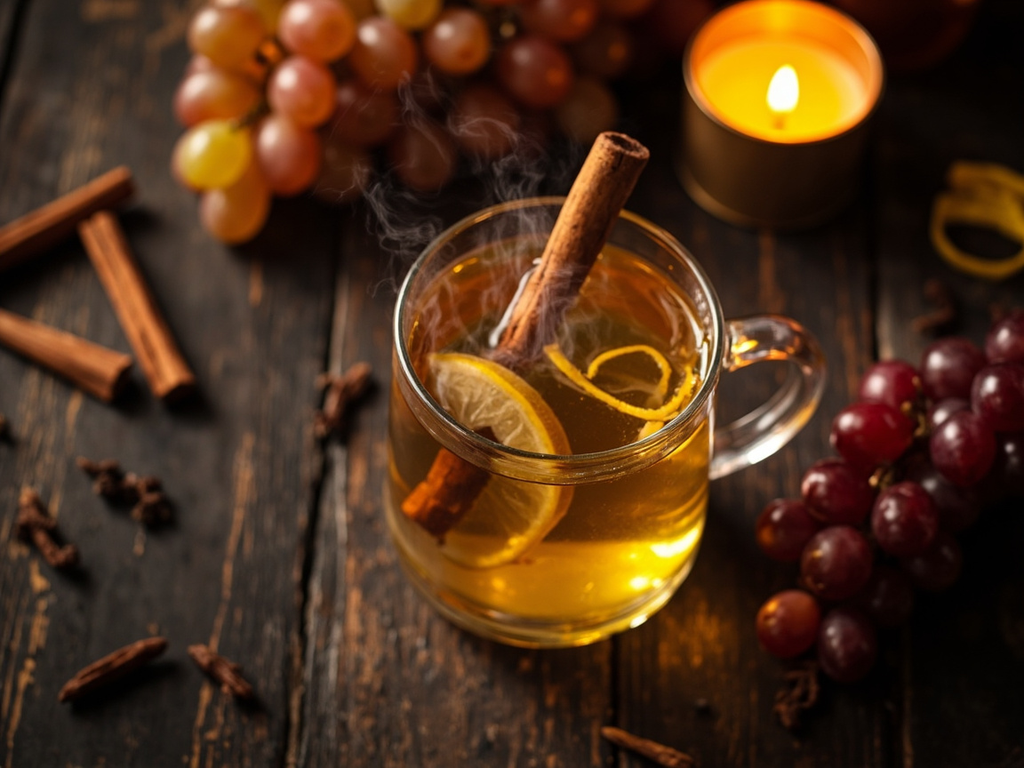
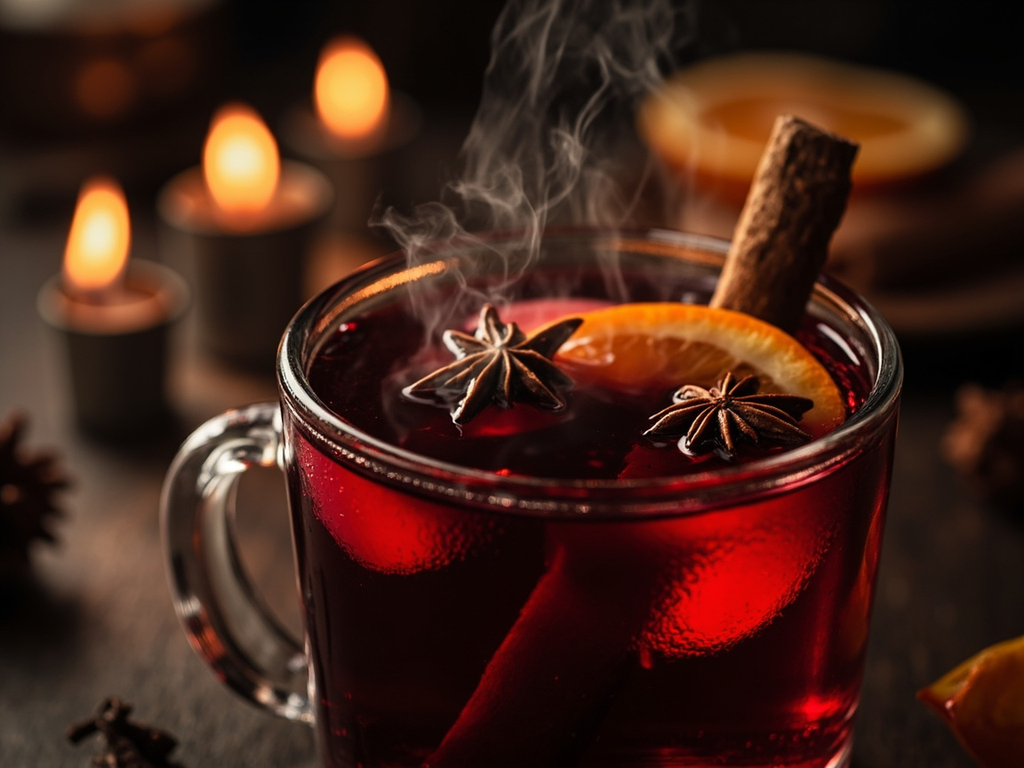
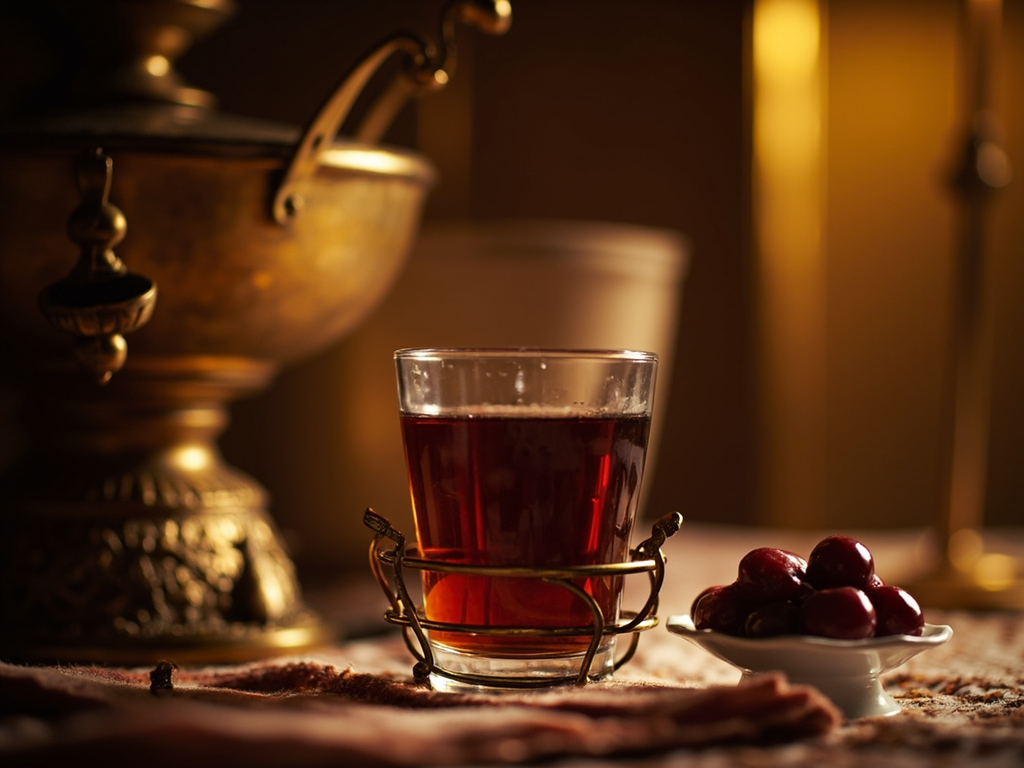
A hot, fragrant brew mixing rum, lemon juice, sugar, and boiling water, spiced with citrus peel and sweet spices. Served steaming in a glass, ideal for long Prussian winter evenings.
Come closer, friend, and fear not the demon dancing at the bottom of this glass—there is no kinder specter than the one rising from a flaming punch! See: I pour the rum over the sugar, I bring the flame near, and behold, a little blue light runs across the surface like a will-o'-the-wisp escaped from one of my tales. A dash of lemon for sharpness, boiling water for warmth, and you hold in your hands enough to make an entire invisible orchestra sing within you. Devrient and I would empty glasses of it until the shadows in the cellar began to converse; drink, but know that this fire warms the soul even as it consumes the body.
- •Rhum des Antilles — a good glass (base alcohol, imported through the port)
- •Sucre de canne en pain — as much as desired (sweetness, caramelized with flame)
- •Citrons — juice of a few (bright acidity)
- •Écorce de citron — a few zests (aroma)
- •Eau bouillante — according to desired strength (dilution and heat)
- •Cannelle et clous de girofle — a pinch (warm spices)
Flaming Punch of Lutter & Wegner
A hot, fragrant brew mixing rum, lemon juice, sugar, and boiling water, spiced with citrus peel and sweet spices. Served steaming in a glass, ideal for long Prussian winter evenings.
Why this dish? Hoffmann spent his nights at the Lutter & Wegner wine cellar in Berlin, where he drank punch after punch while discussing music and literature with the actor Ludwig Devrient. His consumption of hot punch and wine was legendary and contributed to ruining his health: it is almost the drink that defines him.
Come closer, friend, and fear not the demon dancing at the bottom of this glass—there is no kinder specter than the one rising from a flaming punch! See: I pour the rum over the sugar, I bring the flame near, and behold, a little blue light runs across the surface like a will-o'-the-wisp escaped from one of my tales. A dash of lemon for sharpness, boiling water for warmth, and you hold in your hands enough to make an entire invisible orchestra sing within you. Devrient and I would empty glasses of it until the shadows in the cellar began to converse; drink, but know that this fire warms the soul even as it consumes the body.
Ingredients (period version)
- Rhum des Antilles — a good glass (base alcohol, imported through the port)
- Sucre de canne en pain — as much as desired (sweetness, caramelized with flame)
- Citrons — juice of a few (bright acidity)
- Écorce de citron — a few zests (aroma)
- Eau bouillante — according to desired strength (dilution and heat)
- Cannelle et clous de girofle — a pinch (warm spices)
Ingredients
- Dark rum — 200 ml (base alcohol)
- Brown sugar — 4 tbsp (sweetness)
- Lemons — 2 (juice) + zest of 1 (acidity and aroma)
- Water — 500 ml (dilution)
- Cinnamon stick — 1 (spice)
- Cloves — 3 (spice)
Method
- Heat the water with lemon zest, cinnamon, and cloves; let infuse for 5 minutes off the heat.
- Strain the infusion and return to the pot with the sugar, stir until dissolved.
- Add lemon juice, then rum, and reheat without boiling (the alcohol should not fully evaporate).
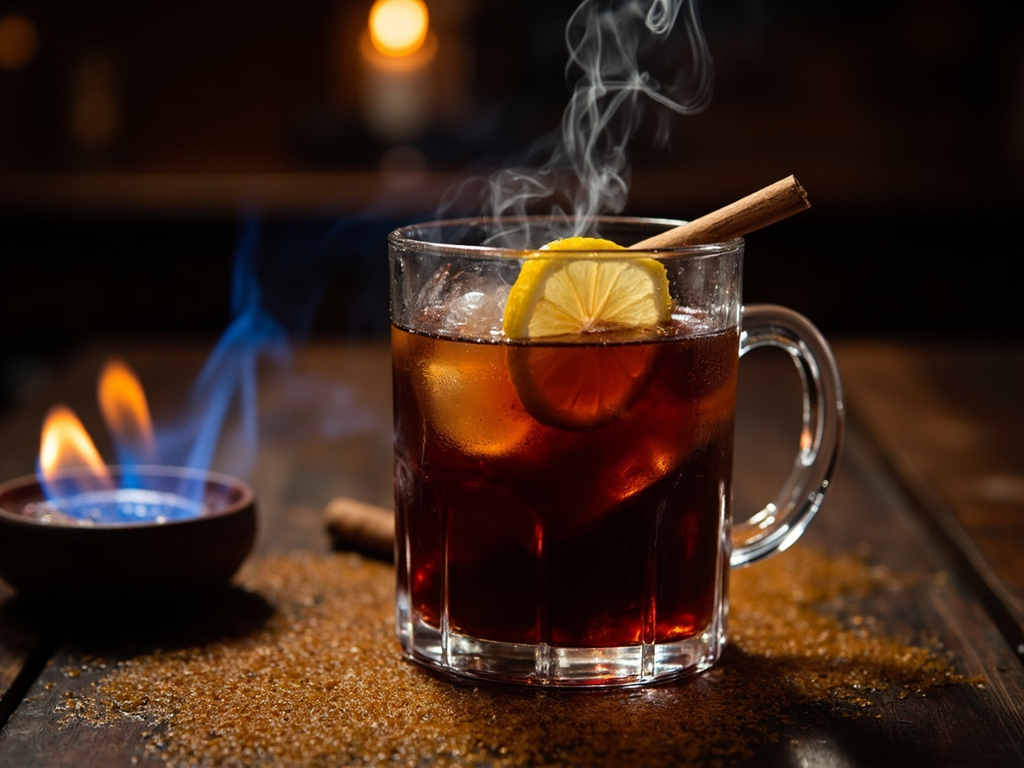
- For the spectacular effect: pour a little rum over a spoonful of sugar, carefully ignite it above the glass, then mix. Serve immediately, piping hot.
- Adjust water and sugar according to desired strength.
How it was made : Punch (from the Hindi pañc, 'five', for its five ingredients) reached Germany in the 18th century via sailors and colonial trade. In Berlin's Weinstuben, it was ladled from large bowls and the sugar drenched with rum was flambéed—a social ritual as much as a recipe.
The contemporary twist : Serve in a thick glass on a saucer, christened 'Kapellmeister Kreisler's Punch' after Hoffmann's whimsical alter ego, and slip in a cinnamon stick as a fragrant stirrer.
E.T.A. Hoffmann · Charactorium