 flip
flipBlåbærsaft — wild blueberry cordial
Blåbærsaft — wild blueberry cordial
Why this dish? After Dr. Jacobson's cure in Copenhagen in 1908, Munch almost entirely gave up the alcohol that had ruined his health. A non-alcoholic berry drink, bottled at the end of summer, exactly matches the sober table he rediscovered upon returning to Norway.
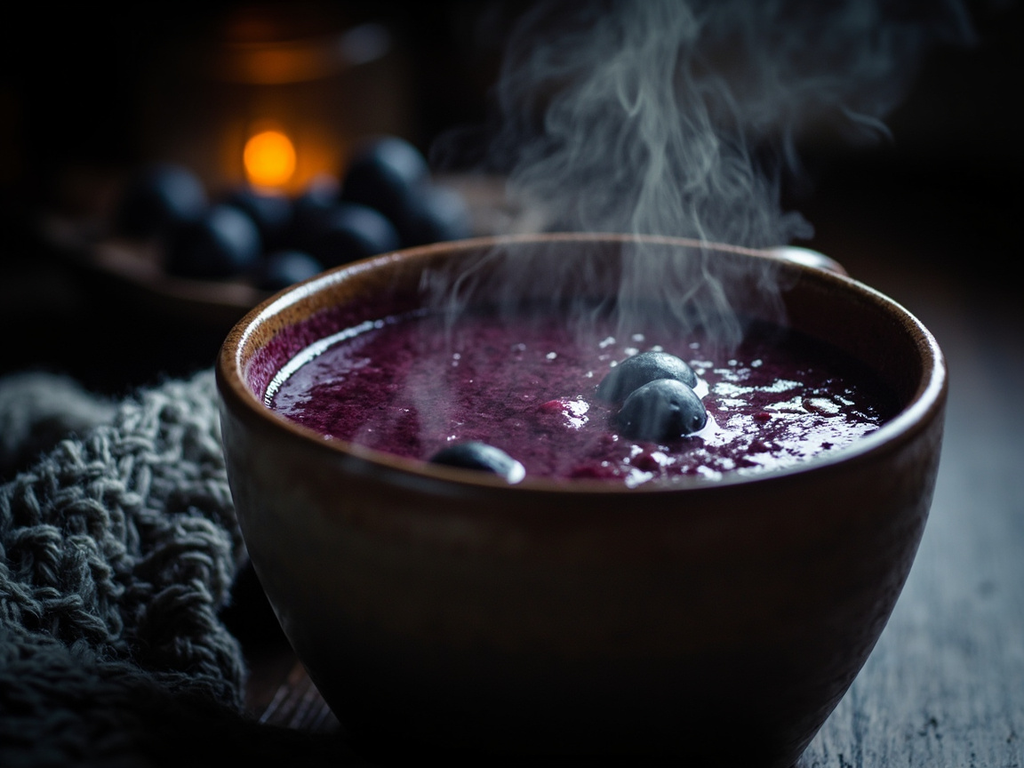
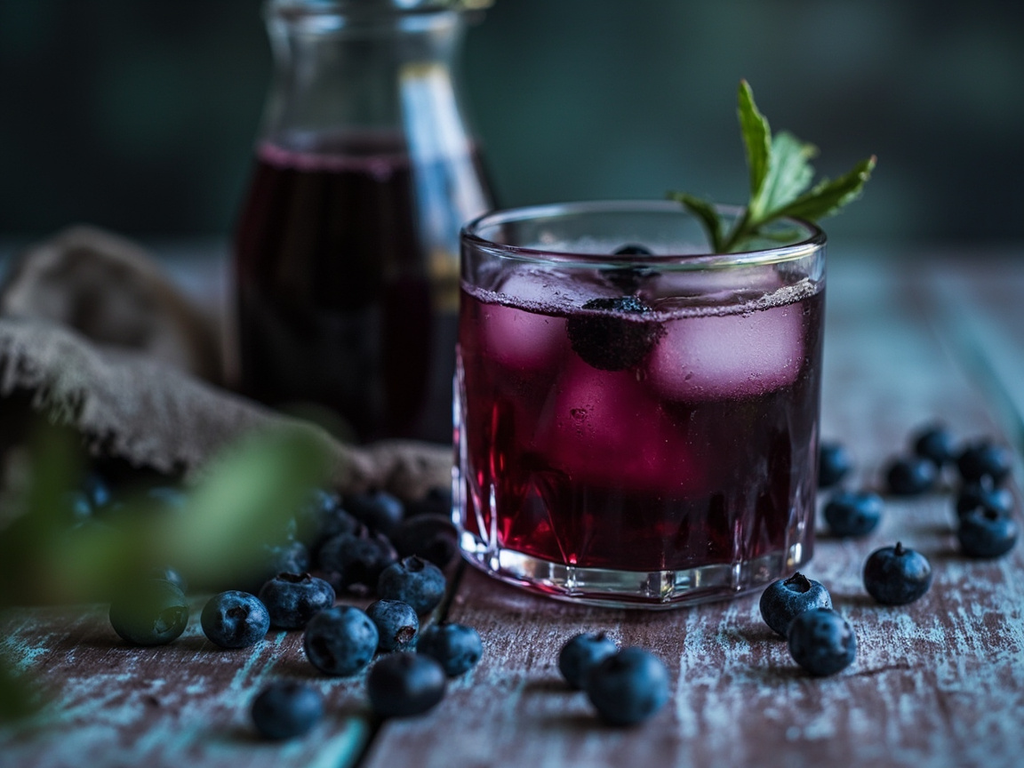
A concentrated syrup of wild blueberries (or their Norwegian cousins, forest bilberries) cooked with sugar then strained, bottled for preservation, and diluted with cold water for a refreshing drink, or hot water in winter.
The Norwegian summer is short, but the forests are laden with blue berries as far as the eye can see. We pick them by the handful, we make them sing in the cauldron with a little sugar, then we fill the bottles for winter. Since the doctors in Copenhagen tore me away from the bottle of alcohol, it is this berry juice, cut with clear water, that I bring to my lips in the studio. It tastes of the forest and of sobriety — and believe me, it is better than anything I drank in the cafés of Berlin.
- •Wild blueberries / bilberries — whole baskets (base fruit)
- •Water — just enough to cover (juice extraction)
- •Sugar — in proportion to the juice obtained (preservation and sweetness)
Blåbærsaft — wild blueberry cordial
A concentrated syrup of wild blueberries (or their Norwegian cousins, forest bilberries) cooked with sugar then strained, bottled for preservation, and diluted with cold water for a refreshing drink, or hot water in winter.
Why this dish? After Dr. Jacobson's cure in Copenhagen in 1908, Munch almost entirely gave up the alcohol that had ruined his health. A non-alcoholic berry drink, bottled at the end of summer, exactly matches the sober table he rediscovered upon returning to Norway.
The Norwegian summer is short, but the forests are laden with blue berries as far as the eye can see. We pick them by the handful, we make them sing in the cauldron with a little sugar, then we fill the bottles for winter. Since the doctors in Copenhagen tore me away from the bottle of alcohol, it is this berry juice, cut with clear water, that I bring to my lips in the studio. It tastes of the forest and of sobriety — and believe me, it is better than anything I drank in the cafés of Berlin.
Ingredients (period version)
- Wild blueberries / bilberries — whole baskets (base fruit)
- Water — just enough to cover (juice extraction)
- Sugar — in proportion to the juice obtained (preservation and sweetness)
Ingredients
- Blueberries (fresh or frozen) — 1 kg (base fruit)
- Water — 500 ml (extraction)
- Sugar — about 600 g (depending on strained juice) (preservation)
- Lemon juice (optional) — 1 tbsp (to enhance acidity and aid preservation)
Method
- Put the blueberries and water in a large pot, bring to a simmer and lightly crush the fruit; cook for 15 minutes.
- Pour into a clean cloth set over a strainer and let the juice drip through without pressing (for a clear syrup).
- Measure the juice, return to heat with about 60 g sugar per 100 ml juice (and the lemon juice), bring to a gentle boil for 5 minutes, skimming.
- Pour boiling into scalded bottles and seal immediately; store in a cool place.
- Serve diluted: 1 part syrup to 4-5 parts cold water in summer, or hot water in winter.
How it was made : Berry picking (blueberries, lingonberries, cloudberries) and preserving them as saft or jam was a pillar of Norwegian self-sufficiency, providing vitamins and sweetness during the long winter. Saft, non-alcoholic, was the everyday drink of families and children.
The contemporary twist : Serve in a thick glass over crushed ice, the color shifting from deep purple to midnight blue depending on the light — a whole Munch palette in a glass.
Edvard Munch · Charactorium