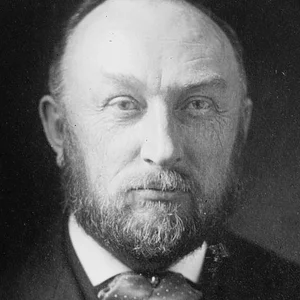

American astronomer (1846–1919), director of the Harvard Observatory for 42 years. He revolutionized stellar classification and led the famous group known as the "Harvard Computers," composed mostly of women scientists.
Edward Charles Pickering(1846 — 1919)
Edward Charles Pickering
États-Unis
8 min read
Frequently asked questions
Key Facts
- 1846: born in Boston, Massachusetts
- 1876: becomes director of the Harvard College Observatory, a post he holds until his death
- 1884: introduces standardized stellar photometry with the Harvard magnitude scale
- 1890–1924: publication of the Henry Draper Catalogue, classifying more than 225,000 stars by spectrum
- 1919: dies, leaving behind a team of women computers (including Annie Jump Cannon) who transformed astronomy
Works & Achievements
The first major photometric catalogue published by Pickering, providing precise brightness measurements for 4,260 stars. It established the standards for stellar magnitude measurement for a generation of astronomers.
A catalogue of the spectra of 10,351 stars photographed and classified at the Harvard Observatory. It laid the groundwork for the spectral classification system that would become universal.
An expanded and corrected version of the 1884 photometric catalogue, now covering more than 9,000 stars. It remained the international reference for stellar magnitudes for several decades.
The masterwork of the Harvard Observatory under Pickering, cataloguing the spectra of more than 225,000 stars classified by Annie Jump Cannon. It stands as one of the most ambitious achievements in observational astronomy of the 20th century.
An international network for observing stars whose brightness varies over time, initiated and coordinated by Pickering. This pioneering collaborative programme led to major discoveries, including Leavitt's law on Cepheid variables.
A classification of stars by surface temperature, developed under Pickering's direction by Annie Jump Cannon. Adopted internationally in 1922, this system is still taught and used worldwide.
Anecdotes
One day in 1881, exasperated by the repeated mistakes of his male assistants, Edward Pickering remarked sarcastically that his Scottish maid, Williamina Fleming, could do a better job than they could. He made good on the quip: he hired her at the Observatory. Fleming became one of the most productive astronomers in history, single-handedly cataloging more than 10,000 stars.
Pickering gradually assembled a team of women computers known as the “Harvard Computers.” Paid around 25 cents an hour — less than their male counterparts — they produced first-rate scientific work. Among them, Annie Jump Cannon classified more than 350,000 stars, and Henrietta Swan Leavitt discovered the period-luminosity relationship of Cepheid stars, the cornerstone of measuring distances across the Universe.
Pickering was a pioneer of large-scale astronomical photography. He equipped Harvard Observatory with an observation station in Peru to cover the southern hemisphere, creating the first truly global star catalog. Thousands of photographic plates were taken, forming a unique archive that still allows researchers today to study how the sky has changed over more than a century.
After the death of astronomer Henry Draper in 1882, his widow Anna Palmer Draper generously funded Harvard Observatory to carry on his work. Thanks to her patronage, Pickering was able to launch the Henry Draper Catalogue, a monumental record of the spectra of more than 225,000 stars, published between 1918 and 1924, which remained the world standard for decades.
Pickering was convinced that modern astronomy could only move forward by collecting large amounts of standardized data. As early as the 1880s, he established a network of amateur correspondents around the world to observe variable stars simultaneously. This collaborative approach, ahead of its time, foreshadowed the large-scale citizen science projects of the 21st century.
Primary Sources
A Catalogue of 4260 Stars, observed with the Meridian Photometer during the years 1879-1882. The observations were made with the greatest care, and the results are believed to be the most accurate stellar magnitudes yet determined.
The spectra of 10,351 stars have been examined and the classification of each recorded. The work was carried out at the Harvard College Observatory under the direction of the Director, Professor Edward C. Pickering.
The importance of a southern station for the purpose of completing the photographic survey of the entire sky cannot be overestimated. Without it, our catalogue must remain forever incomplete and our understanding of the stellar universe partial.
The work of the women employed in the reduction of the photographs continues to advance satisfactorily. Miss Cannon has during the past year classified the spectra of more than 5,000 stars, bringing the total of her classifications to over 150,000.
Key Places
Birthplace of Edward Pickering, born on July 19, 1846. Boston was at the time a major American intellectual center, home to Harvard University and MIT.
The site of Pickering's entire astronomical career, which he directed from 1877 to 1919. It was here that he assembled the team of Harvard Computers and built the largest stellar catalog of his era.
The institution where Pickering taught physics from 1867 to 1877 and founded the first practical physics laboratory in the United States, before moving to Harvard.
An observing station founded by Pickering in 1891 at an altitude of 2,400 meters to photograph the southern sky. It made it possible to complete the universal stellar catalog and discover previously unknown stars.
Home to the major American scientific institutions with which Pickering collaborated throughout his career, most notably the National Academy of Sciences, of which he was a prominent member.
Typical Objects

A precision instrument he had built and used for years to measure the brightness of stars with unprecedented accuracy. Thanks to it, Pickering published the first rigorous photometric tables in the history of astronomy.

The central medium of Harvard Observatory's work: thousands of glass plates coated with a light-sensitive emulsion on which the spectra and positions of stars were captured. They formed an astronomical archive of inestimable value.

A prism placed in front of the telescope's objective that split the light of each star into its spectrum, allowing dozens of stars to be classified on a single photographic plate. Pickering popularized its large-scale use.

The main telescope used at Arequipa for the photographic survey of the southern sky. Its images made it possible to catalog hundreds of thousands of stars in the southern hemisphere that were inaccessible from Cambridge.

The everyday tool of Harvard's Computers, who examined under magnification the tiny spectra recorded on the plates in order to measure and classify them — meticulous work that was taxing on the eyes.

Tens of thousands of handwritten pages in which the women computers recorded their measurements, classifications, and calculations. These ledgers formed the living memory of the stellar catalog being compiled.
School Curriculum
Vocabulary & Tags
Key Vocabulary
Tags
Daily Life
Morning
Pickering arrived early at the Harvard Observatory, often as early as seven in the morning. He began by examining the new photographic plates taken the previous night and checking the work of his collaborators. He was keen to personally supervise the quality of the images before the Computers began their classification work.
Afternoon
Afternoons were devoted to correspondence — voluminous for the director of an international institution — and to meetings with his assistants. Pickering wrote detailed annual reports for funders and scientific academies, and planned upcoming observation campaigns, taking into account the seasons and weather conditions in Cambridge as well as Arequipa.
Evening
On clear nights, Pickering joined his observers at the telescope to supervise plate exposures or carry out photometric measurements himself. He also spent evenings reading European astronomical publications, particularly German and British ones, in order to keep Harvard at the forefront worldwide. He rarely returned home before midnight on observation nights.
Food
Like most Boston professors of the era, Pickering followed a typically Anglo-Saxon diet: hearty breakfasts of porridge and eggs, light lunches taken at the Observatory, and family dinners with roasted meats, boiled vegetables, and puddings. Coffee was the fuel for long observation nights.
Clothing
As the director of a prestigious institution, Pickering wore a dark three-piece suit, white collar, and tie daily — the expected attire for a Harvard professor of the late nineteenth century. For observation nights, he put on a thick overcoat and scarf, the domes being unheated and Cambridge winters particularly harsh.
Housing
Pickering lived in a middle-class home in Cambridge, near the Harvard campus. The Observatory director's residence was comfortable but unpretentious, reflecting the Puritan academic milieu of New England. His personal library, rich in astronomy and physics treatises in several languages, occupied a central place in his home.
Historical Timeline
Period Vocabulary
Liens externes & ressources
Références
Œuvres
Harvard Photometry
1884
The Draper Catalogue of Stellar Spectra
1890
Revised Harvard Photometry
1908
Henry Draper Catalogue (conception et direction)
1918-1924
Programme de surveillance des étoiles variables
1882-1919
Système de classification spectrale Harvard (dit système OBAFGKM)
1901