 flip
flipComfits — Sugar-Coated Spiced Seeds
Comfits — Sugar-Coated Spiced Seeds
Why this dish? Elizabeth's taste for sugar is famous — to the point that her teeth blackened with age. At court, comfits were offered: coriander, anise, or fennel seeds coated in sugar, nibbled at the end of the meal as breath fresheners and digestive aids: sweetness and remedy in one.
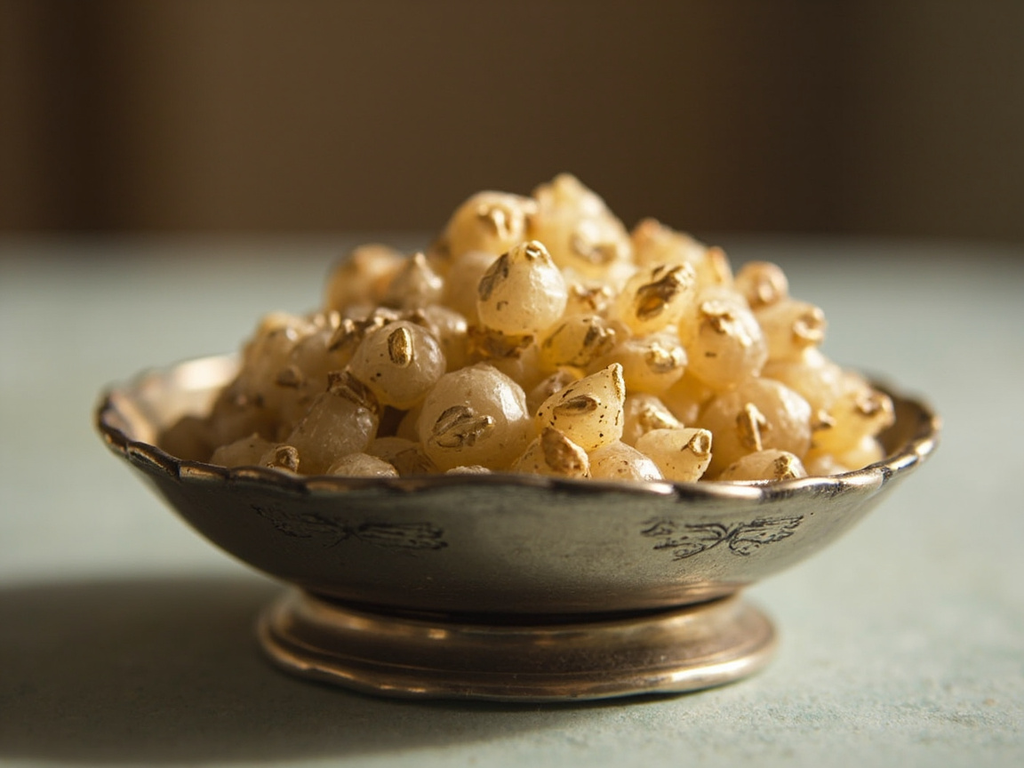
Tiny aromatic seeds patiently coated in layers of hardened sugar, crunchy and fragrant, bursting in the mouth with a note of anise or coriander. They were eaten after the feast to freshen the breath and aid digestion.
Let us confess without concealment Our weakness for sugar — even at the cost of Our teeth, which ambassadors remark upon in whispers. After the feast, We gladly take a handful of these confited seeds, anise or coriander clad in sugar, rolled long in the cauldron until they round themselves like little pearls. They freshen a prince's breath and calm the stomach better than any apothecary's drug. Crunch a few: it is sweetmeat and remedy together.
- •Coriander, anise or fennel seeds — one measure (aromatic core)
- •Sugar — several measures (coating)
- •Rose water or water — a splash (coating syrup)
Comfits — Sugar-Coated Spiced Seeds
Tiny aromatic seeds patiently coated in layers of hardened sugar, crunchy and fragrant, bursting in the mouth with a note of anise or coriander. They were eaten after the feast to freshen the breath and aid digestion.
Why this dish? Elizabeth's taste for sugar is famous — to the point that her teeth blackened with age. At court, comfits were offered: coriander, anise, or fennel seeds coated in sugar, nibbled at the end of the meal as breath fresheners and digestive aids: sweetness and remedy in one.
Let us confess without concealment Our weakness for sugar — even at the cost of Our teeth, which ambassadors remark upon in whispers. After the feast, We gladly take a handful of these confited seeds, anise or coriander clad in sugar, rolled long in the cauldron until they round themselves like little pearls. They freshen a prince's breath and calm the stomach better than any apothecary's drug. Crunch a few: it is sweetmeat and remedy together.
Ingredients (period version)
- Coriander, anise or fennel seeds — one measure (aromatic core)
- Sugar — several measures (coating)
- Rose water or water — a splash (coating syrup)
Ingredients
- Coriander seeds (or anise, fennel) — 50 g (aromatic core)
- Sugar — 200 g (coating)
- Water — 80 ml (syrup)
- Rose water — a few drops (optional) (flavor)
Method
- Sort the seeds and warm them dry in a thick pan to release their aroma.
- Prepare a light syrup by heating the sugar with the water until it just runs off the spoon.
- Pour a small ladleful of syrup over the warm seeds, stirring constantly to coat them, until the sugar crystallizes in a thin layer.
- Repeat layer by layer, letting dry between each, until you have well-rounded comfits.
- Let dry completely in the air before storing in an airtight container.
How it was made : Comfits were a specialty of the Tudor 'banquet': seeds (caraway, coriander, anise, fennel) or peels were patiently coated in dozens of layers of sugar in a cauldron suspended over the fire, stirred by hand for hours. Reputed as digestive aids and breath fresheners, they were also a pure display of sugar wealth.
The contemporary twist : Presented in a small glass bonbonnière, these 'queen's dragées' elegantly replace after-dinner mignardises — and truly perfume the breath.
Sources : The Good Huswifes Jewell, Thomas Dawson, 1585 · Delightes for Ladies, Hugh Plat, 1602
Elizabeth I · Charactorium